




Uncover how low-ground-pressure (LGP) bulldozers are revolutionizing contemporary earthmoving and land-clearing practices. This detailed guide explains how wider track designs and enhanced undercarriage structures significantly improve machine flotation in challenging terrains.
Civil engineering projects often encounter unpredictable terrain conditions, from saturated clay to shifting coastal sands. Traditional crawler dozers, while immensely powerful, apply considerable downward force that can lead to heavy steel tracks sinking into unstable surfaces.
When an earthmoving vehicle becomes mired, it can result in costly delays, potential damage to underground infrastructure, and undue strain on the equipment's drivetrain. To address these adverse soil conditions, progressive contractors are modernizing their fleets with flotation-specific machinery. Working at Heights in Windy and Sunny Conditions
The engineering strategy behind low-ground pressure designs aims to increase the machine's contact area, distributing its substantial weight more evenly. A typical bulldozer exerts around 6 to 8 pounds of pressure per square inch (psi).
In contrast, an LGP variant reduces this pressure to approximately 3 to 4 psi, akin to the way snowshoes work, enabling twenty-ton machines to navigate effortlessly over deep mud, marshy areas, and loose sands.
By expanding the width of individual track shoes to as much as 100 centimeters and lengthening the undercarriage, these machines provide reliable, slip-free pulling power where standard models fail.
Heavy infrastructure projects face strict environmental controls aimed at preserving topsoil and protecting native ecosystems. Conventional heavy machinery can compact the ground beneath it significantly, harming natural drainage and inflicting irreversible damage on native plant roots. Employing specialized wide-track dozers effectively mitigates this environmental harm in sensitive job sites, as their design minimizes deep rutting and surface damage in protected wetlands, agricultural areas, and fragile pipeline corridors.
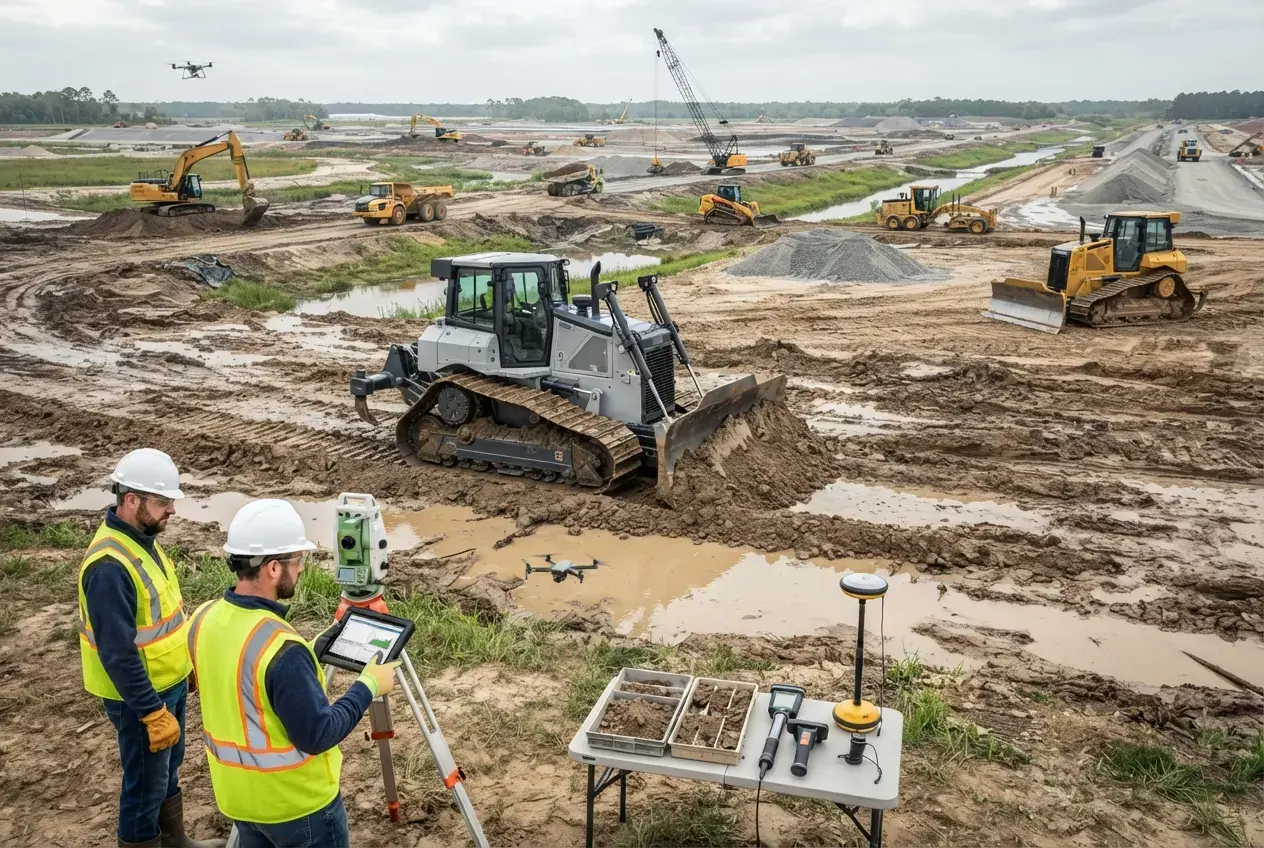
The initial stages of road construction, residential developments, or commercial grading projects are often unstable and vulnerable to changing weather. A sudden downpour can transform a cleared area into a muddy quagmire, immobilizing regular haul trucks and traditional earthmovers. Utilizing low-ground pressure equipment allows for consistent clearing, stumping, and rough grading, even in adverse weather conditions. These adaptable machines can effortlessly handle heavy debris, remove saturated material, and shape drainage without the risk of becoming stuck.
Incorporating LGP dozers into your core equipment inventory not only enhances mobility in muddy environments but also bolsters the financial efficiency of your projects. When standard machinery operates on soft terrain, track slippage leads to rapid wear and increased fuel consumption.
Wide-track alternatives mitigate this operational inefficiency by maintaining solid traction, enabling the engine to convert torque into effective blade force. This operational efficiency reduces cycle times, lessens mechanical stress on final drive systems, and ensures precise grading even on intricate slopes.
Selecting low-ground-pressure dozers is a vital strategy for construction companies aiming to traverse unpredictable terrains efficiently. By maximizing track surface area alongside superior hydraulic capabilities, these versatile machines effectively address the flotation challenges present in modern job sites.
Whether clearing dense brush in wetland areas or executing meticulous grading on loose sand, they provide the reliable performance essential for timely project completion. Investing in high-flotation machinery not only safeguards your business from expensive recovery efforts but also optimizes daily earthmoving efficiency.
What does LGP signify in heavy equipment?
LGP stands for Low Ground Pressure, indicating that the construction vehicle is specifically designed with wide tracks to operate effectively on soft and unstable soils.
Can LGP dozers function well on hard rock or demolition sites?
Although possible, using wide-track machines on rocky surfaces can hasten track wear and increase the risk of bending the track shoes, making standard track dozers a more suitable choice for such terrains.
How do the track dimensions of LGP models compare to standard bulldozers?
LGP models generally feature track shoes that are 75 to 100 centimeters wide, double the width of conventional bulldozer tracks.
Why is soil compaction a significant issue for site developers?
Severe soil compaction disrupts natural water absorption, harms local flora, and can lead to issues like uneven settling under future structures and roadways if not managed properly.
Do low-ground-pressure models require special transport permits?
Yes, as their extended track width often goes beyond standard legal lane sizes, these machines typically need specialized wide-load permits for transportation between job sites.


Leave a comment
Your email address will not be published. Required fields are marked *