




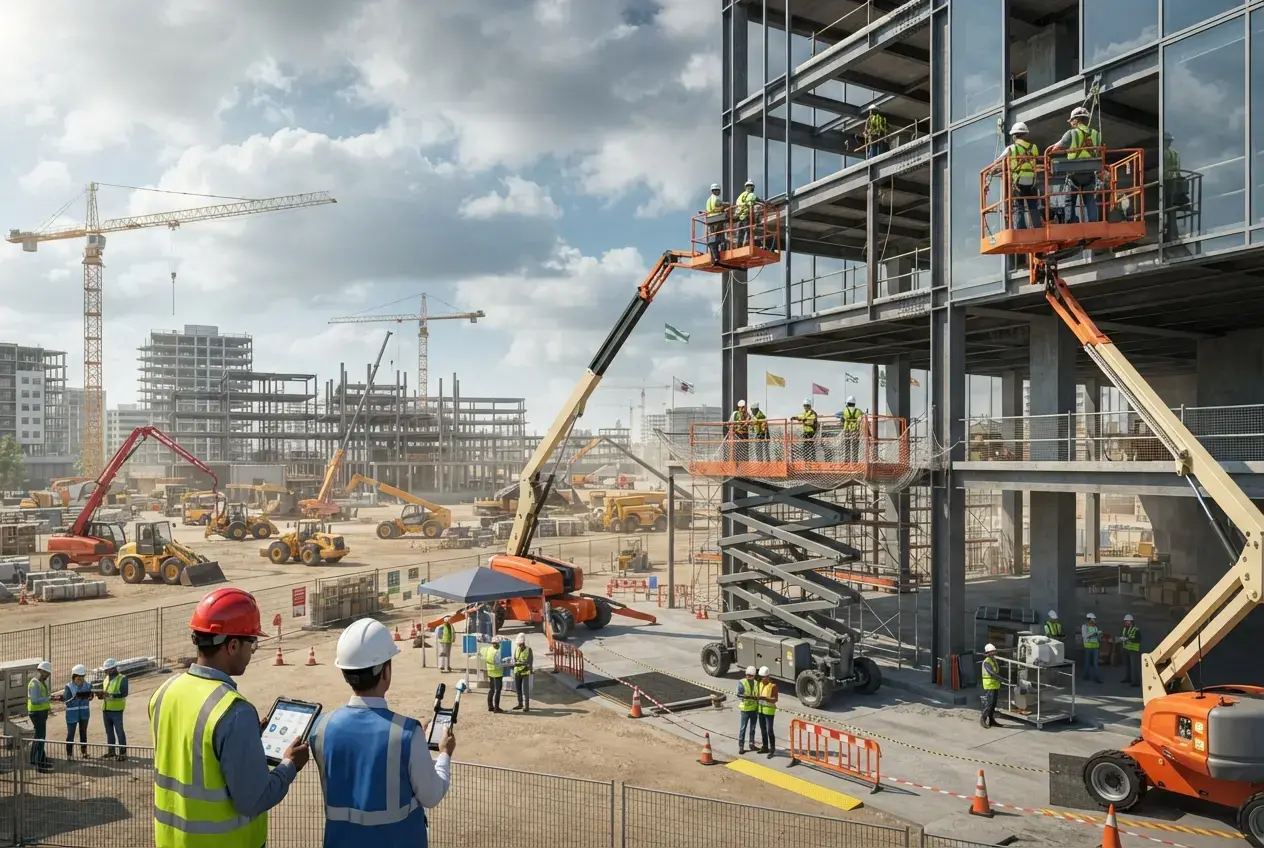
Learn the crucial safety protocols needed to safeguard your team when using elevated work platforms during severe weather conditions. This detailed guide highlights the unseen dangers posed by strong winds and intense sunlight on construction sites.
When working on high structures, such as aerial platforms or scaffolding, heightened spatial awareness and strict compliance with safety guidelines are imperative. While standard safety training primarily emphasizes fall prevention during ideal conditions, fluctuating environmental factors can introduce distinct hazards that complicate operations. Strong winds can destabilize heavy machinery, while bright sunlight may impair visibility and accelerate physical fatigue. By mastering these weather-related challenges, supervisors can better protect their teams, secure loose materials, and avert serious accidents on site.
Heavy Lifting Made Easy: The Rise of 5-Ton Forklifts
Elevated work areas are affected by changing weather conditions more significantly than ground-level tasks. A gentle breeze at ground level can escalate into a perilous gust at heights, leading to dangerous swaying of equipment. Additionally, unfiltered solar radiation produces glare that can hinder visibility, complicating communication with crew members and the handling of heavy tools. Recognizing the correlation between varying wind speeds and high temperatures as shared safety concerns strengthens a construction company’s culture of safety, reducing the risk of falls and heat-related issues.
Each mobile elevating work platform comes with a specific wind velocity limit set by the manufacturer, typically around 12.5 m/s. Site supervisors must accurately measure wind conditions using handheld anemometers at the working height instead of relying on ground-level weather reports. Strong winds can catch large materials, turning them into dangerous projectiles that could cause serious accidents. If wind speeds exceed the manufacturer’s guidelines, all elevated work must cease immediately, and machinery should be secured in a safe position.
Direct sunlight can severely hinder an operator's awareness, perception, and coordination during lengthy outdoor workdays. Intense glare can obscure crucial equipment and present hazards, increasing collision risks. To combat these issues, workers should wear specialized anti-glare eyewear and high-visibility clothing with non-reflective elements. Adding canvas canopies to lift baskets can provide essential shade, reducing eye strain and helping maintain focus.
The combination of high-altitude activity and the effects of wind and sun can lead to rapid thermal exhaustion. Wind can mask bodily perspiration, leading to dehydration, dizziness, and delayed reflexes among workers at heights. Supervisors should encourage routine hydration breaks every 15-20 minutes, irrespective of thirst. Organizing shorter work shifts and providing shaded rest areas at ground level allow crews to recharge before returning to elevated tasks.
Continuous exposure to UV rays can deteriorate synthetic materials used in safety harnesses and lanyards. Technicians must perform comprehensive inspections of their protective equipment before shifts, checking for signs of wear such as fading fabric or fragile stitching. Furthermore, tools and materials should be securely fastened with specialized lanyards or containment nets to prevent wind from dislodging them, protecting ground personnel from falling objects.
Effectively managing construction work at height during unpredictable weather conditions requires an anticipatory strategy focused on real-time monitoring and worker welfare. By adhering to specific wind constraints, providing glare protection, and enforcing hydration protocols, the primary causes of elevated worksite incidents can be addressed.
Dedicating time to check gear and secure loose items ensures that your crew can operate confidently and effectively, even under challenging conditions. Ultimately, prioritizing these weather-specific safety measures helps protect your workforce, keeps projects on schedule, and maintains excellent compliance with safety regulations.
What is the standard maximum wind speed limit for operating a telescopic boom lift?
Most industrial boom lifts are designed for a maximum wind speed of about 12.5 m/s (approximately 28 mph). Exceeding this limit poses a significant risk of tipping.
How does prolonged sun exposure affect the safety webbing of a fall arrest harness?
UV radiation gradually weakens synthetic fibers, making the harness material brittle and susceptible to tearing in the event of a fall.
Why does wind seem stronger at greater heights?
Wind speeds tend to increase at higher elevations due to a lack of obstructions such as trees and buildings that usually slow down air currents.
What are the early signs of heat exhaustion in elevated workers?
Initial symptoms may include dizziness, frequent headaches, heavy sweating, muscle cramps, rapid heartbeat, and confusion.
How can ground crews shield themselves from debris blown from high platforms?
Ground teams should establish clear exclusion zones beneath elevated work areas and wear approved hard hats and high-visibility safety gear for protection.


Leave a comment
Your email address will not be published. Required fields are marked *