





Learn the essential safety procedures for wheel loader operators. Pre-shift inspections and load handling techniques can prevent accidents on the jobsite.
Wheel loaders serve as essential tools in today's earthmoving sector, efficiently transporting large amounts of raw materials, debris, and aggregates across various job sites each hour. However, the powerful mechanics that make them vital also pose significant hazards.Transforming GCC Construction with Smart Machinery and IoT
Their heavy frames, bulky structures, and weight shifts can lead to catastrophic incidents if mistakes occur. To safeguard both workers and equipment, it's crucial to adopt a proactive and disciplined approach to daily operations rather than just meeting minimal safety standards.
A safe work shift begins well before the ignition is turned on. Conducting a thorough walkaround inspection at ground level helps identify potential mechanical issues before they become critical failures in the field. Operators should check tire pressure and inspect for uneven tread wear, as imbalanced tires greatly increase the chance of the loader tipping over when carrying heavy loads.
Beyond tire inspections, it’s vital to examine hydraulic lines for small leaks, check for loose pins in the structure, and ensure that bucket teeth are not cracked. Upon entering the cab, operators must remove any loose debris or tools that could obstruct control pedals and joysticks.
Additionally, all windows and mirrors should be cleaned for optimal visibility, and backup alarms must be tested to confirm their functionality before entering active work zones.
To control the machine effectively, operators need a thorough understanding of weight distribution and leverage dynamics. When the loader's bucket is fully loaded and raised, the center of gravity shifts significantly, increasing the risk of rollover accidents. For safe operation, always keep the bucket low enough to avoid obstacles while moving between loading zones and stockpiles, as this maintains the machine’s stability and visibility.
Navigating uneven surfaces or slopes requires strict adherence to appropriate driving paths. It is crucial to avoid turning the loader or moving it sideways across steep inclines, as this destabilizes the machine and can lead to rollovers.
Operators should travel directly up or down slopes, with the loaded bucket facing uphill to keep weight distribution stable. Rapid turns, aggressive braking, or erratic throttle adjustments should be avoided, along with exceeding the manufacturer’s specified weight limits.
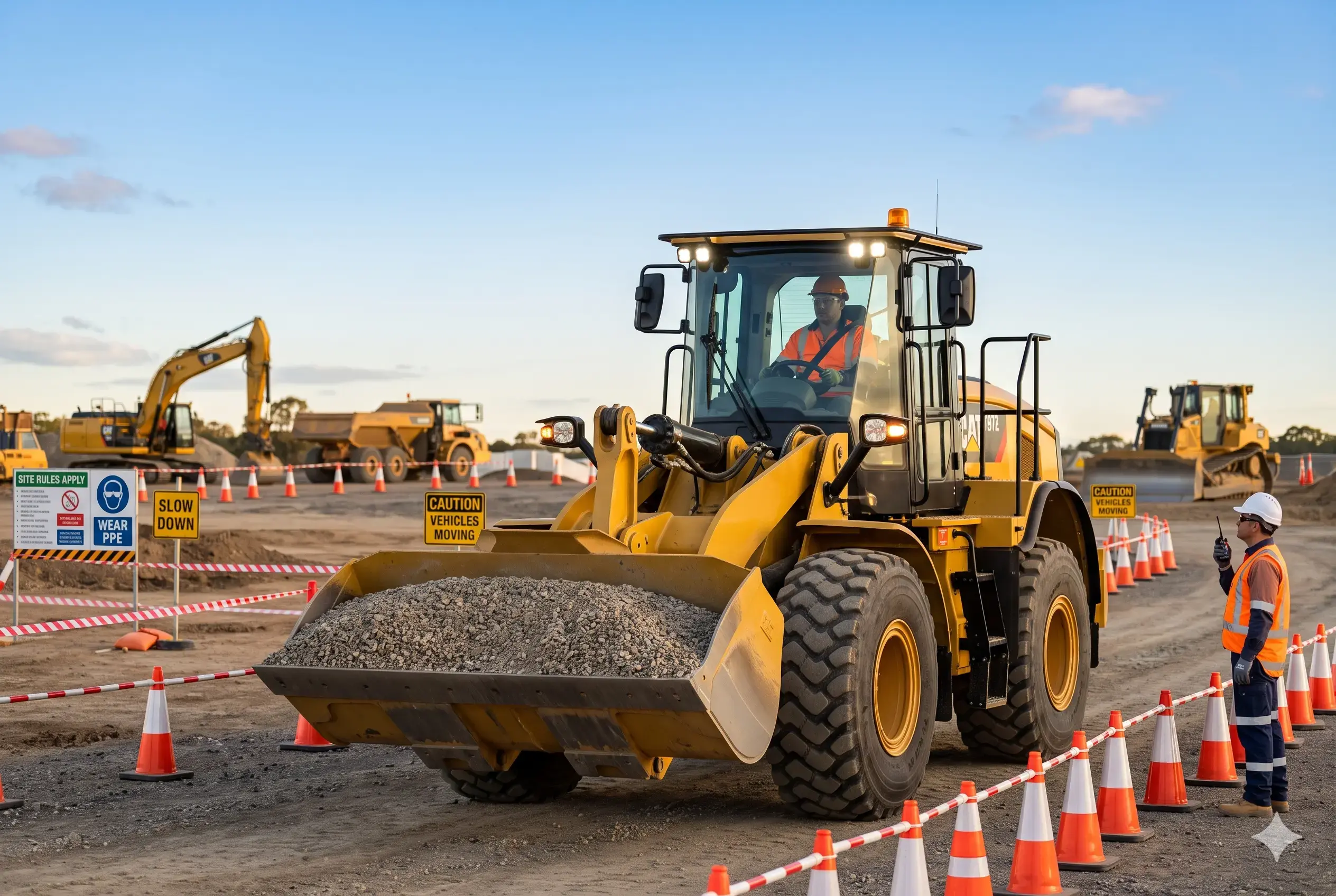
Construction sites are fast-paced environments where heavy machinery and personnel frequently interact. Due to the loader's extensive blind spots caused by its rear engine and large lift arms, operators must maintain clear communication with crew members through two-way radios, standard hand signals, and eye contact.
Never perform lifting, swinging, or dumping actions while personnel are in proximity, and prohibit individuals from standing or walking under a raised bucket. In confined areas, when reversing around blind corners or when dumping loads into tall trucks, having a designated spotter in a safe location is crucial. If the operator loses sight of the spotter or any ground worker, they should halt operations until visibility is restored.
Adhering to strict safety protocols for wheel loader operation not only protects equipment but also saves lives in high-traffic job sites. By implementing thorough pre-shift inspections, mindful material handling practices, and effective communication, operators can address the primary causes of loader-related accidents.
Emphasizing safety is not merely an obstacle to productivity; it acts as a fundamental discipline that keeps equipment operating efficiently while ensuring crew safety and job site progress.
1. What commonly causes wheel loader tip-over accidents?
The predominant reason for tip-over incidents is traversing or turning with the bucket raised, which elevates the center of gravity and compromises stability, especially on uneven terrain or during sharp turns with heavy loads.
2. What is the proper way for an operator to enter and exit the cab?
Operators should always maintain three points of contact (either two feet and one hand or two hands and one foot) while using the designated steps and handrails, avoiding jumping from the machine and ensuring the steps are free from mud, ice, or grease to prevent slips.
3. What are the dangers associated with overloading a wheel loader bucket?
Overloading leads to undue stress on hydraulic systems, hampers steering, and shifts weight from the rear axle, resulting in instability, longer braking distances, and a higher risk of tipping.
4. What guidelines should be followed when driving on slopes?
Always ascend or descend hills straight, avoiding diagonal movements. Keep the bucket low, move slowly and deliberately, and ensure the loaded bucket faces uphill to maintain stability.
5. Is it permissible to transport crew members in a wheel loader bucket?
Absolutely not. Using a bucket to carry personnel is extremely unsafe and violates safety regulations. Buckets should only be used for material transport, with no individuals standing, riding, or working beneath raised buckets.


Leave a comment
Your email address will not be published. Required fields are marked *