





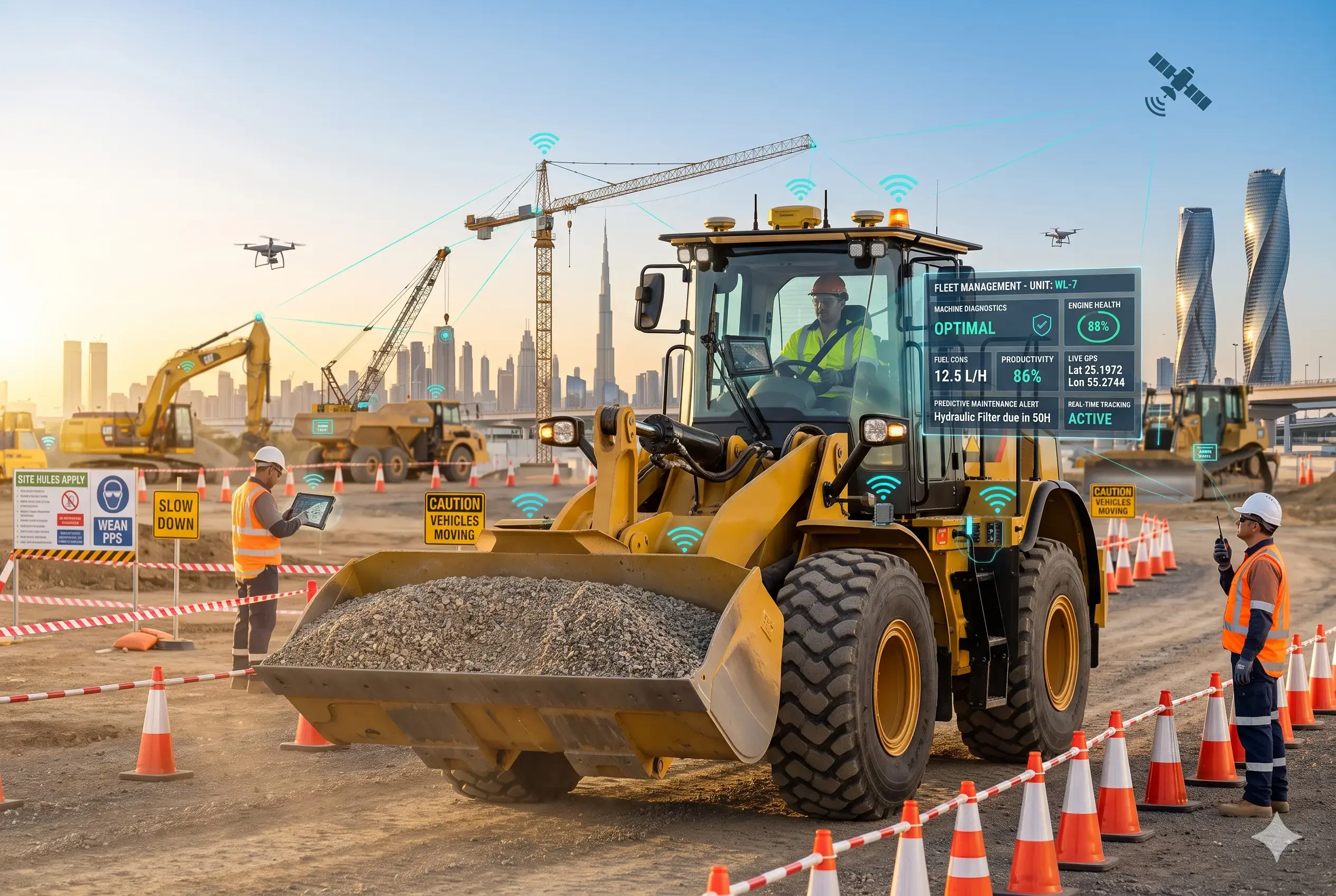
Learn how IoT and smart machines are changing construction in the GCC. Discover how telematics and real-time tracking can boost efficiency.
Project managers can have complete visibility of their assets by integrating Internet of Things hardware into heavy equipment. Rugged sensors, such as cellular and satellite ones, installed on excavators and crawler dozers can track the real-time location, working hours and work cycles.
The continuous data flow has changed the way site supervisors manage their fuel expenditure. Heavy equipment is often idled for long periods of time during material transit delays or shift changes in the GCC.
This wastes fuel and accelerates engine wear. Telematics platforms can flag inefficient patterns instantly, allowing operators to optimize machine routing across large job sites and minimize passive fuel consumption.
In the Middle East, heavy mechanical systems are subjected to extreme heat, fine dust, and dense storms of dust. These harsh elements can cause lubricants to degrade quickly, clog filter systems and cause sudden hydraulic failures. Unlock the Power of Your Excavator: Must-Have Attachments
The transformation of GCC construction through smart machinery and IoT transforms maintenance from a reactive to a proactive strategy. Thermal sensors and vibration monitoring devices embedded in the machine continuously analyze engine health. Fleet managers can plan targeted maintenance during project lulls by identifying unusual temperature spikes or mechanical imbalances. This will prevent costly field failures and extend the life of expensive heavy machinery.
Smart job sites are designed to protect workers in the field while also increasing precision in earthmoving. Modern smart construction eco-systems combine 3D guidance of machines with intelligent sensors on-site to improve workplace safety and operational speeds. Benefits of Renting a Luxury Car for Special Occasions
The tablets in the cab display real-time GPS information relative to project blueprints. This eliminates the need for manual staking and also prevents errors in over-excavation. In parallel, IoT wearables and proximity-warning sensor devices attached to worker gear alert operators when a ground crew gets too close to the blind spot. This dramatically reduces incident rates on busy, fast-moving job sites.
The Middle East infrastructure sector is being fundamentally transformed by the integration of heavy machinery and connected IoT platforms. GCC contractors have successfully mitigated the risks associated with severe desert operating conditions and rising fuel prices by replacing manual asset tracking systems with real-time machine data.
This new wave of fleet intelligence allows for maximum machine utilization and safer working conditions, as well as highly predictable project schedules, across the most ambitious construction projects in the region.
IoT sensors connected to the internet reduce costs by optimizing fuel consumption and preventing costly equipment breakdowns. Condition-based maintenance, compared with rigid calendar-based schedules, can reduce unexpected equipment downtime up to 20% to 25%.
It is possible to update legacy fleets of heavy equipment using telematics hardware, aftermarket, external sensor pods and GPS tracking attachments. Retrofitted devices connect mechanical readouts to cloud-based dashboards for fleet analytics.
Ruggedized industrial IoT enclosures are used for hardware that is designed to be used in construction applications. These components have been designed to operate in extreme temperatures, with high vibrations and under heavy dust exposure.
The ultra-low-latency of 5G networks allows massive sensor configurations to transmit data to dashboards in milliseconds. This rapid connection allows for autonomous machine operation, real-time diagnostics and instantaneous 3D site updates.
Smart machinery can improve job site safety by using automated proximity alerts and wearable tracking devices. Intelligent camera systems also help to increase the level of safety. These connected tools track worker locations in real-time and alert heavy machinery operators immediately if anyone enters a dangerous work zone.


Leave a comment
Your email address will not be published. Required fields are marked *