





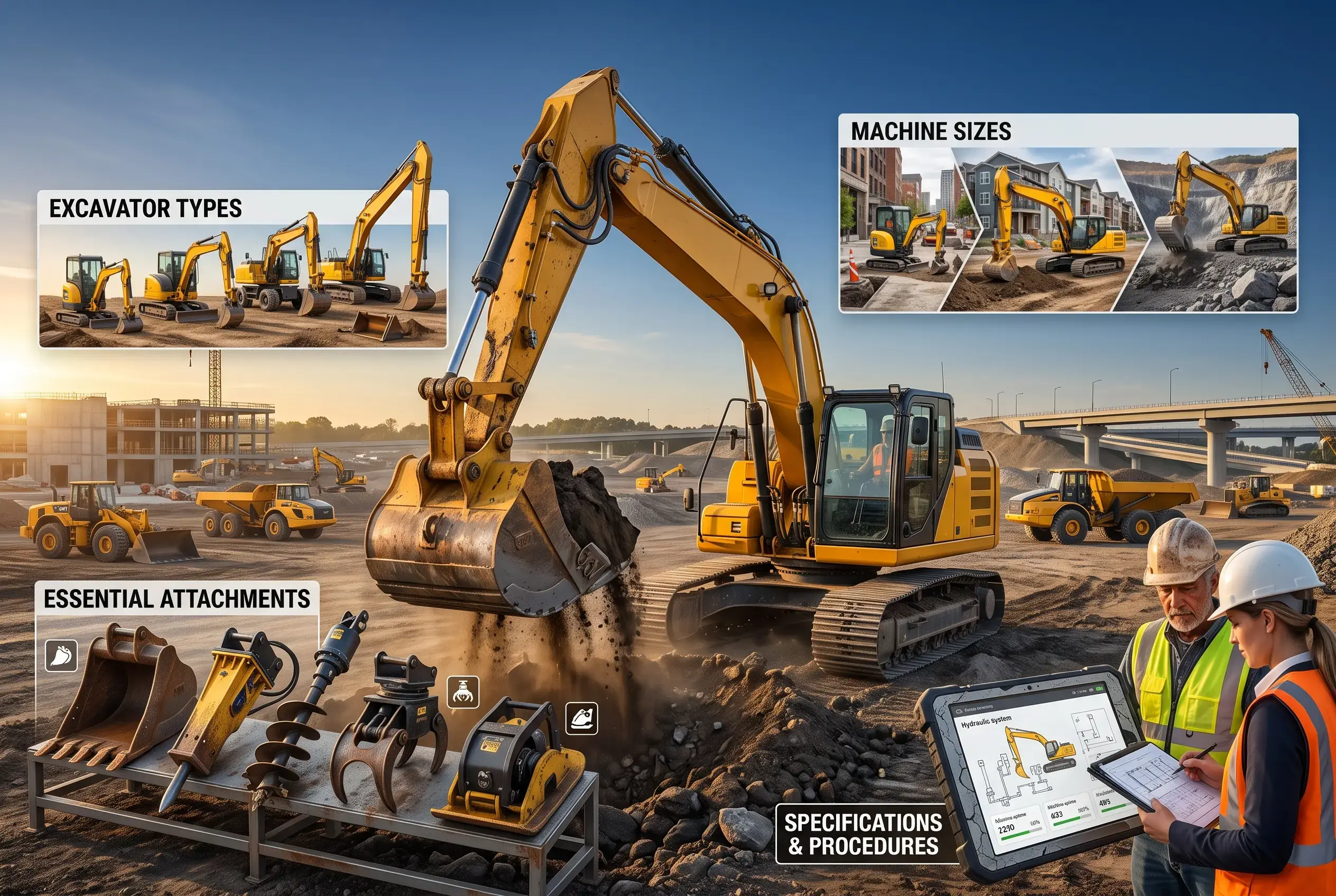
Learn how to operate heavy machinery. Learn how to avoid costly downtime by learning about the types of excavators, selecting the right size and essential attachments.
The excavator, whether you're managing a large construction site or renting your first heavy equipment to complete a small project, is undoubtedly the king of earthmoving. The excavator is the most powerful machine in modern construction, but choosing and operating it can be overwhelming.
This comprehensive guide breaks modern excavators down into their essential elements. Answering the four most frequently asked questions by fleet managers, contractors and operators will help you to maximize efficiency.
Read Also The World’s Top Truck Mixer Manufacturers and Construction Equipment
Not all digging jobs require the same equipment. Choosing the correct excavator for your particular workspace will ensure safety and keep your operating costs low.
The wrong size can cause project delays and fuel costs. It is important to consider the power needed for your material and the constraints of the site.
Look at the weight of your machine. Most commercial projects require machines between 10 and 25 tons. Next, consider your maximum digging depth and reach. You risk structural damage and tipping hazards if your machine is unable to reach the bottom without straining. Check the bucket capacity and make sure it is able to handle your daily tonnage goal.
Modern excavators are versatile machines. You can change the bucket on a digging machine to make it multi-purpose for different industries.
Augers enable operators to drill holes for fencing and footings in seconds. Hydraulic breakers are ideal for demolition jobs. They can easily smash through rock and concrete. Thumbs and grapples are used for land clearing and forestry to sort and load irregular debris. A high-quality quick coupling makes it easy to switch between these attachments.
Preventative maintenance is the best way to prevent costly downtimes and maintain the value of your heavy equipment fleet.
Your first line of defence is to perform daily visual inspections. Before turning on the engine, operators should check for any hydraulic leaks, loose tracks, or excessive wear of bucket teeth. Greasing the chassis reduces friction at pivot points that are under high stress. The undercarriage should also be cleaned at the end of each shift to prevent premature track failure.
When used correctly, excavators can transform the timeline of your project. Understanding the different types, correctly sizing the machine for the job, using the right attachments and adhering to daily maintenance protocols will ensure high productivity.
How many hours can a standard excavator operate? A high-quality commercial machine that is maintained and serviced regularly will last from 8,000 to 10,000 hours of operation before it requires a major overhaul.
Can a wheeled excavation machine be driven on public roads without damaging the pavement? Wheeled excavators have been designed specifically to operate on public streets. You must, however, check the local traffic regulations for maximum speed limits and any required wide-load permits.
What's the difference between an excavator and a backhoe? A heavy-duty excavator has a cab which can rotate 360 degrees around its undercarriage. A backhoe is an ordinary tractor frame that has a front-loading arm and a rear-digging arm. It can rotate 200 degrees.
Why does hydraulic fluid maintenance matter? The fluid transfers power from the engine and digging arms to the attachments. Low or contaminated fluid can cause sluggish operation, heat components and eventually lead to catastrophic failure.
Is my track tension correct? Each manufacturer has specified the ideal "sag". Tracks that are too tight can cause the idlers to wear out quickly, while tracks too loose may slip off the rollers.


Leave a comment
Your email address will not be published. Required fields are marked *