





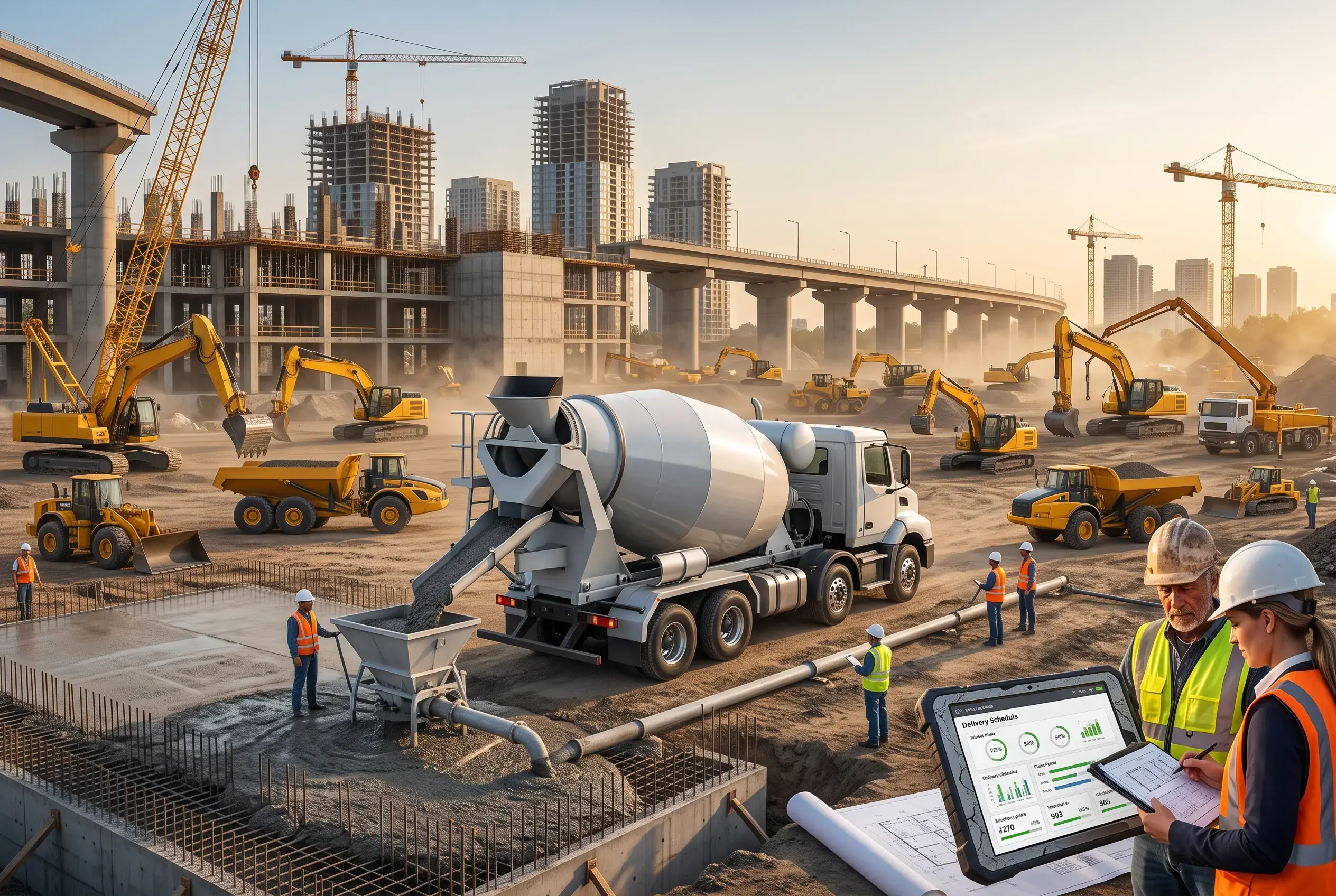
Optimize Your Pouring Efficiency. Delve into our technical resource that covers the leading manufacturers of truck mixers and construction equipment crucial for contemporary site infrastructure.
When evaluating premier truck mixer manufacturers and construction equipment, fleet operators seek the ideal combination of drum durability and chassis dependability. The mixing drum needs to endure the abrasive forces of stone aggregates on its internal steel flights for extended periods without compromising its integrity.
Top global manufacturers excel by combining robust structural steel with effective hydraulic Power Take-Off (PTO) systems that harness rotational energy directly from the truck's engine. This design ensures the drum operates at a consistent, controlled speed, unaffected by traffic conditions or road slopes.
European producers have established a reputation for high-quality concrete transport equipment specifically designed for rigorous duty cycles. Renowned brands like Liebherr and Schwing Stetter are recognized worldwide for their precisely angled internal spiral blades, which ensure exceptional concrete uniformity during transport.
Check Pallet Jack vs. Forklift: A Technical Guide for Material Handling
These innovations are crucial, as they prevent the detrimental separation of heavy aggregates from wet cement over long distances. Additionally, their sophisticated hydraulic drum control mechanisms significantly decrease fuel consumption, making them ideal for large-scale infrastructure initiatives.
The manufacturing sector has experienced substantial growth due to East Asian construction giants that deliver robust machinery at a large commercial scale. Companies such as SANY Group, Zoomlion, and XCMG have forged a significant presence by providing reliable, high-capacity transit mixers.
Many of these firms enhance their global influence by strategically acquiring established European brands, such as Zoomlion's acquisition of the renowned Italian brand CIFA. Their advanced machinery lines are known for their exceptional value, reliable local maintenance support, and convenient automated loading and unloading options.
Conventional batch plants may not be suitable for remote locations, rural projects, or congested city renovations. Italian innovator Carmix leads the off-road industry with adaptable self-loading concrete mixers that can load materials, weigh batches, and mix concrete on-site.
For precise, on-demand pouring, American firm Cemen Tech specializes in advanced volumetric mixer trucks that keep sand, stone, and cement in distinct dry compartments. These mixers produce the exact quantity of concrete required directly at the job site, minimizing waste and freeing contractors from strict batch timing.
Fleet management is transitioning toward a digital and environmentally-conscious future aimed at reducing operational costs. Leading manufacturers are introducing all-electric and hybrid truck mixer prototypes to mitigate diesel emissions in densely populated areas. Additionally, conventional factory concrete drums are now fitted with smart digital slump sensors that track concrete consistency in real-time during transport. These telematics systems automatically adjust drum speeds and notify operators of potential batch hardening issues well before arrival on-site.
The increasing complexities of the infrastructure sector make selecting a dependable concrete delivery solution a critical decision. From the high-quality craftsmanship of German manufacturers to the efficiency of Asian leaders, the marketplace provides options suited for projects of all sizes. Investing in the appropriate mixer equipment safeguards your ready-mix quality, curtails unforeseen mechanical repair costs, and maintains your pouring schedules reliably. Collaborate with an established global manufacturer offering a strong spare parts network to ensure your fleet operates smoothly throughout significant projects.
1. What is the standard drum capacity of a typical commercial transit mixer truck?
Most standard commercial transit mixer trucks typically have a capacity between 6 and 14 cubic meters, influenced by the vehicle's axle configuration.
2. How does a volumetric concrete mixer differ from a traditional transit mixer?
A traditional transit mixer transports premixed wet concrete from a central batch plant, while a volumetric mixer carries dry ingredients in separate compartments and mixes them on-site as needed.
3. Why is the spiral blade design in a mixing drum so essential?
The angle of the internal spiral blade is crucial for efficiently folding and pushing the concrete during transit, preventing aggregate separation and ensuring an even discharge.
4. Are electric concrete mixer trucks viable for modern construction sites?
Yes, electric mixer trucks are practical, particularly for urban or nighttime construction, as they provide instant rotational torque, operate quietly, and produce zero on-site emissions.
5. How often should a concrete mixing drum's interior be cleaned?
The drum's interior should be thoroughly cleaned with high-pressure water at the end of each shift to prevent leftover concrete from hardening on the walls and blades.


Leave a comment
Your email address will not be published. Required fields are marked *