





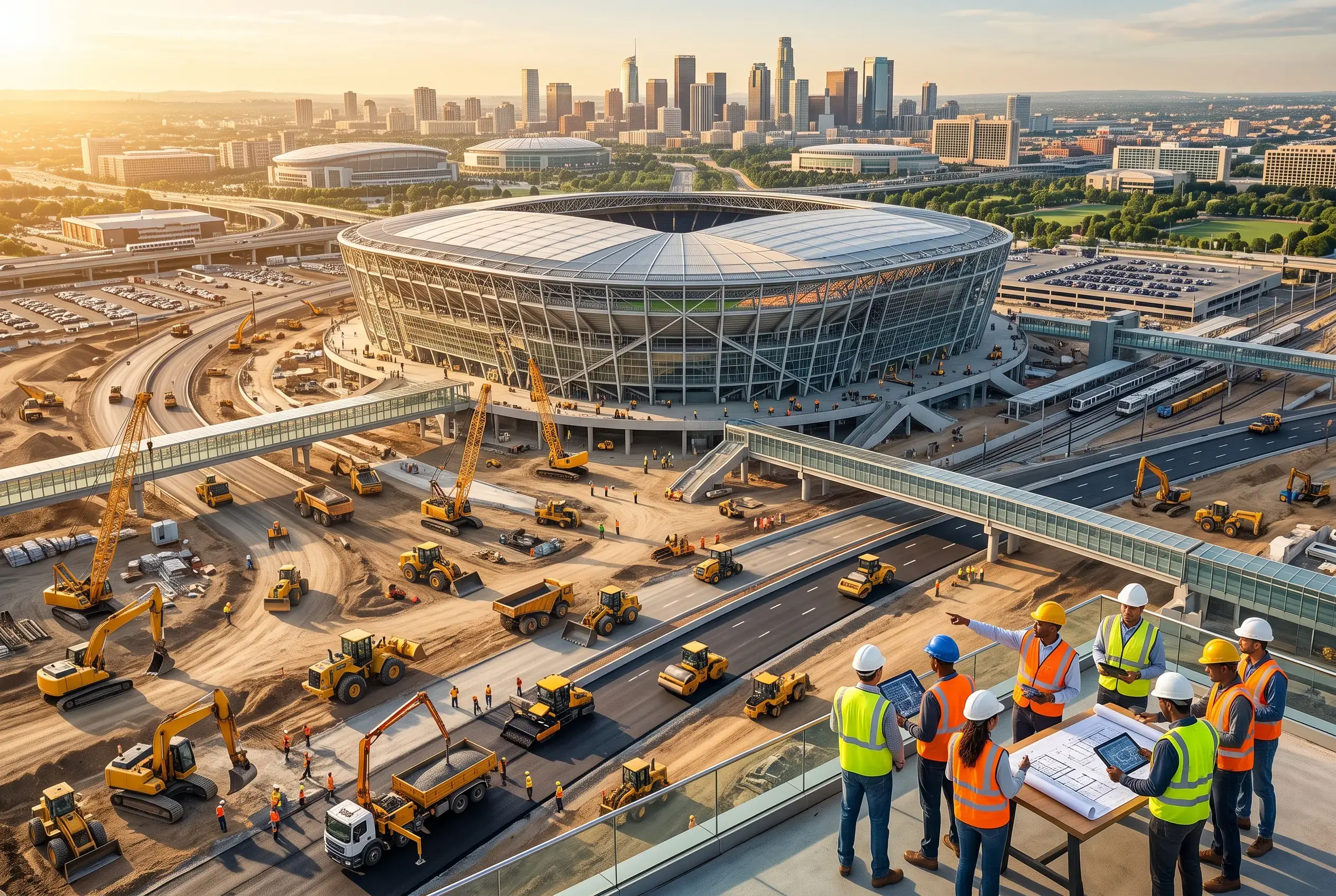
Discover the engineering and infrastructure efforts behind World Cup 2026. Learn how heavy machinery transformed stadiums and logistics to host the largest tournament in history.
The biggest sporting event ever is now officially on overdrive. The FIFA World Cup 2026 will be the largest sporting event in history, with 48 teams competing in 104 matches over three huge nations, the United States of America, Canada and Mexico. Millions of fans are captivated by the tactical formations and spectacular goals on the pitch. But behind the scenes, a feat of strength that is equally impressive has been achieved. The massive mobilization of heavy equipment, civil engineering and heavy-duty logistical support required to deliver a tournament on this scale took several years.
This tournament's sheer geographic location has put engineering and logistic networks on overdrive. This tournament is unlike previous ones that were restricted to one country or a small region. It spans 16 different host cities spread across thousands of miles from Vancouver to Mexico City.
Cities had to expand their stadium footprints and transit networks simultaneously in order to accommodate the influx of millions of fans traveling from around the world and international media centers. To cope with this massive regional strain, public infrastructure authorities and contractors needed to work in perfect sync using advanced fleet management systems.
The massive construction required to prepare North American mega-stadiums in order to host international football matches was breathtaking. The majority of venues selected were designed for American Football, with narrow pitches and artificial turf that broke strict international regulations.
Contractors used heavy excavators and compactors as well as precision concrete cutters in order to alter the stadium bowls structurally. Construction crews in Los Angeles had to remove concrete seating tiers and corner sections to make the field 74 yards wide. This complex demolition and rebuilding process relied on specialized, low-clearance heavy machinery capable of operating safely underneath massive, multi-million-square-foot translucent roof canopies.
The greatest engineering feat of the tournament was hidden right under the players' feet. Engineers had to dig existing field beds to a depth of 60-90 centimeters to replace artificial turf with high-performance, pristine natural grass.
The deep excavations required the use of a fleet of compact wheel loaders, dump trucks and other equipment to remove thousands of tons from enclosed arenas. Engineers built multi-layered, advanced pitch systems, including automated irrigation and complex drainage systems, from scratch. To keep the engineered soil alive under roofed conditions with limited sunlight and to maintain the quality of the soil, the crews installed automated LED lighting systems suspended from stadium trusses. They treated the field like a complex agronomic project.
The logistics of moving the tournament's infrastructure across three huge sovereign nations was one of the biggest logistical challenges in the history of freight forwarding. The logistics teams manage upwards of 1,500 time-sensitive shipments every day. They navigate complex customs regulations and border checkpoints as well as airport cargo hubs. Check Essential Crane Safety Guidelines for Operators and Buyers
To meet the tightest deadlines, heavy transport fleets move broadcasting equipment, hospitality scaffolding and team gear from one venue to another. Logistics coordinators use unified control towers with real-time tracking software to eliminate the risk of missing match deadlines. This ensures that heavy support equipment is delivered on site, unloaded, and deployed without any breakdowns.
This tournament's incredible civil engineering efforts will have a lasting impact on the North American sports and construction sectors. Massive investments in stadium upgrades, transportation hubs and highway expansions have permanently modernized the regional infrastructure.
The projects were a testing ground for many advanced technologies in the heavy machinery sector, such as hybrid powertrains and autonomous surveying drones. They also provided a digital twin mapping of the project. The equipment and structural methods refined in this massive buildup will be the blueprint for massive infrastructure projects around the world for the next generation.
The World Cup 2026 is a massive event that goes beyond the 48 teams on the grass. Heavy machinery, precision engineering and tireless logistic crews spent years transforming stadiums on a continent. This tournament is the true foundation. The heavy equipment sector has proven that no project is ever too large.
They have completed complex structural widenings, deep field excavations, and flawless equipment transport across borders. These modernized, state-of-the-art arenas will remain as a testament to the incredible power of civil engineering long after the final trophy has been lifted.
Heavy construction crews removed concrete walls and corner seats at the field level using specialized concrete cutting machines and specialized excavators. This allowed the pitches to reach the 74-yard width standard.
Crews were required to dig 60-90 centimeters down to install sub-bases that included high-capacity drain pipes, automated moisture sensors, and advanced vacuum-aeration systems.
Teams of logistics professionals use centralized control towers, real-time tracking, and software to coordinate more than 1,500 daily shipments in the United States, Mexico and Canada. This ensures seamless customs clearance, as well as tight delivery windows at the last mile.
Compact wheel loaders, electric skid steers, and mini-excavators with low emissions were heavily used by contractors to maneuver in small, enclosed spaces safely without contaminating the air.
Stadiums now have a highly advanced modular field-management system, upgraded structural seating configurations and increased electrical capacity. This makes them more flexible for hosting major international sporting events in the future.


Leave a comment
Your email address will not be published. Required fields are marked *