




Find out how to select the best mini excavator blade for your project. Discover blade types, their benefits, and the key factors to consider when selecting a blade for maximum efficiency.
Mini excavators have revolutionized modern construction sites. They can fit into small spaces and still deliver impressive digging power. Many contractors ignore the front attachment, which transforms this digging machine into an all-purpose powerhouse. The blade configuration you choose will have a profound impact on how your machine performs when it comes to leveling, balancing, and backfilling. The perfect blade setup will allow you to get more done faster, be safer and make the most of your investment.
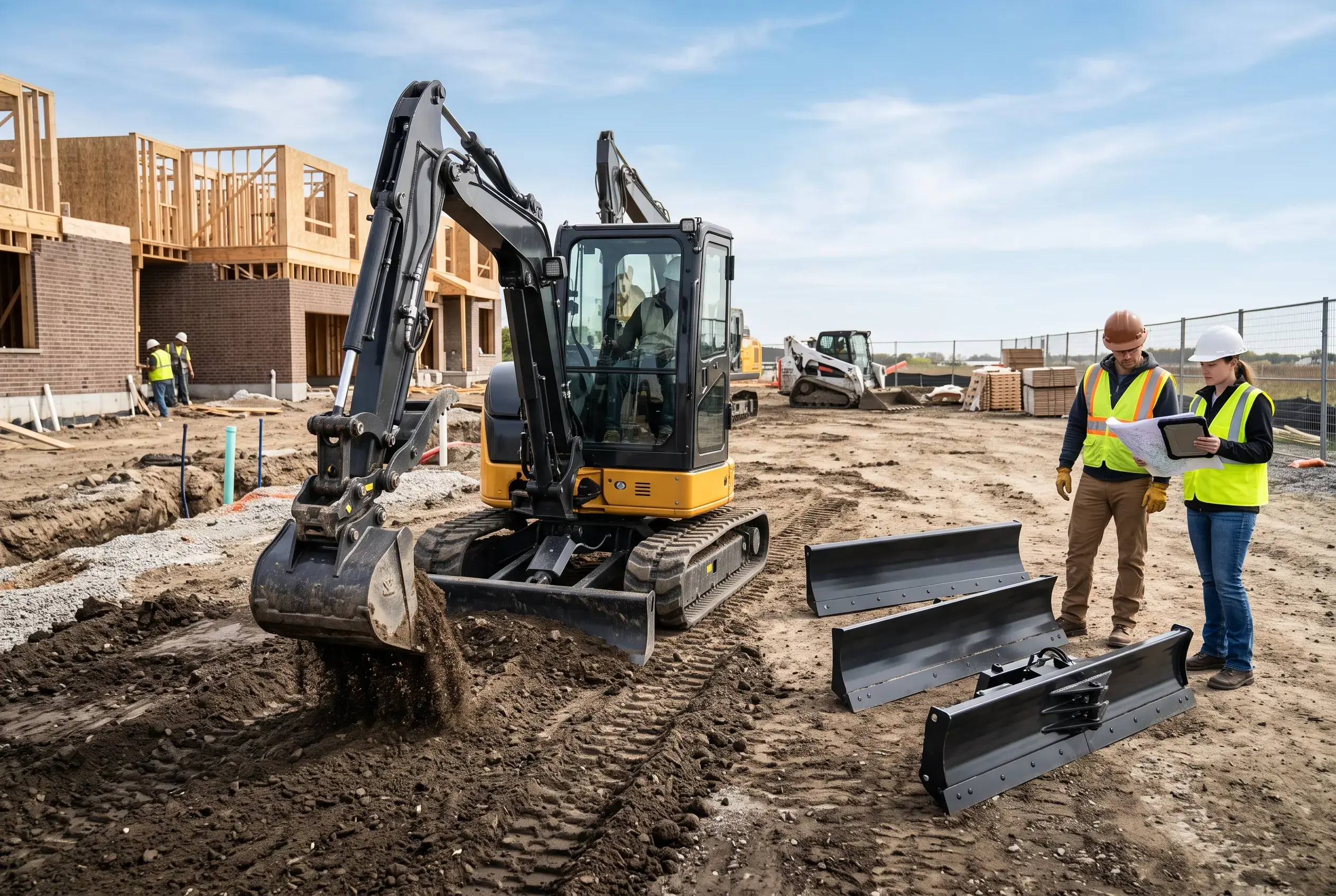
The mini excavator blade is a heavy-duty, hydraulically operated steel plate that's mounted on the machine's undercarriage. Its main purpose is to push material such as soil, gravel or construction debris. However, it can also be used as a stabilizer when digging on the sides or front. Operators can lift or lower the blades to raise the tracks off the ground. This anchors the excavator and keeps it from rocking or tipping during heavy lifting. This machine combines the capabilities of a standard bulldozer and an excavator.
Read Also After-Sales Service: Unlocking Heavy Machinery Longevity
If you focus solely on the bucket capacity or engine horsepower, you may miss out on opportunities to improve overall project efficiency. The front blade determines how fast you can finish a project because it does the cleanup after digging. The right blade can reduce the need for expensive secondary grading equipment, speed up trench backfilling, and prevent costly rework. It also absorbs significant operational stress and protects the main chassis, extending the life of the excavator's tracks.
The blades do not come in a single size. They vary according to the amount of movement that they provide. Standard straight blades move only up and down. This makes them ideal for simple stabilizing and backfilling. A four-way blade with an angle allows you to move the blade to either the left or the right side to windrow the material. A six-way blade or power-angle tilt can be used to achieve maximum precision when working on slopes or uneven terrain. It can lift, angle and tilt at the same time, giving you complete control of complex contours.
You must consider the soil and job-site conditions before selecting the appropriate tool. For hard, rocky terrain, you need a blade that is heavy-duty and has a bolted-on, reinforced cutting edge. This can be easily replaced when the edge wears out. To avoid driving over uneven material, you should also ensure that your blade width is equal to or slightly larger than the outer edge of the excavator's tracks. Consider your operator's skill level. While a six-way knife offers incredible versatility, a skilled operator is required to master the multi-axis control effectively.
The time you spend choosing the best mini excavator blade will pay off in terms of daily productivity and structural durability. Your compact excavator will perform at its best if you match your attachment to the grading or backfilling requirements. By treating your blade as the primary tool, rather than an afterthought on your job site, you can maximize your efficiency and make your machine a versatile asset.
Your excavator will need to be configured for those additional hydraulic functions. Angled blades require auxiliary lines and controls in the cab that manage the lateral movements.
A bolt-on edge protects the main blade structure. This allows you to replace or reverse the piece of edge once it becomes dull, rather than having to replace the entire blade assembly.
The center of gravity of the machine is shifted forward by lowering the blade into the ground. This anchors the tracks and reduces vibrations.
The blade should be wider than the track outside width to ensure that the excavator can travel smoothly on a leveled path, rather than bouncing up and down on unmanaged dirt or rocks.
The six-way power angle-tilt is perfect for fine landscaping. It can tilt and turn simultaneously. This makes it easy to create drainage slopes and smooth contours.


Leave a comment
Your email address will not be published. Required fields are marked *