




Discover the best strategies to manage heavy machinery on soft and muddy terrain. Learn how to choose tracked equipment, use mud mats and protect your fleet against undercarriage damages.
Construction crews often face the challenge of operating heavy equipment in unstable terrain. This can be frustrating and dangerous. Thick mud or waterlogged soil can reduce Traction and increase mechanical strain.
This can lead to multi-ton machines sinking in seconds. One trapped bulldozer or excavator can stop an entire project and drain your budget, while creating serious safety hazards. By understanding how to deal with these poor conditions, you can ensure that your project remains on track and your fleet is kept out of the workshop.
To navigate an unstable terrain successfully, you need to combine site preparation, machine choice, and skillful operating techniques.
Supervisors must first assess the soil depth on a site and identify underground water paths before moving any equipment. It is easy to damage the drivetrain of your machine by driving unthinkingly into a muddy area without a clear strategy for Traction. Read Also 10 Essential Maintenance Checks for Sinoboom Boom Lifts
How well your machine's undercarriage distributes its weight on unstable surfaces is determined by the style. In the mud, tracked machines perform better than wheeled ones because they have a wider footprint that distributes the weight of the machine over a greater area. You can increase Traction by lowering tire pressure within the manufacturer's guidelines if you have to use wheeled equipment.
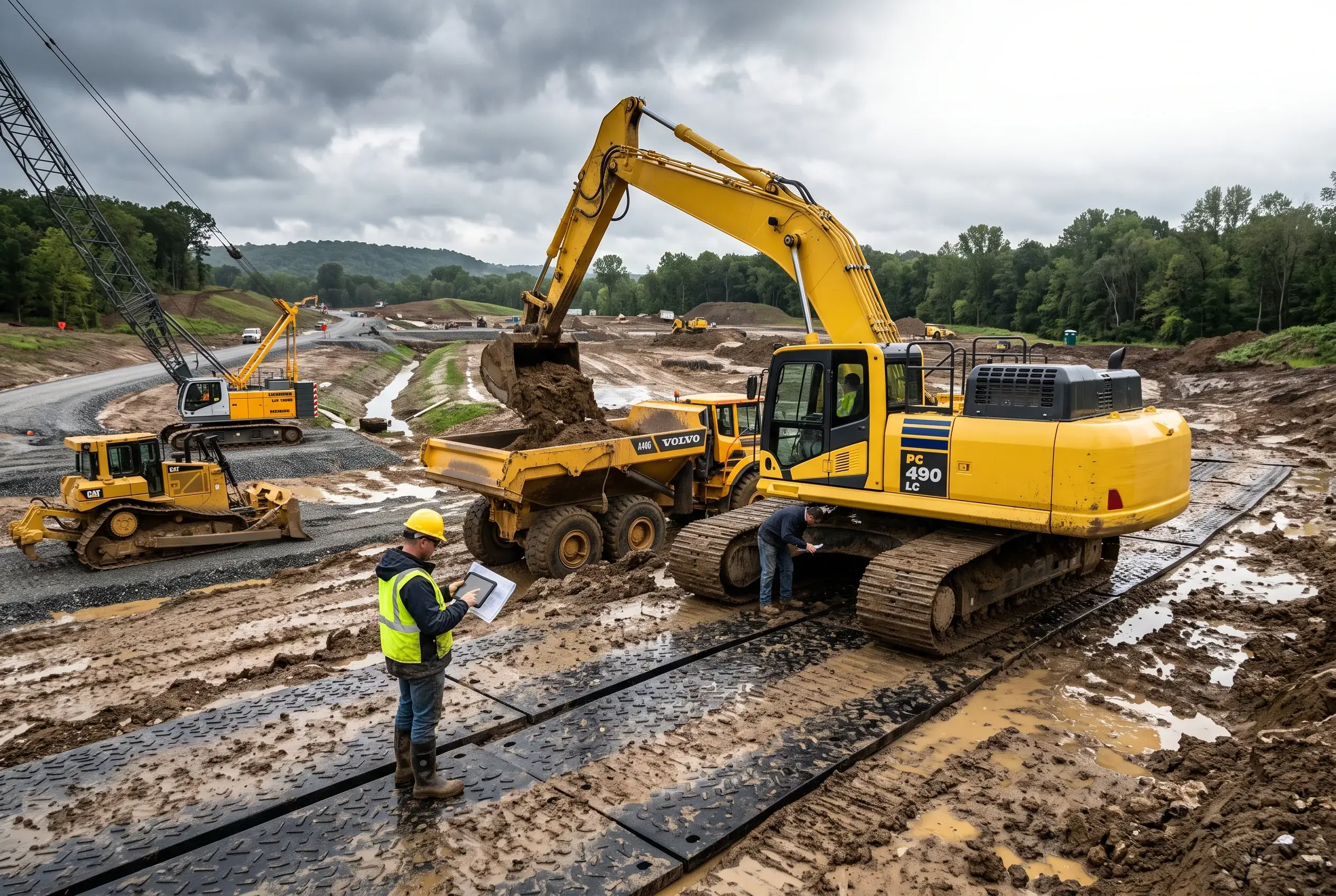
You must use external support when the earth is unable to support your equipment. The use of heavy-duty construction mats or thick timber mats can be a great way to spread out axle loads. These mats are placed over heavy-traffic roads to prevent deep rutting. They also stop the soil from turning into a swamp.
When driving heavy equipment over slick dirt, it is important to make deliberate, smooth movements. Operators must avoid abrupt accelerations, sharp turning, or hard brakes as these movements can cause the machine to dig itself a hole. The undercarriage can be greatly reduced when moving a tracked machine through muck.
When it hardens and dries, mud is extremely abrasive. It acts as sandpaper on expensive components of the undercarriage. Crews should clear mud packed on tracks, rollers and sprockets at the end of each shift using high-pressure power washing or specialized scraping instruments. The hydraulic motors are strained, and seals and bearings wear faster if thick mud is left on the machine overnight.
To conquer a muddy and wet job site, you need patience, the right preparation and the correct equipment adjustments. If you try to force underpowered equipment through mud and soft ground, it will result in broken parts and stuck machinery. You can maintain a clean job site by using mats and tracks, as well as maintaining strict cleaning practices.
The safest, most efficient option is to use tracked machinery such as low-ground pressure (LGP) bulldozers and track loaders. The wide rubber or steel tracks evenly distribute the weight, which prevents them from sinking as heavy wheeled machinery.
Use the hydraulic boom and bucket of the machine to reverse the tracks while pushing against solid ground gently. If the machine has completely bottomed, remove the mud from the body of the machine and tow it using a larger tractor attached to approved points.
If wet mud around hydraulic cylinder rods is allowed to dry, the hardened grit will tear the rubber seals when the cylinder retracts. It can lead to hydraulic fluid leaks, and dirty particles can contaminate internal oil systems.
If the machine begins to make ruts deeper than its tires or tracks, or the soil becomes too liquid to slide on, the operation should be stopped immediately. Continued work in such conditions can lead to the machine tipping over.
Timber mats tend to be thicker and heavier than plastic, so they are better suited to heavy equipment like large excavators and cranes. Plastic mats are easier to transport and lighter. They work well for small or medium-sized fleets.


Leave a comment
Your email address will not be published. Required fields are marked *