





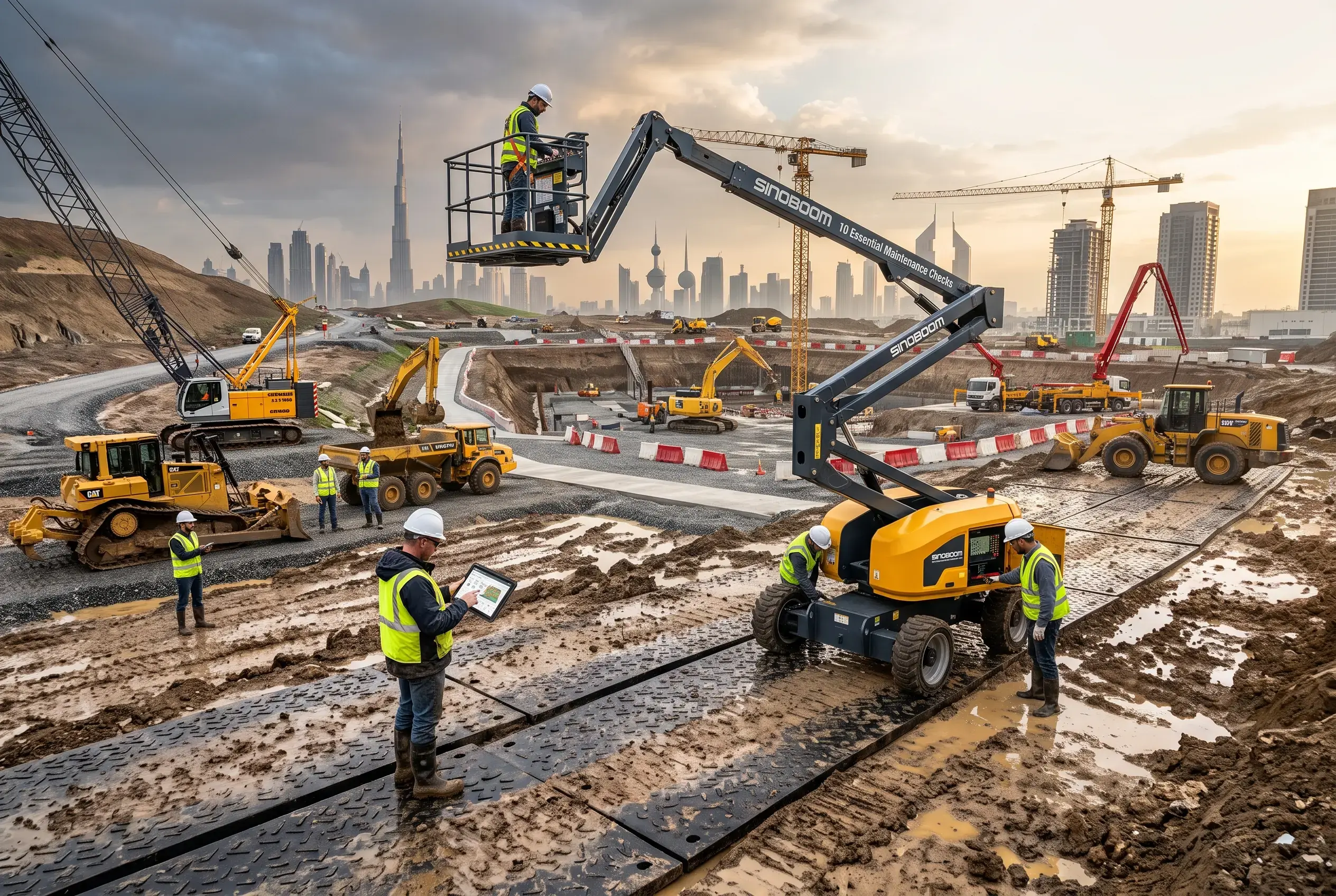
Keep your work site safe and avoid costly breakdowns. Learn 10 maintenance tips for Sinoboom Boom Lifts to increase the lifespan and uptime of your heavy machinery.
Sinoboom boom lifts are designed to tackle the toughest jobs. They offer incredible reach and rock-solid stability on demanding sites. Even the toughest heavy machinery requires regular maintenance to remain safe and effective.
Neglecting regular inspections can result in unexpected breakdowns, costly repairs, and unsafe site conditions. Implementing a daily and weekly routine inspection can help you maximize the uptime of your equipment and keep your crews safe. Read Also NEOM’s Massive Pivot to a 170km AI Super-Farm
These 10 maintenance checks are essential for every owner and manager of a Sinoboom boom lift.
The hydraulic system is vital to any boom lift. Before starting your shift, check the hydraulic fluid levels and add more if needed. Check the hoses and fittings to see if there are any signs of leaking, pooling or dripping fluid. Loss of hydraulic pressure may cause boom movements to be erratic or even system failure.
Battery performance is critical for electric and hybrid Sinoboom models. Check the terminals of the batteries for corrosion. Also, make sure that all cables are tightly connected. Check the level of distilled water in the wet-cell battery regularly. Low voltage or faulty wiring can cause error codes to appear and turn off machine functions.
The condition of your machine's tires will affect its stability, whether they are foam-filled or pneumatic. Look for any deep cuts, missing rubber chunks, or embedded debris, which could lead to a blowout. To prevent wheel separation, ensure that all wheel lug nut torques are set to the manufacturer’s specifications.
In the event that the primary power source fails. At the same time, the operator is in the elevated position, the emergency lowering valves and auxiliary power unit are essential for a safe descent. Before every shift, test these ground controls. Ensure that the emergency system is working properly to save lives in case of an unexpected power outage.
Sinoboom Lifts are equipped with advanced safety features, such as tilt alarms and overload sensors. These sensors should be tested to ensure they activate the correct alarms and shut-off functions. Never operate a lift boom if the safety switch has been bypassed or is malfunctioning.
Examine the chassis, the outriggers and the boom structure. Look for signs of metal wear, such as stress cracks or chips in the paint, which indicate bending. You should pay special attention to pivot pins and weld joints that are critical, since they bear the most weight.
Heavy machinery wears out quickly when friction is constant. Consult your Sinoboom Manual to find all grease points. This includes the boom section, wear pad, and turntable bearings. The correct grade of grease is essential to keep movements smooth and avoid premature wear on expensive metal parts.
The platform is your primary zone of protection. The entry gate should latch and close automatically. Check the guardrails to see if there are any structural damages or dents that could compromise the strength of the rails. Also, make sure that the anchor points for the safety harness and lanyards are intact.
For diesel or dual-fuel Sinoboom lifts, regular engine maintenance is vital. Check the fuel, engine oil and coolant levels every day. Check under the engine compartment to see if there are any leaks of coolant or oil. Replace dirty fuel and air filters, and you will maintain optimal performance.
Step onto the platform to test each joystick, toggle, and pedal. The boom should rotate, lift, extend and retract smoothly, without any strange sounds or jerky movements. If you observe any delays in the response, it is best to take your machine down for professional troubleshooting.
Preventive maintenance is a smart investment for your fleet ofheavymachinery . Following these 10 critical checks will protect your operators and extend the lifespan of your Sinoboom Boom Lifts. It will also protect your bottom line from costly project delays. Remember that spending a few moments inspecting your lift can help prevent an accident.
Operators should perform a thorough visual and functional check before each work shift. Standard industry regulations also require an annual comprehensive inspection by a heavymachinery technician certified.
Stop all movement immediately if an alarm for tilt or overload is triggered while you're elevated. Retract and lower the boom using the safest possible path, then troubleshoot any weight or slope issues before continuing.
You should only use the lubricant grade and type recommended in the Sinoboom manual. The wrong grease may not reduce friction effectively, causing pins and bearings to wear faster.
The most common cause of a non-responsive emergency lowering is a depleted auxiliary battery, a jammed hydraulic valve or a damaged electrical connection. A qualified mechanic must repair this system before the lift can be used again.
Wear pads can be identified by jerky movements or stuttering when extending or retraction the boom. They may also make loud squealing sounds or leave visible marks on the inner boom sections.


Leave a comment
Your email address will not be published. Required fields are marked *