





Discovering how to maintain radiators in heavy machinery, and these expert tips will help you avoid catastrophic engine failures by maintaining radiators on heavy machinery. Learn how to clean cores, check fluids and prevent internal scale.
The heavy machinery engines produce a lot of heat when they are under high loads. Radiator-centered cooling systems are the only thing that stands between a smooth engine operation and a catastrophic meltdown. Neglecting your cooling system can cause severe overheating and cracked engine blocks. It can also lead to expensive repairs. You can keep your equipment cool, reliable, and efficient by following simple preventive maintenance procedures.
The most effective way to avoid unplanned delays is by implementing a routine for the cooling system. The primary causes of cooling system failures on construction equipment are debris, scale accumulation, and low fluid levels. To ensure that heat can exit the engine block efficiently, a proper maintenance plan includes external cleaning and regular internal fluid checking.Read Managing Heavy Machinery in Soft and Muddy Ground
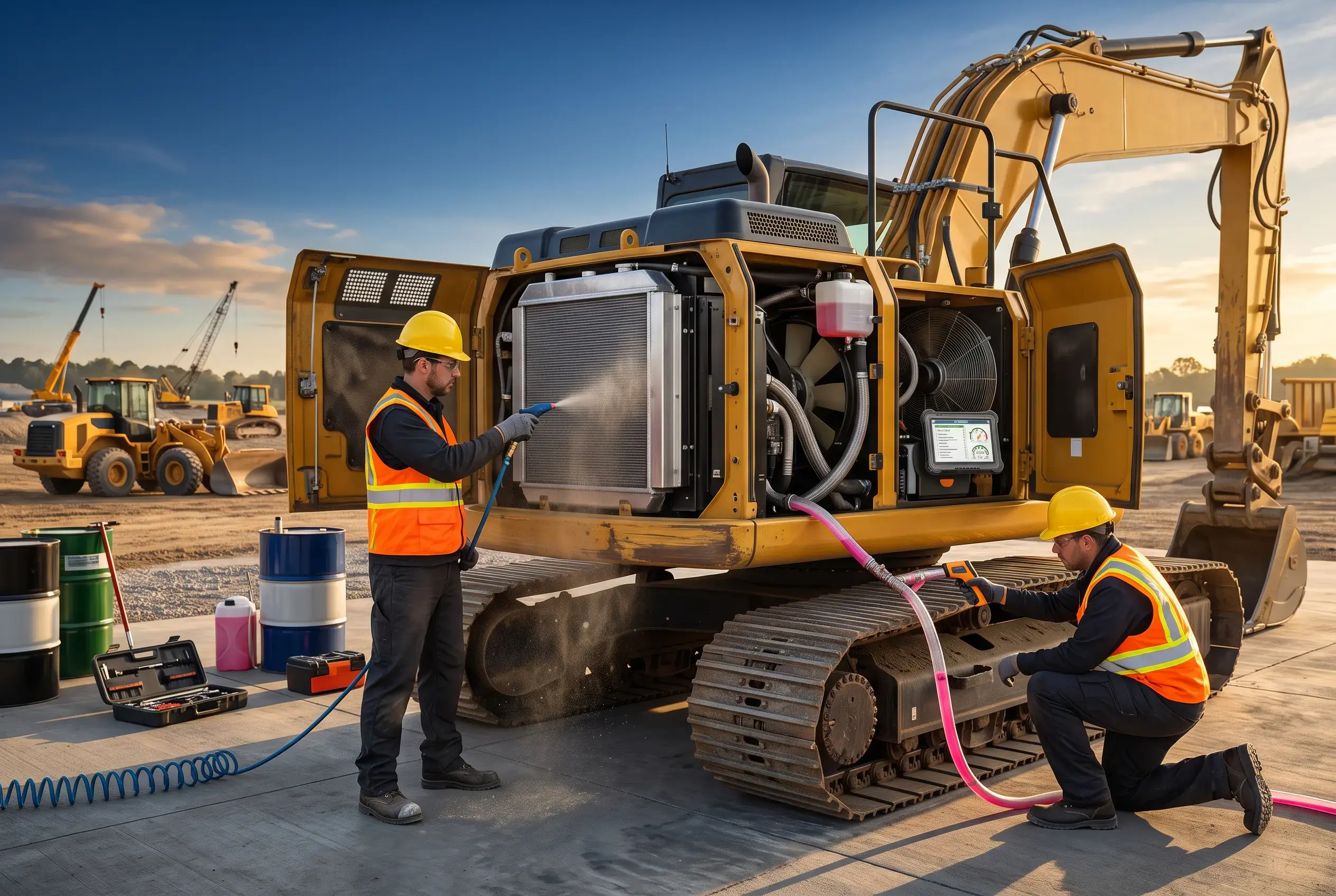
Construction sites are dusty and quickly cover radiator fins in dirt, chaff and greasy debris. This external buildup stops airflow and traps intense heat in the cooling core. At the end of every shift, operators should use compressed water or a low-pressure water washer to blow the radiator fins out from the inside. Avoid using high-pressure water washers close to the radiator fins, which can damage them and prevent airflow.
Overheating can occur quickly if you run your engine with a low level of coolant or if it has degraded. Before starting your machine each morning, check the fluid level of the expansion tank and look for signs such as oil contamination or discoloration. Use a 50/50 mixture of distilled water with the Extended Life Coolant specified by the manufacturer to prevent freezing and provide proper boil-over protection.
Rubber hoses, drive belts, and other components are essential to the operation of a cooling system. Check all radiator hoses every day for bulging, softening or cracking. Hardened brittle areas can also indicate an imminent failure. Make sure the drive belt for the water pump is correctly tensioned and that it's free from dry rot. A slipping belt will reduce fluid circulation and cause immediate heat spikes.
When you use tap water in a cooling system for heavy machinery instead of distilled water, it introduces minerals that can cause scale. This scale acts like an insulation blanket in the radiator tubes and stops the coolant from transferring heat to the air. The addition of coolant additives and flushing the cooling system every year prevents internal corrosion and protects water pump seals.
When managing a fleet of valuable heavy machinery, radiator maintenance is a must. Spending a few moments every day to clean out the dust, check fluid levels and inspect rubber hoses could save you thousands in engine overhauls. Your cooling system will run more efficiently if you keep it clean and chemically balanced.
The tap water can contain minerals such as calcium and magnesium, which cause hard scale to form inside radiator tubes. This scale can block heat transfer and eventually clog up the small cooling passages. The engine will overheat when under normal load.
Most heavy machinery manufacturers recommend that you flush your system and replace the fluid every 2 years or every 2000 operating hours. Refer to the manual of your equipment, as some coolants have a longer life span.
If the outside of your radiator is clean, it could be due to an internal blockage caused by scale buildup. Other causes include a thermostat that will not open, a water pump belt that slips, or a radiator cap that has broken.
You should not mix coolant colors or types in heavy machinery. The fluid can gel or thicken if you mix different chemical formulas. This will block radiator passages and also destroy the additives.
You should never open the radiator cap when your engine is running or hot. Opening the radiator cap while the cooling system is under high pressure can result in severe burns on your skin.


Leave a comment
Your email address will not be published. Required fields are marked *