





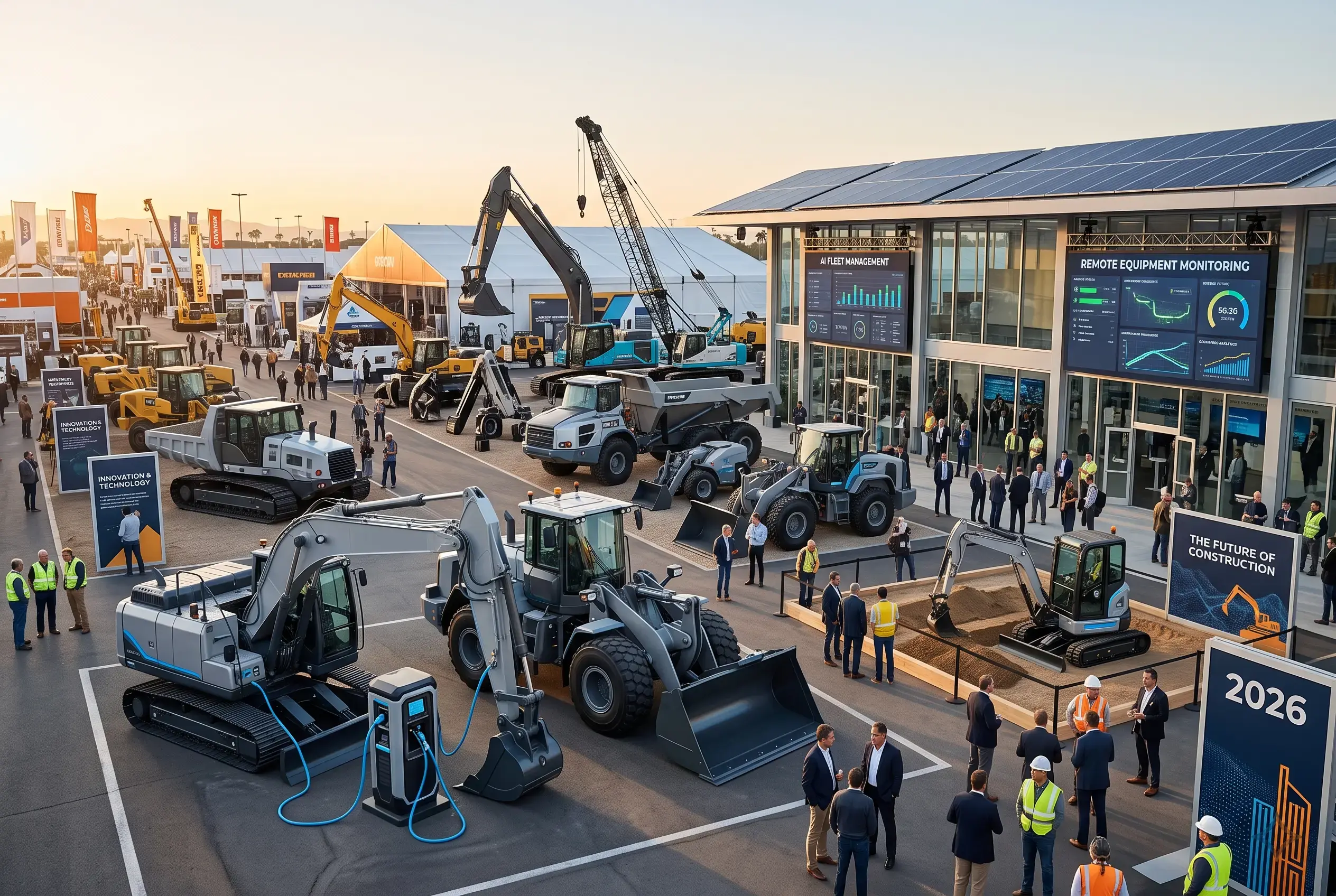
Explore the Future of heavy machines with our comprehensive CONEXPO 2026 overview. Discover the latest trends for autonomous equipment, electric technology, and AI fleet technology.
Global construction is changing at an alarming pace. This is due to the urgent need for greater efficiency, cleaner energy, and smarter work sites. To navigate this rapidly evolving world, fleet managers and contractors must embrace the Future and look beyond traditional methods. The CONEXPO/CON/AGG event in Las Vegas brought together the heavy machinery industry to showcase the Future of construction.
The event proved that tomorrow's job sites will rely on a perfect marriage of heavy iron, advanced automated software, and data-driven management tools to optimize everyday workflow. This event showed that the Future of job sites relies on a marriage between heavy iron, automated software and data-driven tools for management.
The incredible display of self-operating machinery that tackled complex tasks without human drivers in the cab was one of the most impressive displays at the show. The use of advanced artificial intelligence and radar sensing technology allowed large excavators and compact wheel loaders to dig and haul dirt with pinpoint accuracy. Read Maintaining Radiators in Heavy Machinery: Best Practices
These autonomous solutions were designed to combat the labor shortage in dangerous environments such as deep mines and unstable trench lines. The real-time reaction of a multiton excavator to its surroundings proved that the operatorless technology was no longer a far-off dream.
This year, the push towards carbon neutrality was at the forefront of every exhibition hall. The manufacturers proudly displayed electric mini excavators with zero emissions, battery-powered skid-steers, and hybrid heavy-duty cranes designed for dense urban areas.
These machines reduce noise pollution on the job site while maintaining the same hydraulic breakout force of their diesel counterparts. The show also featured major advances in hydrogen fuel cell prototypes and alternative biomass, which gave fleet owners a roadmap for reducing their environmental footprint.
Modern iron is a product of the digital revolution, and standard factory machines are now mobile data hubs. Artificial intelligence-powered telematics platforms have captured the attention of many by providing predictive maintenance alerts which detect component failures before they cause a sudden malfunction.
Fleet managers can monitor fuel consumption, payloads and machine efficiency in real time across multiple sites using a dashboard. This level of connectivity reduces expensive machine idle times and allows for the most efficient operation costs.
The event was centered on the human factor, which drives the progress of the trades. Specialized educational tracks, interactive workshops and high-energy sessions addressed important challenges such as workforce retention and development of leadership. The industry demonstrated its commitment to building a supportive, sustainable foundation for workers by addressing mental illness awareness, business resilience, and technological innovation.
It is clear from the incredible innovations on display that construction has entered a highly-connected, hyper-efficient era. The heavy machinery market is undergoing rapid changes. From self-driving machines that can communicate with cloud networks instantly to zero-emission electric drives, this market is transforming rapidly.
Businesses that wish to stay profitable and competitive must embrace these technological advances. Adopting the innovative strategies presented at the event will help you future-proof your fleet and protect your bottom line, as well as lead the way in tomorrow's work sites.
The Las Vegas Convention Center, Nevada, hosted the event from March 3, 2026, to March 7, 2020.
The focus was on the use of autonomous and semi-autonomous machines, artificial intelligence to predict fleet maintenance, advanced connectivity through telematics, and hybrid or electric power systems that reduce carbon emissions at work sites.
Electric compact and medium-sized machines can match the hydraulic power and torque that traditional diesel models offer. These models are perfect for night or indoor construction because they operate almost silently and emit no emissions.
Artificial intelligence uses massive amounts of data in real time from machine sensors. It can predict mechanical failures, optimize fuel usage, track operator performance, and schedule maintenance automatically to avoid costly delays.
This massive international trade show for construction takes place every three years.


Leave a comment
Your email address will not be published. Required fields are marked *