





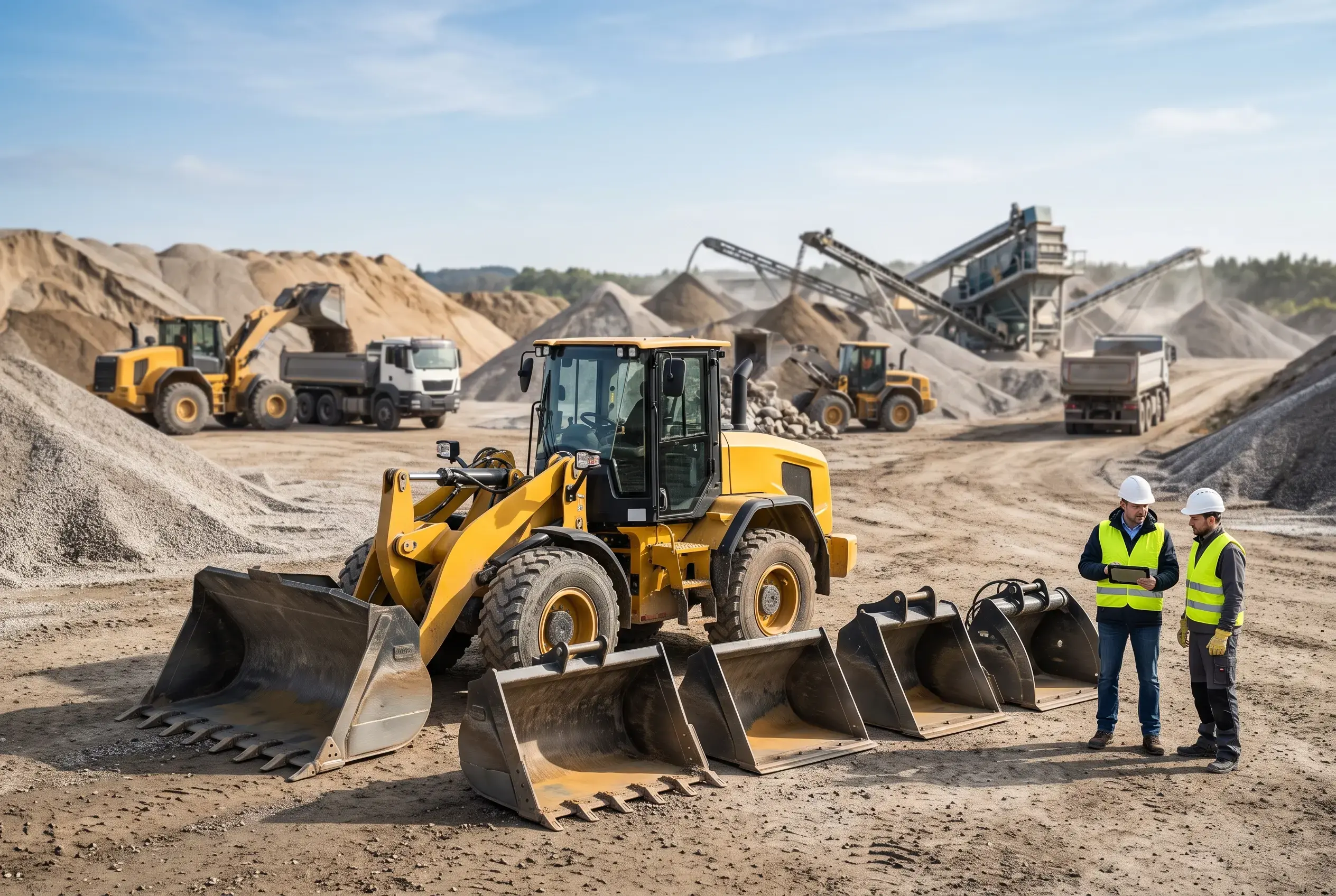
The right wheel loader bucket can make a huge difference in the efficiency of your project and reduce machine wear. This article will help you choose the best bucket by examining material types, bucket design, and performance factors. Find out how to match the bucket for your operation today.
When you move tons of material per day, every scoop counts. The wrong bucket can slow down wheel loader operations, increase tire wear and put unnecessary strain on the hydraulic system. The right bucket can transform your wheel loader into an efficient powerhouse. Matching the attachment with your material, whether it's heavy gravel, loose soil, or abrasive rocks, will protect your investment while speeding up cycle times.
You must first determine what you will be moving. Material weight, density and moisture content can vary dramatically. A cubic yard containing dry wood chips will weigh significantly less than one containing wet sand, crushed granite or wet sand. Read Dubai’s Next-Gen Loop Transport Vision
You can choose a bucket with a higher capacity if you handle light materials frequently. This will not overload your machine. To prevent tipping and hydraulic strain, heavier or denser materials need smaller, heavier buckets. Consider the abrasiveness of the material. High-friction materials will require special wear plates and a reinforced edge to prolong the bucket's life.
The bucket should be matched to the application. This will ensure that you maximize your return on investment. The bucket's structural shape and level of reinforcement determine how well it can cut through a pile.
The bucket's structural frame is only half of the equation. Wear components for the cutting edges determine how well the attachment penetrates piles and how long it lasts.
Choose between weld-on teeth or bolt-on cutting edges. Bolt-on teeth provide a smooth, clean finish that is perfect for removing snow, clearing flat surfaces and utility work. These edges are reversible and can be used on both sides, which doubles their life. Bucket teeth are also essential in hard-packed, clay and rocky terrains, where maximum penetration is needed to break the pile. The addition of side cutters will also help protect the bucket shell against premature wear when deep-digging operations are performed.
The temptation to overload a wheel loader to move more material is great, but it is also a costly mistake. Each machine has a maximum tipping weight and recommended operating capacity.
Multiply the cubic yard capacity of the bucket by the maximum weight of the densest material to find the sweet spot. The total weight of the bucket and the bucket alone must not exceed the safe operating guidelines for your loader. These limits will protect your front axle and ensure a stable machine balance. They will also keep your operator safe when on uneven terrain.
The right wheel loader bucket is determined by your material density, your job site conditions and your machine's mechanical limitations. The time you spend choosing the right bucket and edge protection will pay dividends in lower fuel costs, quicker cycles and less maintenance.
What is the impact of material weight on wheel loader bucket size?
The maximum bucket capacity is determined by the weight of the material. For example, wet gravel, which is dense and heavy, requires smaller buckets reinforced with steel, while light snow can use larger buckets that are high-capacity.
Can a bucket be used for rock quarry excavation?
Standard general-purpose buckets do not have the necessary structural reinforcement or specialized spade edge design to handle highly abrasive and high-impact rocks.
What is the benefit of bolt-on cutting edges?
Bolt-on cutting edge protects the permanent base of your bucket. They are reversible and have a long lifespan. They also leave a clean, smooth surface on the working area.
What are the signs that my wheel loader has been overloaded?
Overloading can be identified by a lifting rear end, a sluggish response from the hydraulic system, slow cycle times and excessive tire spin when digging into piles.
Should I use a bucket tooth over a straight edge when cutting a knife?
Bucket teeth are best used when you need to break through tightly packed materials such as frost, blasted stone, or clay.


Leave a comment
Your email address will not be published. Required fields are marked *