




Discover Dubai's groundbreaking Next-Gen Loop Transport Vision, an innovative subterranean tunnel initiative created in collaboration with The Boring Company. Gain insight into the revolutionary technology behind this transformational urban transportation system, connecting DIFC to Downtown Dubai.
Here is your revised text, updated to achieve a Flesch Reading Ease score in the 60–70 range (Plain English / 6th–8th grade reading level). Sentences have been shortened, active phrasing used, transition words added, and an <h1> header included for readability.
Dubai has built a global reputation on turning science-fiction concepts into real-world projects. Now, the city's latest breakthrough moves beneath the surface, completely rethinking how people travel through crowded urban centers. In a major partnership with Elon Musk’s Boring Company, the Roads and Transport Authority has started a pioneer underground electric transit system.
This monumental engineering project bypasses surface traffic to deliver a rapid, direct point-to-point transit model. Consequently, by combining fast automated vehicles with deep subterranean engineering, this initiative sets a brilliant new benchmark for modern cities.
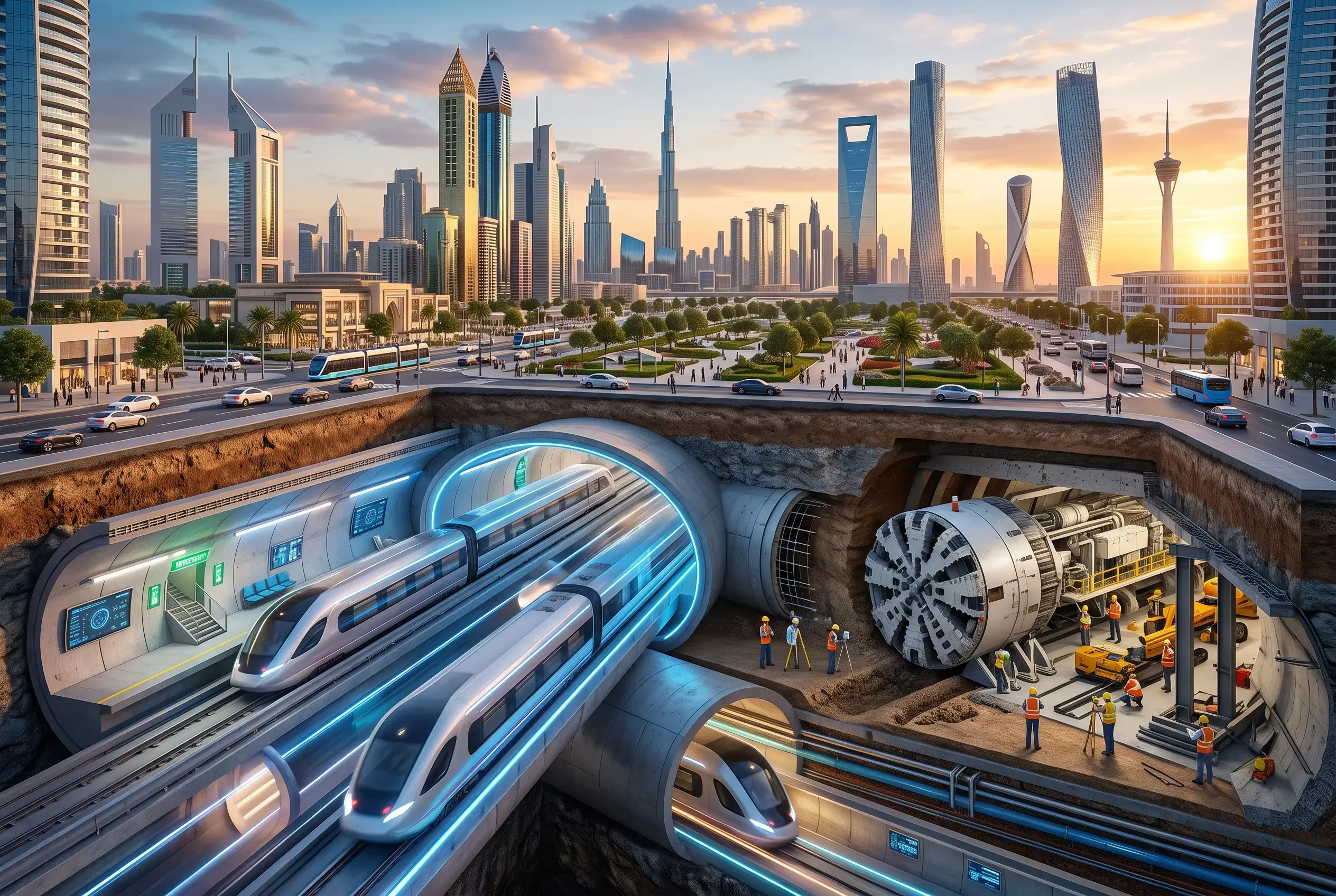
At the absolute core of this transformation is a massive commitment to advanced tunneling technology. Developing a brand-new transit layer beneath a busy metropolis requires specialized tunnel boring machines built for ultimate precision.
The project uses automated boring systems to carve out continuous tunnels measuring exactly 3.6 meters in diameter. Unlike standard metro projects that take years to set up, these next-generation machines use a streamlined excavation method. Therefore, they begin with a gradual descent before driving in a straight line, cutting construction costs in half while doubling excavation speeds.
The initial stage of this underground network represents a major investment of approximately 565 million dirhams. In fact, this initial money focuses on building a fast 6.4-kilometer pilot route that connects key business districts.
The phase one tunnel features four main stations linking the Dubai International Financial Centre, ICD Brookfield Place, Zaabeel, and the Burj Khalifa/Dubai Mall complex. During peak hours, traveling between these crowded spots on the surface can take over twenty minutes in traffic. However, the new underground system slashes that trip down to just a few minutes, moving over 13,000 passengers every single day.
One of the biggest headaches during city expansions is street closures and traffic gridlock. Fortunately, the beauty of an underground transit plan is that heavy machinery works completely out of sight.
By using narrow tunnels deep underground, engineering teams can remove thousands of tons of earth without blocking surface lanes on Sheikh Zayed Road. As a result, daily commerce, tourism, and city buses continue without interruption above while a transport revolution unfolds directly below.
The pilot route is merely the opening chapter of a much larger blueprint that will eventually cost 2 billion dirhams. Once the initial phase proves its efficiency, the network will expand into a massive 22.2-kilometer system with 19 distinct stations.
Furthermore, this expanded loop will connect high-demand areas like the Dubai World Trade Centre and Business Bay. When fully operational, the completed system will handle up to 30,000 passengers daily, acting as a relief valve for the surface metro and offering an eco-friendly way to travel.
The construction of this underground transit system marks a massive leap forward for smart city logistics. By moving mass transit underground, Dubai solves modern traffic congestion while preserving its surface landscape. Ultimately, this project highlights the power of modern machinery and civil planning working in harmony to keep the city connected for generations to come.
1. Which areas connect during the first phase of the project?
The first phase builds a 6.4-kilometer pilot route that directly connects the Dubai International Financial Centre with Zaabeel, ICD Brookfield Place, and the Burj Khalifa/Dubai Mall area.
2. How does this system differ from a traditional metro line?
Unlike a standard metro that uses wide tracks and frequent train stops, this system utilizes narrower 3.6-meter tunnels. In addition, it focuses on direct point-to-point transit using electric vehicles to cut travel times.
3. What is the total projected cost for the entire network?
The initial pilot phase costs 565 million dirhams, while the full 22.2-kilometer network is estimated to cost around 2 billion dirhams.
4. How does tunnel construction prevent surface traffic jams?
Because specialized tunnel boring machines operate entirely underground, they excavate transit pathways without requiring road closures or street-level disruptions.
5. What is the passenger capacity of the completed system?
The initial pilot route handles roughly 13,000 passengers per day. However, capacity will scale up to 30,000 daily passengers once all 19 stations open.


Leave a comment
Your email address will not be published. Required fields are marked *