





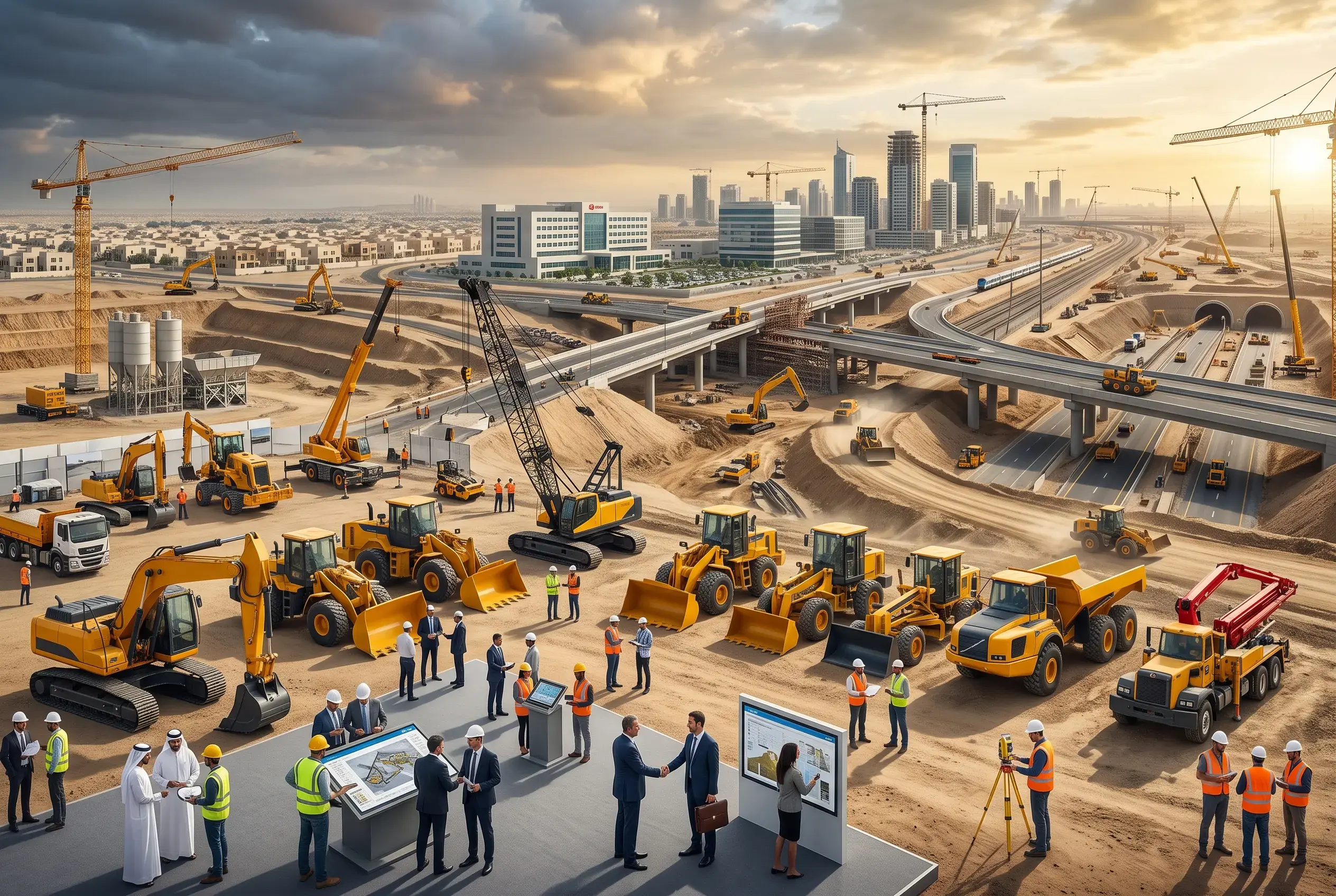
Discover how BUILDEX is bringing together global partnerships with advanced heavy machinery in order to rebuild Syria's infrastructure.
The regional building landscape is undergoing a major transformation. The 24th International Construction and Building Exhibition (BUILDEX 2026) recently took center stage on the Damascus Fairground. Bringing together over 710 companies and 1,400 brands from 51 countries, this major event has become a huge hub for global cooperation. In fact, it acts as a gold rush for suppliers of heavy lifting equipment needed to rebuild cities and revive local networks.
The sheer size of this event marks a turning point for regional development. Spanning massive exhibition halls, the show drew thousands of developers, engineers, and city leaders focused on one goal: rebuilding key infrastructure.
As regional development programs expand across northern, coastal, and southern areas, the demand for heavy earthmovers and building supplies has surged. Therefore, the exhibition serves as a live meeting place where local builders team up with top global suppliers. Consequently, future civil projects can move forward with modern precision and fast speed.
International business cooperation is the heart of this trade show. After all, rapid renewal of critical roads and utilities cannot happen in isolation. As a result, global engineering firms are partnering with local contractors from Asia, Europe, and neighboring Arab nations to sign key technical deals.
These global partnerships help regional contractors overcome equipment shortages through flexible financing and green purchasing rules. Therefore, local firms can now tackle major highway restorations, housing builds, water treatment upgrades, and multi-million dollar road repairs.
Heavy machinery must run at top speed without breakdowns during mass site clearing. At the exhibition, leading global brands showed off high-capacity wheel loaders and heavy cranes built for demolition and site prep.
In addition, contractors showed huge interest in mobile concrete batching and crushing plants. These heavy machines allow work crews to recycle old concrete right on site. Consequently, crews can process debris into base rock for new roads and foundations, cutting material costs and speeding up project timelines.
Deploying massive machine fleets across expanding build sites brings unique shipping challenges. To solve this, logistics teams are working closely with regional customs officers to create secure, fast transit routes through major land borders and ports.
At the same time, equipment dealers focus heavily on mobile field training and local parts centers. Thus, job sites get immediate access to hydraulic lines, engine filters, and structural parts, keeping machines working around the clock.
The main mission highlighted at the expo is the shift toward durable, eco-friendly building systems. Rather than using outdated methods, modern rebuilding efforts rely on lightweight pre-made wall panels, modular concrete units, and energy-saving insulation.
However, this shift requires specialized lifting gear, such as precision tower cranes and high-capacity telehandlers, to assemble heavy pre-made parts safely. As a result, developers are matching smart lifting tools with green building ideas to ensure new cities are built faster and stronger for future generations.
The momentum built at BUILDEX 2026 proves that heavy machinery, global partnerships, and strong business ties are essential for regional recovery. Ultimately, the trade show created a reliable supply chain connecting global equipment makers with local contractors, ensuring a steady flow of high-performance machinery.
1. What makes BUILDEX a crucial event for heavy equipment makers?
The show acts as the main hub for securing infrastructure contracts. In fact, it connects top machinery brands directly with regional governments and developers who need cranes, loaders, and crushing gear.
2. What types of heavy machinery are most in demand at the show?
Demolition gear is a top priority. Specifically, contractors are seeking large crawler excavators, heavy wheel loaders, and mobile crushing plants to recycle concrete rubble.
3. How do international firms move heavy equipment across borders smoothly?
Exhibitors and transport teams use dedicated shipping corridors. In addition, they work closely with local customs authorities and set up regional spare parts hubs to prevent delays.
4. What role does sustainability play in current infrastructure projects?
The industry is moving toward green materials like pre-made wall panels and modular concrete. Consequently, contractors rely on specialized telehandlers and cranes to assemble these parts with minimal site waste.
5. How do these global partnerships protect local contractors from machine downtime?
Strategic alliances include long-term service deals, factory operator training, and local parts supply chains. Therefore, heavy equipment fleets receive fast repair support whenever needed.


Leave a comment
Your email address will not be published. Required fields are marked *