




Learn how a strong logistical partnership mobilized an enormous fleet of heavy equipment to restore Sharjah within three days after unprecedented flooding caused by a storm. Learn how the community was able to move forward with the help of dewatering and strategic emergency coordination.
The infrastructure of Sharjah was put to the test by the extreme rainfall caused by the Munkhafad al Azm storm. Sharjah did the almost impossible, restoring the city's streets within three days of the end of the rain. A weather crisis on this scale would have brought a major metropolis to a standstill.
Sharjah Municipality, in partnership with Al Marwan Machinery, executed a masterclass on logistics that resulted in this rapid recovery. Combining rapid municipal direction and a massive fleet of heavy machinery, the combined forces transformed a potentially month-long catastrophe into an inspirational story of resilience.
Emergency response teams were aware that they had to act quickly after the storm passed in order to protect commercial and residential zones. The partnership immediately activated a high-readiness program that sent a fleet of heavy construction equipment into the flood zone. Also Yellow Steel vs. Green Tech: Why Used Equipment Wins
The coordinated team map, instead of waiting for individual requests to be made, targeted the worst-affected choke points in Sharjah at the same time. The massive industrial power injection was vital because the normal municipal vehicles were not able to cope with the volume of stormwater on major highways.
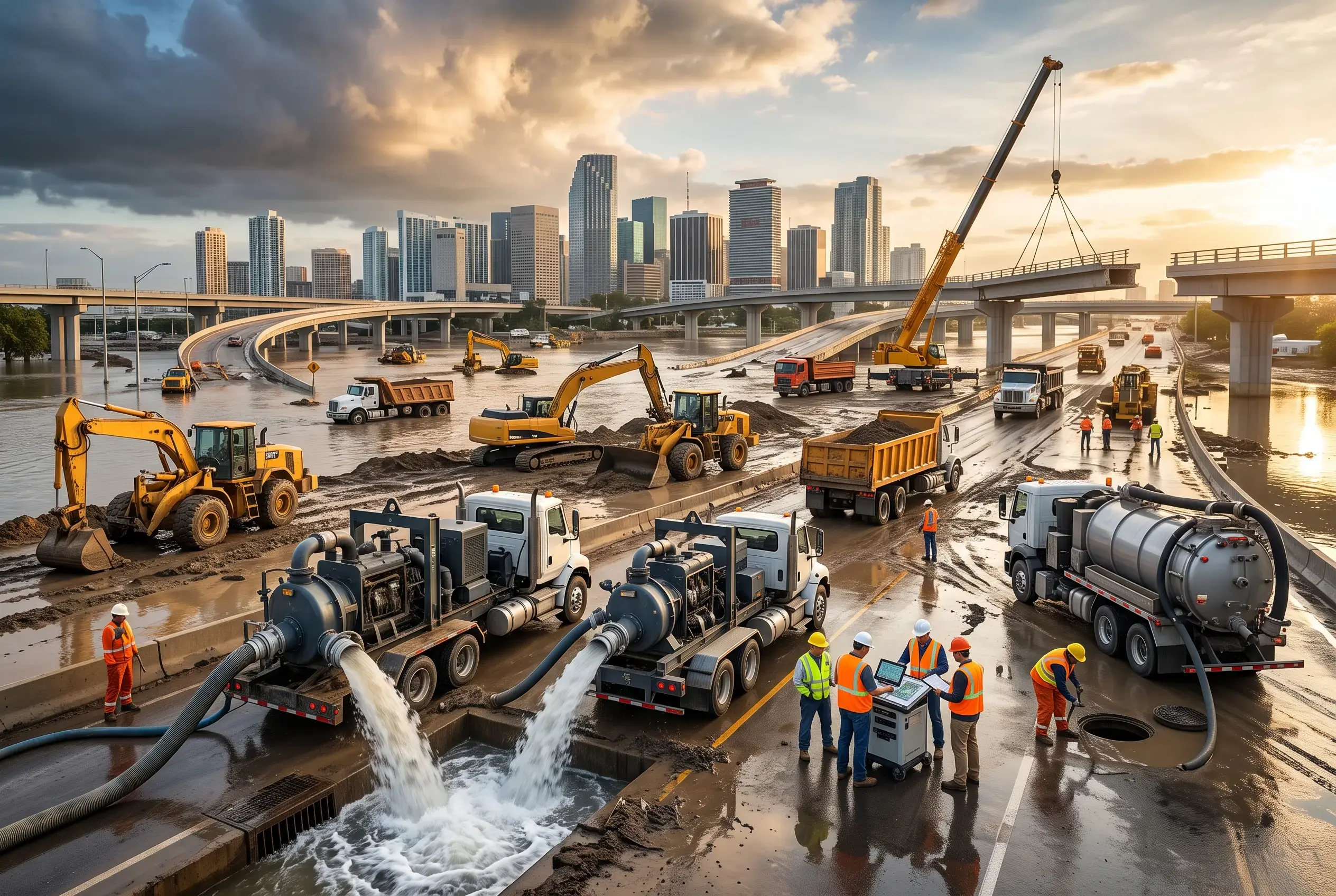
To ensure the safety of emergency services, medical personnel, and commuters, it was essential to clear the main road network. Eleven massive water tanks and high-capacity pumps were used to remove water from the asphalt continually.
These industrial-grade pumps and tankers were operating at such a large scale that millions of gallons per hour of standing water were successfully diverted to drainage channels. This aggressive strategy enabled primary transit corridors in the emirate to open much faster than expected, preventing a prolonged economic and logistics paralysis.
The popular Al Majaz Waterfront was the site of one of the most impressive logistics feats during the 72-hour operation. To pump out the huge volumes of water from the neighborhood, a massive heavy-duty drainage pipe had to be run directly over busy main roads.
The engineering team built three temporary, highly durable vehicle ramps over the pipes to prevent the total closure of the road, which would have trapped residents. These ramps were designed to act as bridges that allowed cars to pass over the dewatering pipes without causing any traffic delays.
The support team behind a machine is just as important as the machine itself, especially under extreme environmental conditions. The heavy machinery ran for three days without stopping. Human operators and heavy truckers rotated in strict double shifts so that they could stay alert and sharp.
In the flood zones, dedicated mechanical support teams provided immediate fluid checks and maintenance in real time. The proactive approach meant that minor mechanical issues or clogged intake valves were repaired immediately on-site, reducing the risk of expensive equipment downtime.
Sharjah's remarkable recovery is a historical example of what can happen when visionary planning and industrial strength are combined. The city has proven that its logistical strength can overcome severe weather disruptions within record time thanks to the hard work of Sharjah Municipality and the heavy-duty Al Marwan fleet. This 72-hour success set a new standard in modern city crisis management by utilizing heavy machinery and maintaining on-site engineers.
Sharjah Municipality was the architect of the whole emergency operation. The strategic planning, weather forecasts and direct command of the Sharjah Municipality allowed heavy machinery to be deployed to flood-prone areas with maximum speed.
To effectively control large-scale flooding, a combination of dewatering pumps with high capacity, heavy water tanks, transport trucks and wheel loaders is needed to remove debris and place heavy drainage infrastructure.
The team designed temporary ramps to allow the city to continue moving in areas with high traffic, such as the Al Majaz Waterfront. Residents could drive safely over the lines while drainage continued.
The fleet of machinery was kept in top condition through strict rotations, and technical crews on site. The mechanics were stationed in the field, allowing them to perform minor repairs and filter changes without having to remove machines from their jobs.
A public-private collaboration combines the local expertise and strategic authority of government with the vast equipment inventory and immediate response of a heavy machinery supplier. This creates a more effective and faster response than could be achieved by either party alone.


Leave a comment
Your email address will not be published. Required fields are marked *