





In just three days after unprecedented storm flooding, Sharjah's infrastructure was restored thanks to a powerful logistical partnership.
When the Munkhafad Al Azm storm arrived with extreme rainfall, the storm put the infrastructure of Sharjah to the ultimate test. While other major cities would likely take weeks to restore normalcy, the nearly impossible was accomplished by Sharjah when they restored the roads within three days after the rain completely stopped.
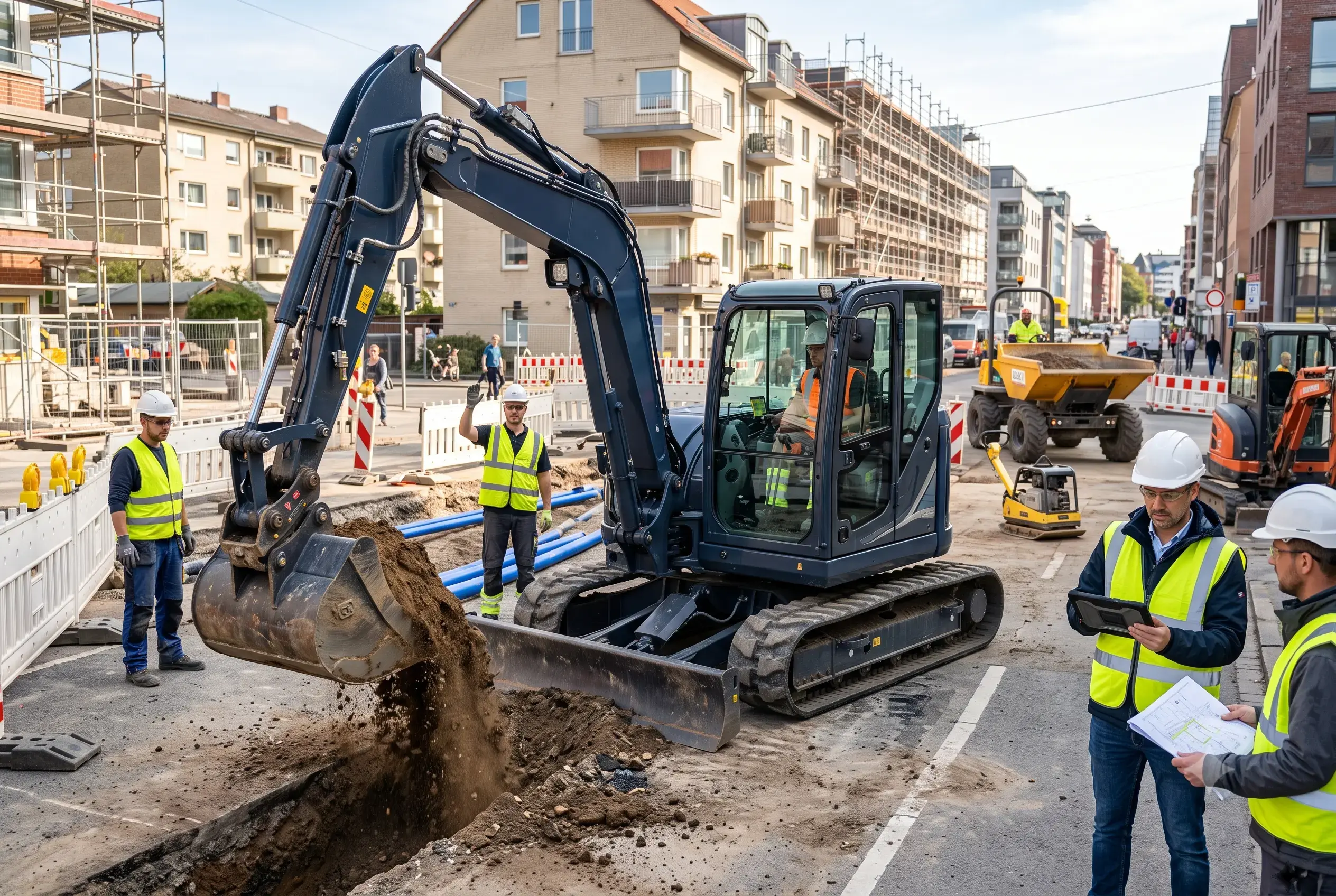
This recovery was not luck, but rather the perfect execution of logistics by the Sharjah Municipality in collaboration with Al Marwan Machinery. The collaboration of the Municipality with a significant amount of heavy construction equipment created a disaster of the potential duration of a month into a perfect example of resilience.
The removal of the storm only marked the beginning of the work for the construction machinery, heavy or otherwise. The emergency response teams were under the greatest time pressure to protect the remaining neighborhoods and commercial districts. For achieving a maximum effect in the shortest time, the partnership activated at once and implemented a high-preparedness plan by placing a very large quantity of specialized heavy construction machinery into the flood zones. Check 72 Hours Success: The Partnership That Restored Sharjah in Record Time
A coordinated effort was made to target the most affected pinched areas of Sharjah, and was accomplished before any of the multiple requests were even issued. This concentrated approach was necessary to engage a significant amount of industrial power, since the normal Municipal vehicles lacked sufficient size and capacity.
The very first step of the operation was to clear the main road network. This was vital for the safe movement of the emergency and medical teams, as well as the regular road users. In this phase of the operation, a total of eleven large water tankers, in conjunction with high-capacity dewatering pumps, were deployed to draw the water from the asphalt.
This phase of the operation relied upon the use of large industrial dewatering pumps and tankers. This was successfully achieved, where millions of gallons of standing water were diverted into drainage channels every hour. This aggressive operation helped to open the main transit pathways much quicker than expected and helped to reduce the severe economic and logistical impacts on the emirate.
One of the most phenomenal aspects of logistics in the entire operation was observed in the Al Majaz Waterfront area. To achieve the goal of drawing large quantities of water from this area, large-diameter, heavy-walled drainage piping had to be laid directly across the main roads.
To avoid total road closures, which would have trapped the residents, three highly durable, temporary vehicle ramps were constructed directly over the piping. These formed bridges and allowed the drainage process to continue unhindered.
No matter how tough machinery is designed to be, the right support is crucial. The trucks and human staff operated on scheduled double shifts, which required a great deal of discipline to stay alert and aware. The machinery, on the other hand, was in operation for 72 hours without any breaks.
To mitigate the risks of equipment downtime during this crisis, maintenance and fluid checks were done onsite by mechanical support teams, which were stationed directly in the flood zone, in the event of minor mechanical snags or clogged valves.
The rapid recovery of Sharjah was achieved through a combination of strong civic planning and robust industry, and it stands as an example to the world of the potential that lies in strategic collaboration. The results achieved in this operation by the Sharjah Municipality, Al Marwan, and its fleet of heavy-duty machines proved that disruptive severe weather cannot affect the city’s operations.
With the combination of precise heavy lifting, engineering support, and a high maintenance focus, the world now has a new benchmark for city crisis management operations within a 72-hour commitment.
What did Sharjah Municipality do to make this a reality?
Sharjah Municipality was the emergency operation’s central planner. With their strategic planning, early weather warnings, and direct command, they ensured that heavy machinery was able to proceed to critical flood locations with maximum speed and efficiency.
What heavy equipment is optimal for flood control in a city?
Flood control on a large enough scale requires high-capacity dewatering pumps, heavy water tankers, and support transport trucks, as well as highly adaptable wheel loaders to clear the site and place heavy drainage systems.
How did the team manage the temporary disruption to traffic during the pumping?
To achieve the previously stated goal, one of the temporary designs incorporated the use of custom-designed and made ramps over the large water lines for use in the high traffic areas of the Al Majaz Waterfront, for the driving public to continue driving while the pumping operation continued.
What about the deep water for 72 hours presented a challenge to the moving machinery?
Fleet movement relied on strict work rotations and onsite repair teams. Having teams stationed in the field enabled filter changes and quick fixes without having to idle the fleet.
What advantage does a public-private partnership during an infrastructure crisis have over the normal provision of goods and/or services?
An effective public-private partnership during an infrastructure crisis combines the government’s ability to strategically manage its locality with the private sector’s ability to pivot quickly and provide an extensive inventory of heavymachinery. Combining these two results in an exceptional and unparalleled service delivery.


Leave a comment
Your email address will not be published. Required fields are marked *