




Learn why fleet equipment that is standard in the Middle East will not suffice. Find out why heavy machinery custom-built for GCC projects such as NEOM or Etihad rail is essential.
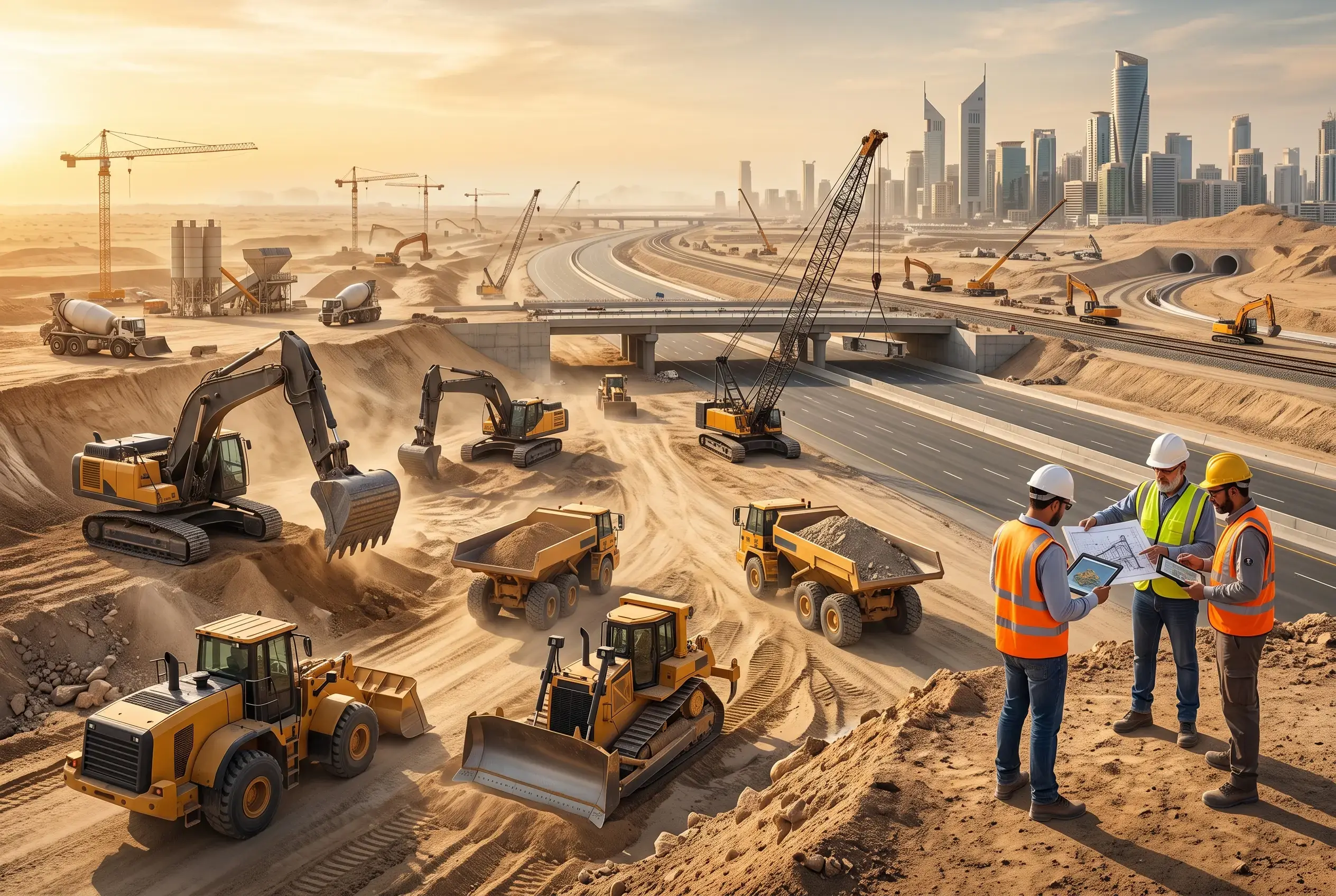
The construction sector in the Gulf Cooperation Council (GCC) is advancing at an incredible rate. Driven by ambitious initiatives like Saudi Vision 2030 and urban expansion in the UAE, the region holds the highest concentration of megaprojects in the world.
However, as contractors venture into rugged deserts, underground coastal zones, and dense smart cities, standard machinery reaches its limit. Moving vast quantities of rock and earth in extreme heat requires a shift toward custom-built equipment.
The sheer size and financial backing of modern GCC infrastructure demand a new approach to equipment logistics. Billion-dollar projects—such as Saudi Arabia's 170-kilometer city, THE LINE at NEOM, and Etihad Rail—require moving earth and rock at record speeds.
On these busy job sites, standard excavators and haulers often suffer structural failures because they were built for lighter work. Consequently, projects moving over 500 million cubic meters of soil in remote deserts cannot rely on basic machinery without facing costly delays.
To maintain high production rates across Middle Eastern job sites, contractors must move away from generic machinery fleets. In fact, unique project demands call for specialized engineering solutions:
Extended Boom Excavators: Heavy crawler excavators built with extra-long booms handle deep marine dredging along coastal developments.
Specialized Material Handlers: Custom frames allow machines to lift and position solar panels across vast desert solar farms safely.
Reinforced Attachment Frames: Custom-built buckets and arms handle dense rock without cracking or flexing under pressure.
Extreme weather is the biggest enemy of hydraulic systems and diesel engines across the Gulf region. Standard machines built for European or Asian markets rarely survive continuous exposure to temperatures above 50°C paired with fine, abrasive sand.
Therefore, custom-built machines address these challenges with upgraded cooling systems, high-capacity reversible fans, and multi-stage air filters. As a result, these features prevent engine overheating, block sand from entering critical components, and keep fleets running through severe summer heat.
Modern infrastructure projects in the GCC align closely with strict sustainability goals and zero-carbon mandates. In addition, leading smart cities are moving away from fossil-fueled equipment, prompting contractors to acquire alternative-power machinery to win public contracts.
This shift has created strong demand for specialized electric and hybrid heavy equipment equipped with 3D GPS grading and telematics. Consequently, project managers can monitor carbon output, automate grading, and comply with strict environmental regulations.
While custom-engineered machines cost more upfront than standard models, the long-term financial benefits are substantial. Custom machines feature reinforced frames, heavy-duty buckets, and efficient hydraulics that lower fuel burn per ton.
Furthermore, because these machines are built specifically for local soil and weather conditions, they suffer fewer breakdowns. As a result, this reduces costly job site delays, lowers repair bills, and maintains high resale value over time.
Relying on standard, unmodified machinery for major GCC infrastructure projects is a thing of the past. Unprecedented construction activity in Saudi Arabia, the UAE, and Oman requires purpose-built equipment to execute complex engineering tasks. Ultimately, investing in machines built for extreme heat, heavy payloads, and smart technology protects profits and ensures long-term project success.
1. What makes standard heavy machinery inadequate for GCC megaprojects?
Standard machinery is built for moderate weather and average workloads. However, extreme heat above 50°C and abrasive sand cause standard hydraulic systems and cooling packs to overheat and fail quickly.
2. What custom modifications are commonly made to heavy equipment for Gulf projects?
Key modifications include wide-core tropical cooling arrays, multi-stage air filters, reinforced steel frames, and extended booms tailored for specific tasks.
3. How do custom machines help meet sustainability goals in smart cities like NEOM?
Manufacturers build zero-emission electric or hybrid machines integrated with smart telematics. Consequently, these tools track fuel use, optimize engine output, and reduce site emissions.
4. Can existing standard fleets be retrofitted for tough GCC conditions?
Yes. Fleet owners can work with authorized equipment dealers to install retrofitting kits, such as high-efficiency tropical cooling packages, heavy-duty air filtration, and 3D GPS grading systems.
5. Is investing in custom heavy machinery financially viable in the long run?
Yes. While purchase costs are higher, custom machines cut downtime, burn less fuel, and suffer less component wear, delivering a much lower total cost of ownership.


Leave a comment
Your email address will not be published. Required fields are marked *