Learn the differences in engineering between construction and warehouse forklifts, and why using one machine to perform both tasks is a costly error. This guide explains how outdoor powerhouses and indoor precision models are designed for completely different environments. First, discover how the right equipment can protect your fleet against accelerated wear and tear, increase crew safety, as wel
Details : Warehouse vs Construction Forklifts
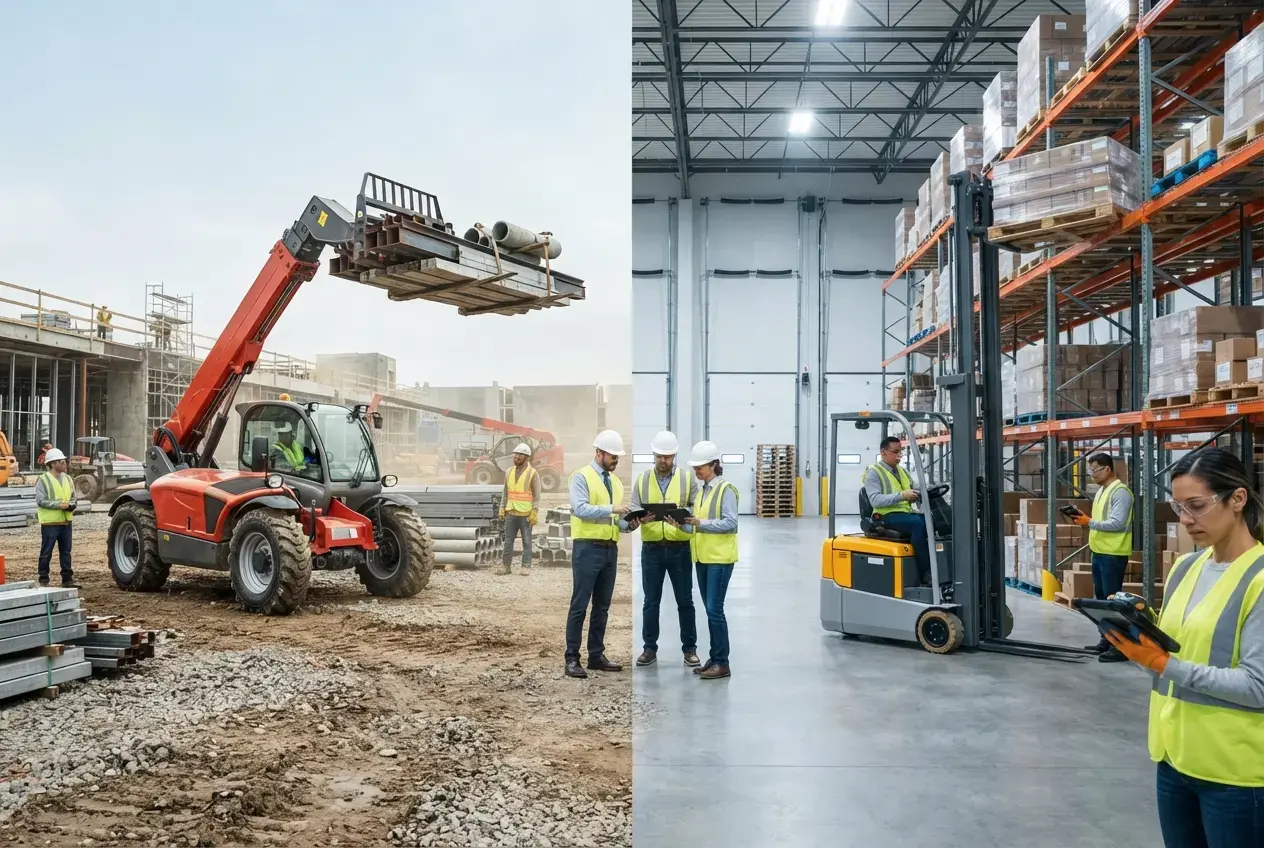
All forklifts appear to have the same DNA at first glance: They are material-handling machines designed to lift heavy loads, move them, and stack them. It is dangerous to assume that a forklift can be used in both a highly structured indoor fulfillment center and an outdoor construction site. These two environments have completely different operational requirements, which require fundamentally different machinery.
Analysis of the structural design of warehouse vs construction forklifts
Frames, tires, and ground clearances for indoor and outdoor material-handling equipment are designed specifically for specific environments. Warehouse forklifts are designed with ultra-compact chassis, low ground clearances, and tight turning radii to maneuver highly confined storage areas. They use smooth cushion or solid tires that are optimized for polished concrete floors. Construction forklifts have massive frames with high structural clearances and deep-tread pneumatic tires.
Compare Indoor Precision to Heavy Duty Outdoor Power Requirements
Open-air construction requires a lot of torque and structural force. By comparison, the hydraulic systems are finely tuned for vertical finesse, allowing operators to smoothly lift standardized pallets up to extreme shelving heights.
Evaluation of the risks associated with mismatched equipment deployment on job sites
A forklift that is deployed outside of its intended design environment can cause immediate and costly damage to the equipment. In addition, it also compromises workplace safety.
The conclusion of the article is:
Material handling companies treat warehouse precision and construction strength as separate engineering disciplines.
FAQs
Can a warehouse forklift operated by electric ever be used outdoors?
Electric warehouse forklifts can only be used outdoors if they are on a flat, dry, and paved surface. This includes a concrete loading dock. Their smooth cushion tires lose traction immediately and will stick.
Why is the construction forklift louder and bigger than indoor models?
Forklifts for construction require powerful engines that can generate massive torque to lift heavy materials and irregular objects over rough terrain. As a result, they are louder and bigger than indoor models.
What will happen if you operate a diesel construction lift inside a warehouse that is closed?
The wide turning circle of a diesel forklift makes it difficult to maneuver narrow aisles in a warehouse. As a result, it can hit the racking.
What are the differences between forklift tires used in warehouses and construction?
The tires on construction lifts are deep-tread pneumatic or solid pneumatic tires designed to grip rough terrain and absorb shock. In contrast, warehouse tires serve different indoor conditions.
Is the control mechanism for both categories of forklifts identical?
Construction forklifts have specialized controls that allow them to manage multi-wheel drives, level the frame on sloped terrain, and adjust telescopic Booms. These features are not available on indoor warehouse trucks.








Leave a comment
Your email address will not be published. Required fields are marked *