




Discover how the UAE National Day, also known as Eid Al Etihad in Arabic, combines traditional Emirati culture with modern infrastructure. This guide discusses the historical unification of the seven emirates and the role of visionaries such as Sheikh Zayed. It also covers the mega-machinery that is driving the nation's future architectural.
The United Arab Emirates shows what happens when an ambitious vision aligns with deep cultural pride. Every December 2nd, the nation comes together to celebrate UAE National Day, formally known as Eid Al Etihad, or the Festival of the Union.
This day is more than just another year on the calendar. In fact, it marks a remarkable journey that transformed quiet coastal towns and vast deserts into a global leader in innovation, trade, and modern architecture.
The story of the nation’s unification is a shining example of diplomacy and collective purpose. Before 1971, the area was known as the Trucial States under British protection. However, when Britain announced plans to withdraw, two visionary leaders—Sheikh Zayed bin Sultan Al Nahyan of Abu Dhabi and Sheikh Rashid bin Saeed Al Maktoum of Dubai—recognized that their strength lay in unity.
They invited other rulers to unite, leading to the historical signing of the union agreement on December 2, 1971. Consequently, six emirates joined initially, followed by Ras Al Khaimah in early 1972. Renaming the holiday to Eid Al Etihad emphasizes the unwavering unity forged by these founding leaders.
A guiding principle in the UAE is that true progress stays rooted in cultural heritage. In addition, even as glass skyscrapers rise and autonomous transport changes urban travel, the nation remains dedicated to protecting its traditions.
Camel racing, falconry, and maritime crafts are celebrated in heritage villages and schools across the emirates. As a result, ancient forts coexist alongside modern high-rises. By honoring their ancestral roots during Eid Al Etihad, citizens ensure rapid economic growth does not erase their distinct identity.
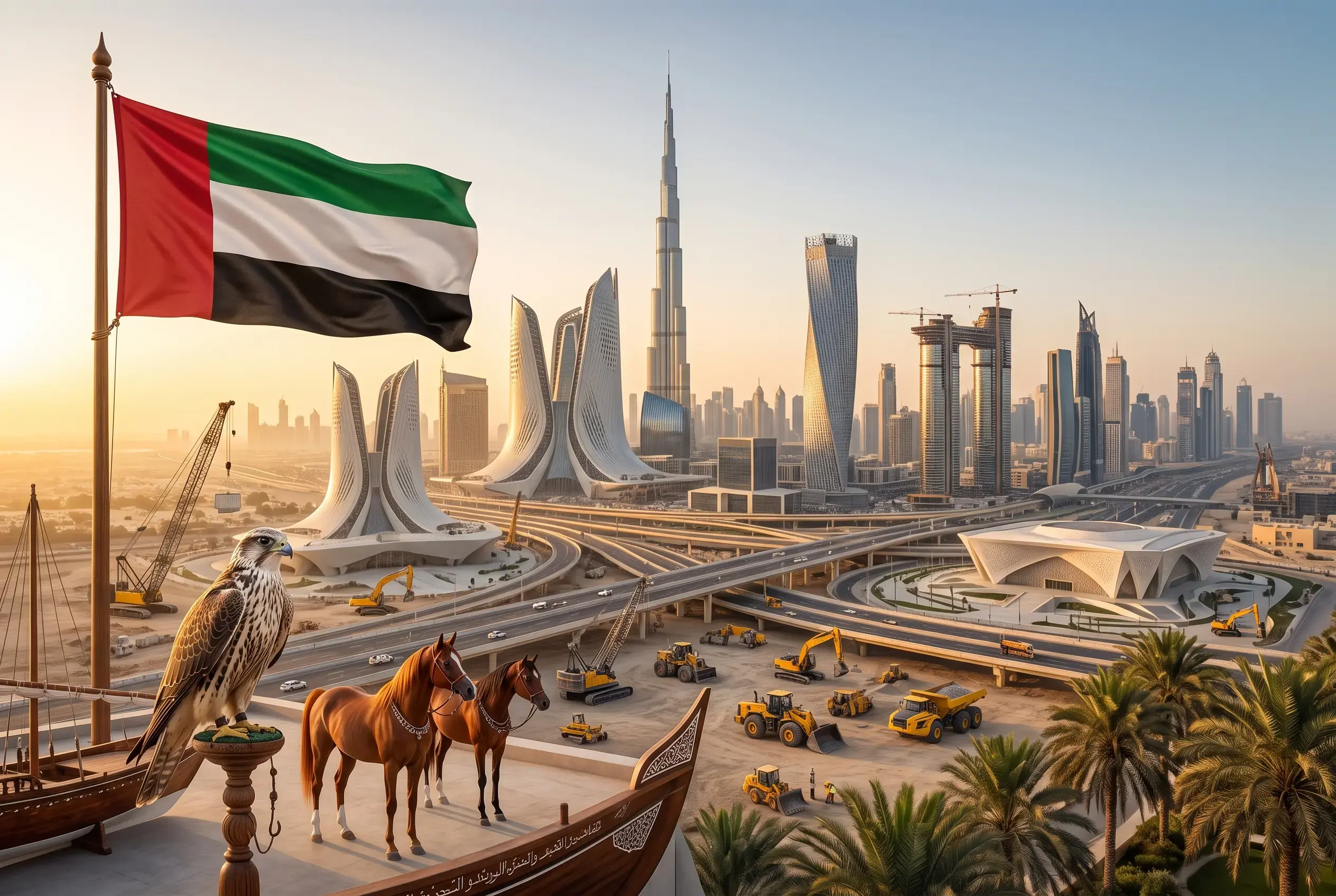
To understand the UAE’s growth, look at the extraordinary engineering projects that reshaped its landscape. Iconic structures like the Burj Khalifa, Palm Jumeirah, and Abu Dhabi’s massive ports required an impressive array of heavy machinery working around the clock.
Tower cranes, heavy excavators, marine dredgers, and wheel loaders transformed desert plans into world-class infrastructure. Furthermore, construction sites today integrate advanced, eco-friendly machinery featuring smart telemetry and low-emission engines to build cleaner, safer smart cities.
Eid Al Etihad is a celebration of Emirati identity, but it welcomes the entire international community. Expatriates make up a large part of the population, working alongside locals to build the nation's physical and economic framework.
During this festive long weekend, cities glow in red, green, white, and black, while fireworks light up the skies of Dubai, Abu Dhabi, and Sharjah. Therefore, air shows, parades, and cultural dances unite people from all backgrounds in a shared national celebration.
Looking ahead, the UAE continues to set ambitious long-term plans for future generations. The UAE Centennial 2071 plan aims to make the nation a world leader in education, economic diversity, and social well-being by its 100th anniversary.
In construction and industry, this strategy means adopting eco-friendly tools, smart logistics, and circular economies that eliminate waste. Consequently, investments in massive solar farms and clean energy fuel the machinery and industries driving future progress.
UAE National Day, or Eid Al Etihad, stands as a testament to what a nation achieves through human resolve, unified vision, and respect for culture. As heavy machinery continues to reshape city skylines, the values laid down by the founders remain the firm foundation of society. Ultimately, by blending its rich history with cutting-edge technology, the UAE sets a remarkable example for balanced progress worldwide.
1. What is the official name of UAE National Day, and what does it mean?
The official name is Eid Al Etihad, which means the Festival of the Union. In short, it commemorates the historic joining of separate emirates into one sovereign nation.
2. When is UAE National Day celebrated?
It is celebrated every year on December 2nd, marking the date in 1971 when rulers signed the union agreement at the Union House in Dubai.
3. Who is recognized as the founding father of the UAE?
Sheikh Zayed bin Sultan Al Nahyan, the former ruler of Abu Dhabi, is honored as the founding father and served as the nation's first president.
4. How does the heavy equipment and construction industry support National Day themes?
The construction and logistics sectors use modern machinery and advanced engineering to turn ambitious national blueprints into smart cities and public infrastructure.
5. What is the main goal of the UAE Centennial 2071 initiative?
The 2071 initiative is a long-term plan to make the UAE a world leader in education, green technology, economic diversity, and community well-being by its 100th anniversary.


Leave a comment
Your email address will not be published. Required fields are marked *