





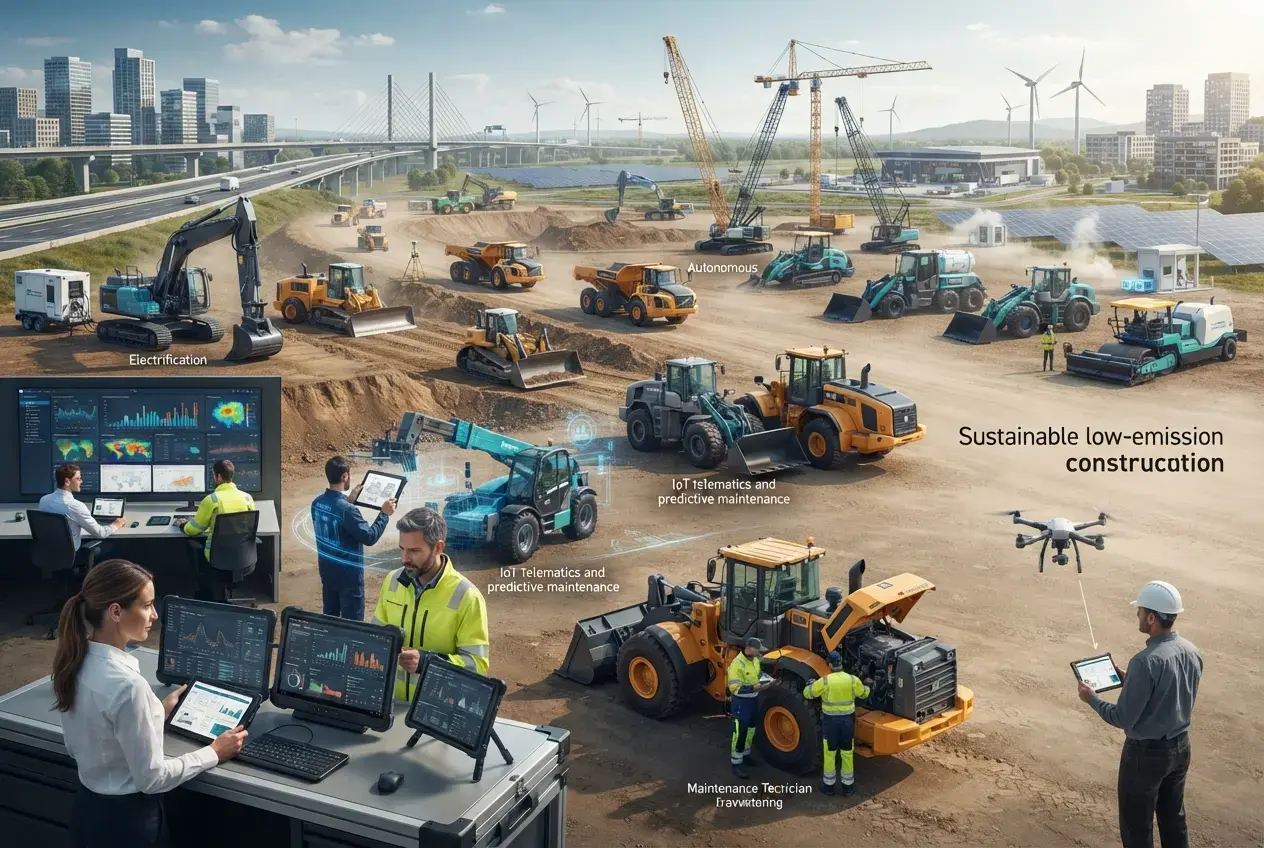
This year marks a pivotal shift in the global industrial fleet landscape, fueled by innovative advancements. This detailed guide outlines seven key trends that are shaping the heavy equipment sector in 2026. These trends range from the swift adoption of high-voltage electric machinery to growing autonomous excavation technologies.
The heavy machinery industry never stops. Whether managing massive city projects or complex shipping routes across the Middle East, success relies on clear teamwork. In fact, in this fast-paced global industry, miscommunication is a serious risk. Even a minor mix-up over excavator specs or crane rental terms can delay an entire job.
To solve this challenge, we updated our digital tools to remove language barriers. Consequently, we now offer full online support, detailed equipment catalogs, and customer service in both English and Arabic to keep your projects on schedule.
Choosing the right heavy equipment requires understanding complex technical data. Whether you need to review engine torque, bucket capacity, or boom length, reading specs in your native language helps you make better buying decisions.
In addition, industry experts localized our entire platform rather than using basic software translation. Therefore, technical details for wheel loaders, crawlers, and piling rigs are clear and accurate in both English and Arabic. As a result, your purchasing teams can match equipment to project needs with full confidence.
Renting high-capacity machinery requires clear and transparent contracts. By offering online services in both English and Arabic, we ensure all teams understand price quotes, rental terms, and leasing conditions.
Whether your executive team needs documents in English or your site supervisors require Arabic for local compliance, our platform generates accurate, legally valid documents simultaneously. Consequently, this dual-language clarity speeds up corporate approvals, cuts legal delays, and gets machinery onto your job site faster.
Heavy machinery operates under intense stress, so resolving unexpected breakdowns quickly is vital. When a field engineer sees an urgent hydraulic warning light, every minute counts. Fortunately, our online platform connects you directly with bilingual technical support specialists.
This setup allows your operators and mechanics to explain issues in the language they know best. As a result, our team diagnoses problems faster, dispatches service trucks quickly, and reduces costly job site downtime.
Working in the Middle East requires heavy equipment built for hot weather and harsh terrain. By providing fully bilingual digital resources, we combine global engineering standards with deep regional knowledge.
Our online portal offers custom maintenance tips, cooling system advice, and operational guides tailored for desert environments. Therefore, local fleet managers can protect equipment from sand damage, reduce component wear, and ensure top performance during extreme heat.
Achieving top results in modern construction requires durable machinery and clear communication. Ultimately, offering a fully bilingual digital ecosystem removes friction from international fleet management. From reading spec sheets to signing rental agreements, our dual-language platform ensures complete transparency at every step.
1. How do you switch between English and Arabic on the portal?
Switching languages is simple. Click the language button in the top right corner of any page. As a result, all text, menus, forms, and spec sheets switch instantly to your chosen language.
2. Are operator manuals and spec sheets available in both languages?
Yes. Our digital library—including hydraulic diagrams, load capacity charts, and safety guides—is available for download in both English and Arabic.
3. Can you request a rental quote in Arabic and get an Arabic response?
Yes. Our system routes your request directly to an Arabic-speaking equipment specialist. Therefore, all follow-up messages, pricing details, and technical answers arrive in Arabic.
4. Does using bilingual services cost extra?
No. Dual-language support comes at no extra charge. In fact, there are zero hidden fees for using our bilingual website, technical portal, or contract tools.
5. How does a bilingual portal speed up machine deliveries?
Providing clear contracts in both languages allows your legal, finance, and engineering teams to review documents at the same time. Consequently, this eliminates translation delays and speeds up delivery logistics.


Leave a comment
Your email address will not be published. Required fields are marked *