





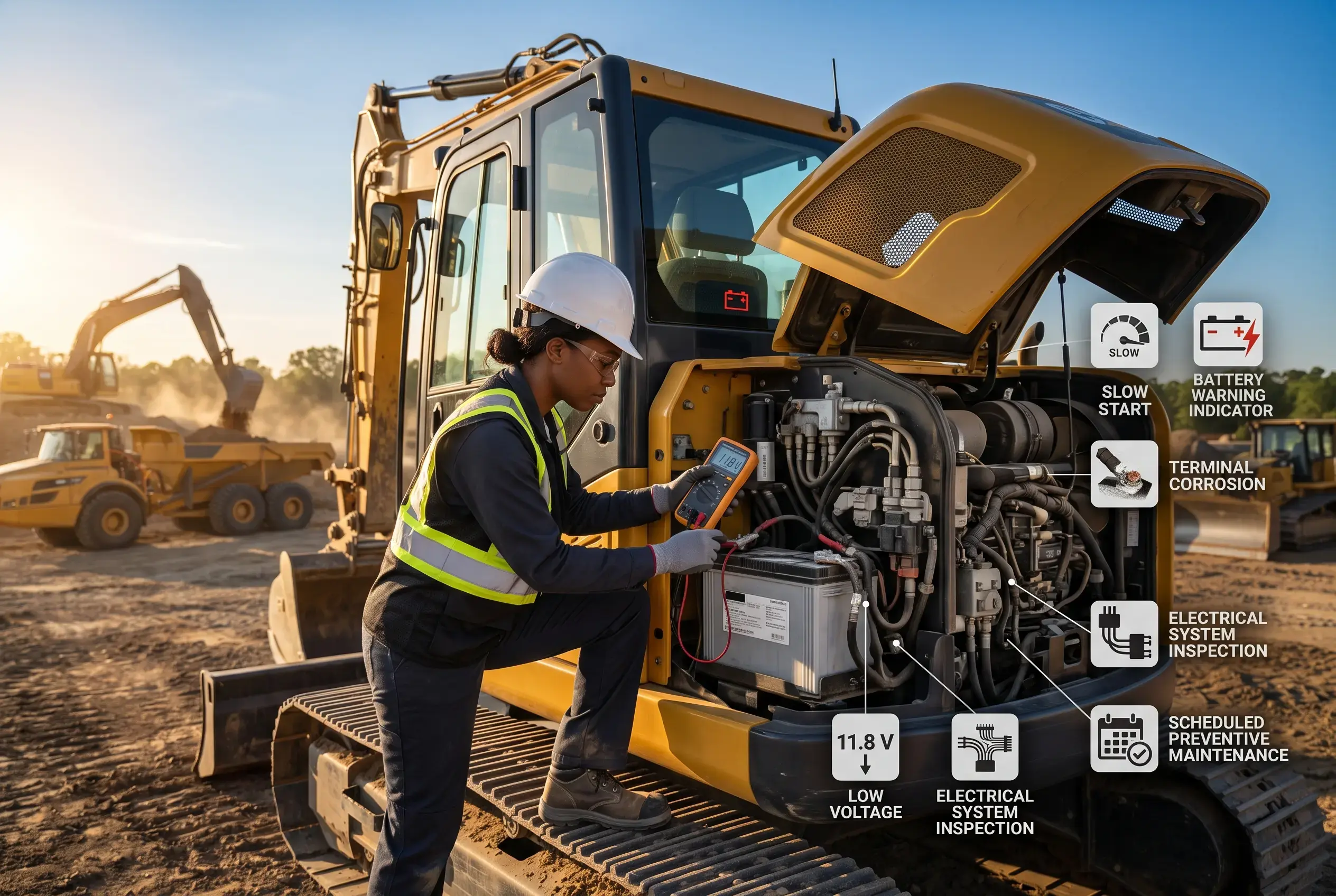
Prevent unexpected downtime from a dead engine. Discover how to identify a Heavy Equipment Battery Failure: Six Warning Signs to keep your fleet running smoothly.
The continuous demands of contemporary job sites put significant pressure on the electrical systems of your fleet. Whether it’s a large excavator or a small skid steer, heavy machinery requires solid, heavy-duty batteries to start powerful diesel engines and operate advanced onboard systems.
Regrettably, battery health is often neglected until a machine suddenly fails to start in an isolated location, which can derail your project timeline and incur hefty costs. By identifying early signs of battery degradation, fleet managers can proactively plan for replacements, safeguarding the company from unforeseen repair costs.Read Driving Excellence Through Advanced Technical Training with Us
To catch electrical flaws early, it’s crucial to understand the behavior of heavy-duty batteries as their components begin to fail. Unlike regular cars, industrial machines endure high vibrations and extreme temperatures, hastening internal deterioration. By being vigilant about the following six signs, operators can spot a failing battery before it leads to a complete electrical failure.
1. Slow Engine Crank: One of the first signs of battery trouble is an engine that takes longer than usual to start. This delay often indicates a reduction in Cold Cranking Amps (CCA), the power needed to start large engines. When internal components deteriorate, the battery can’t provide the necessary surge of current, which may mean the battery is nearing its end if operators report sluggish starts.
2. Inconsistent Electronic Performance: Modern equipment relies on stable voltage for systems like telematics and digital controls. A declining battery can cause electronic flickers — like dimming lights or erratic dashboard displays. Low voltage may also lead to erroneous error codes or false alarms, risking damage to sensitive components that are costly to replace.
3. Failure to Start After Short Breaks: A reliable battery should maintain its charge during downtime, whether overnight or over a weekend. If a machine needs a jumpstart after just a few hours of idling, it indicates a problematic battery struggling to hold its charge due to internal damage or parasitic draws. Relying on jumpstarts can strain the alternator, potentially leading to a complete electrical failure during operation.
4. Swollen or Distorted Battery Housing: During routine inspections, it's essential to examine the battery casing closely. Factors like extreme temperatures or a faulty voltage regulator can lead to overcharging, causing the casing to swell or crack due to pressure buildup. A deformed battery is a serious safety risk and should be replaced immediately.
5. Corrosion and Buildup on Terminals: While some corrosion is typical on older machinery, significant green or white residue on the terminals can suggest a serious chemical issue. This buildup often arises from gas escaping due to failing seals or overheating. It creates resistance that disrupts the electrical flow, indicating that the battery’s internal health is compromised.
6. Foul Sulfur Odors from the Engine Bay: Lead-acid batteries, composed of sulfuric acid and water, can emit a rotten egg smell if overcharged or short-circuited, producing hazardous hydrogen sulfide gas. This pungent odor signals overheating and a risk of thermal runaway or casing rupture, which should never be ignored.
A failing battery can halt operations on a construction site, turning a valuable asset into an immovable barrier. By training operators to recognize signs like slow starts and distorted battery cases, you can address issues proactively.
Implementing thorough electrical system checks in your maintenance routine will help keep your machinery dependable, protecting both your workforce and schedules by replacing compromised batteries at the first warning signs.
What causes premature heavy equipment battery failure?
Premature battery failure often results from mechanical vibrations on rough sites, extreme temperatures, inadequate charging, and lack of regular maintenance.
Can a faulty battery damage the alternator?
Yes, a failing battery can strain the alternator by forcing it to overwork, leading to overheating and early failure.
What voltage should a healthy heavy equipment battery show?
A fully charged battery should read between 12.6 and 12.8 volts when off, and between 13.8 and 14.5 volts when the engine is running.
Why do vibrations shorten a battery’s lifespan?
Constant vibrations can fatigue the internal lead plates, causing material loss and internal short circuits that compromise the battery's integrity.
Are AGM batteries safer than wet-cell batteries in heavy machinery?
AGM batteries are preferred for heavy equipment due to their design, which offers high resistance to vibrations and eliminates acid leakage risks.


Leave a comment
Your email address will not be published. Required fields are marked *