





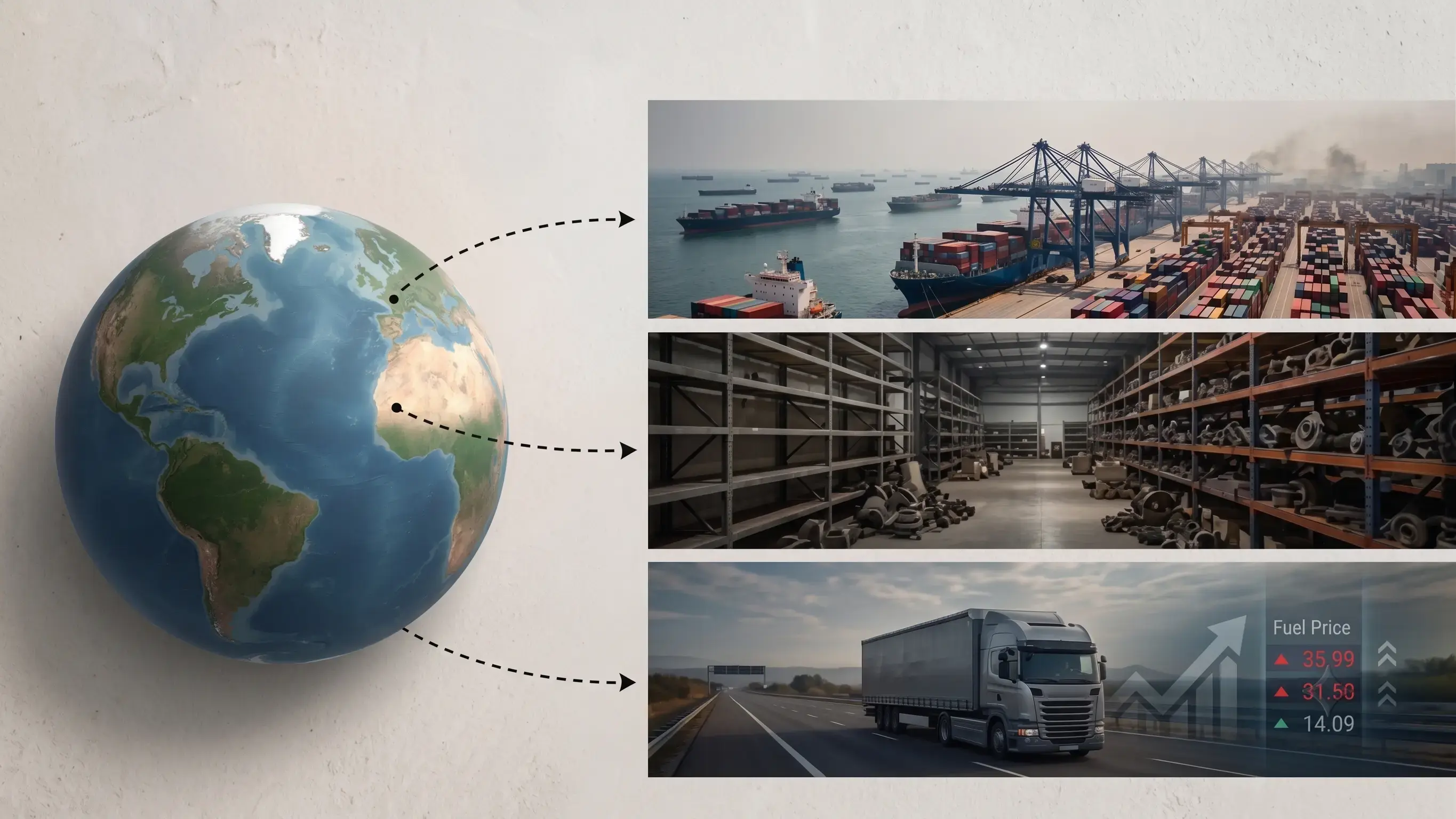
Learn how global supply chain changes will impact heavy equipment availability by 2026. Wait times, increasing material costs and smart fleet strategies are discussed.
The worldwide heavy machinery industry is going through a major reawakening. Previously, fleet procurement worked on a reliable cycle: order a machine, wait a few weeks, and then send it to a job site. As of 2026, that normal process has totally collapsed due to rapid shipping reroutes, new increased environmental regulations and new geopolitical movements.
The biggest hurdle to heavy equipment procurement worldwide is the disruption to trade lanes caused by the bottlenecks in international shipping. The cargo diversions around the Cape of Good Hope and water level restrictions in the Panama Canal have prolonged shipping to new destinations.
Heavy excavators, cranes, and articulated dump trucks require specific types of shipping vessels, which means major shipping disruptions mean procurement delays for these types of equipment. As a result, contractors are forced to look for equipment in local markets to avoid delays on their ongoing projects. Read also Dubai’s “The Loop”: a 93-km Cycleway Redefining Urban Mobility
Increasing Costs and Disruption of Supply
Modern heavy equipment requires sophisticated electronics and an elaborate supply chain of raw materials. Currently, there are several material shortages, including some vital components, which have caused delays to equipment manufacture from all OEMs.
In 2026, the increased regional trade restrictions and tariffs of most countries have increased the costs of single-source manufacturing. Because of an increase in tariffs for raw steel and import precision hydraulic parts, the cost of overseas components has increased compared to two years ago.
Logistics and Labor Costs
There is a domestic and international shortage of labor, which has caused an increased cost of shipping. These elevated shipping costs have led to inflation of the cost of equipment, both new and used.
Construction projects intend to utilize company assets and deliver value. However, supply chain issues have construction firms adapting their sourcing and altering timelines. These changes include:
- Multi-Sourcing Spare Parts: Components are sourced through various suppliers instead of a single original manufacturer.
- Used Equipment Markets: There is a growing market for secondhand equipment. Because heavy machinery can be used right away, firms are moving to buy equipment that was recently serviced and verified.
- Predictive Telematic Tracking: To prevent breakdowns and further avoid ordering delays, telematics is being used to track the health of the machinery.
To successfully manage project pipelines in 2026, an understanding of the state of global supply chains is necessary. Trying to source vital earth movers at the last minute is a recipe for idle crews and unfavorable costs, especially now that the availability of equipment is not guaranteed. Heavy machinery owners can implement used equipment, diversify spare part suppliers and shift operations to be more readily prepared for transport/ logistical bottlenecks to minimize the impacts of global unpredictability.
Why aren't heavy machinery firms able to produce new equipment?
Localized component shortages, for example, with microchips and hydraulics, affect production lines. Combined with supply chain issues with extended shipping timelines, heavy equipment lines are severely affected.
What are the challenges of shipping timelines on heavy equipment?
Geopolitics has forced cargo vessels to take longer alternative routes around Africa. Climate issues have reduced traffic in canals. Both issues have delayed shipping and raised the costs of container shipping.
Are supply chain issues causing an increase in used machinery prices? Yes. New machinery orders can take a long time, so contractors are willing to pay more for used machinery that can be delivered sooner.
What is causing the longest manufacturing delays?
Advanced semiconductors used in modern engine computers, high-grade structural alloys such as titanium, and heavy-duty hydraulic valves that are difficult to manufacture are in short supply.
How can construction companies mitigate delays that are a result of an equipment shortage?
Companies should shift from a "just-in-time" ordering philosophy to a long-term ordering philosophy and practice this by ordering equipment rentals and purchasing used equipment and wear part supplies in the interim to ensure machinery is operational.


Leave a comment
Your email address will not be published. Required fields are marked *