





Learn about the challenges and potential of automated forklifts deployed in supply chain environments. This guide explores the ways in which these self-driving materials handlers can manage obstacles outdoors, improve safety standards and integrate into existing warehouse systems. Learn how to combine high-tech automation and real-world yard restrictions to maximize your logistic efficiency.
The dream of an autonomous warehouse is quickly moving beyond science fiction. Material handling systems that are manually operated cannot keep up with modern supply chains, which demand quicker turnaround times. The introduction of fully automated guided vehicles into indoor environments has revolutionized the industry. However, bringing this high-tech intelligence to an unpredictable outdoor yard presents a whole new set of operational challenges.
Etihad Rail September Launch: Routes and Construction
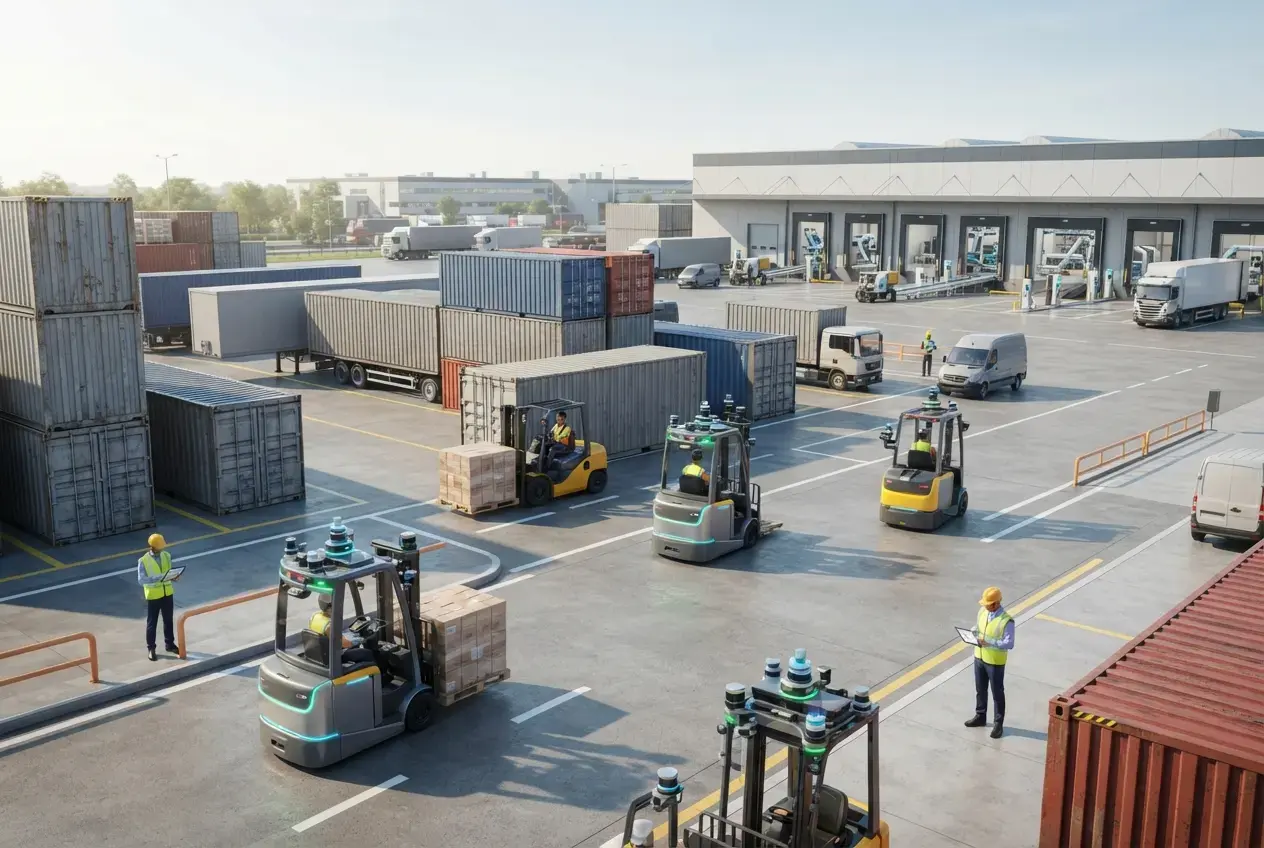
Robotics must be rethought in order to deploy autonomous lift trucks outdoors. A driverless truck can enjoy smooth, flat floors made of concrete, predictable lighting and fixed storage racks. When moving the same machinery into an open yard, it is necessary to deal with uneven surfaces, cracked asphalt, sudden rainstorms and dust particles flying in the air. Supply chain efficiency can only be achieved by finding the right balance between robotic programming and unpredictable physical challenges.
The sensors used by autonomous vehicles are designed to map the environment in real-time. LiDAR systems (Light Detection and Range) emit thousands of laser beams every second, creating a 3D map that allows the vehicle to detect pallets, parked vehicles, and walking employees. Specialized optical camera systems work with these lasers to verify shipping labels and read barcodes, ensuring that the machine always picks up the right load. Radar units that are rugged and integrated into the frame can cut through morning fog, heavy rains or dense fog. This ensures high levels of safety when visibility is reduced.
To be productive, an automated lift truck must have a flawless connection with the central digital brain of the facility. The Warehouse Management System (WMS), which is a high-speed Wi-Fi industrial network or a private 5G network, assigns tasks to the vehicle directly. This eliminates the need for radio chatter or paper clipboards. The tight integration of the software allows the system to track the exact GPS position of every container and pallet in the yard. The software updates inventory records instantly when a load arrives, reducing the risk of misplaced assets and costly errors.
Upgrades to driverless fleets require a large initial capital investment, which can cause some hesitation among business managers. In addition to the expensive machinery, businesses must also invest in lane markings and wireless signal boosters. These upfront costs are often offset by the reduction in product damage and labor shortages. Businesses can choose a hybrid solution by converting existing manual trucks to autonomous units with modular retrofit kits.
It is possible to future-proof your business by converting your fleet of material handling vehicles to autonomous technology. The unpredictable nature of outdoor yards requires careful planning and robust sensors systems. However, the benefits in terms of safety and accuracy over the long term are unquestionable. You can create a reliable, resilient workflow by carefully matching the advanced software to your yard conditions. The ability to blend automated precision and real-world flexibility sets apart the market leaders from their competitors.
Can automated lifts be operated safely in heavy snow or rain?
Modern autonomous forklifts have weather-resistant outer shells, rugged radar systems, and LiDAR that help them navigate safely in poor weather conditions such as rain, snow or heavy dust.
How can autonomous material handlers reduce the risk of accidents involving human workers?
Sensors on these machines are programmed with multiple safety zones. The forklift will slow down if a worker or a manual vehicle enters the warning zone. If the object enters the critical stopping zone, it will brake instantly.
Can I convert my manual forklift fleet to autonomous units?
Many manufacturers offer retrofit automation packages. These kits will add cameras, computers and hydraulic actuators for your existing standard forklifts. This saves you the cost of buying a new machine.
When can I expect to see a return after automating my yard?
The majority of logistics operations will see their investment return within 24 to 36 months. The financial recovery is a result of lower product damage rates and optimized fuel usage, as well as continuous 24-hour operation.
What will happen if a wireless network is down when a forklift moves?
When an autonomous forklift's connection to the main facility is lost, the safety software built into it takes over immediately. The machine will stop itself in a safe, controlled manner and wait until the signal is restored before continuing its task.


Leave a comment
Your email address will not be published. Required fields are marked *