





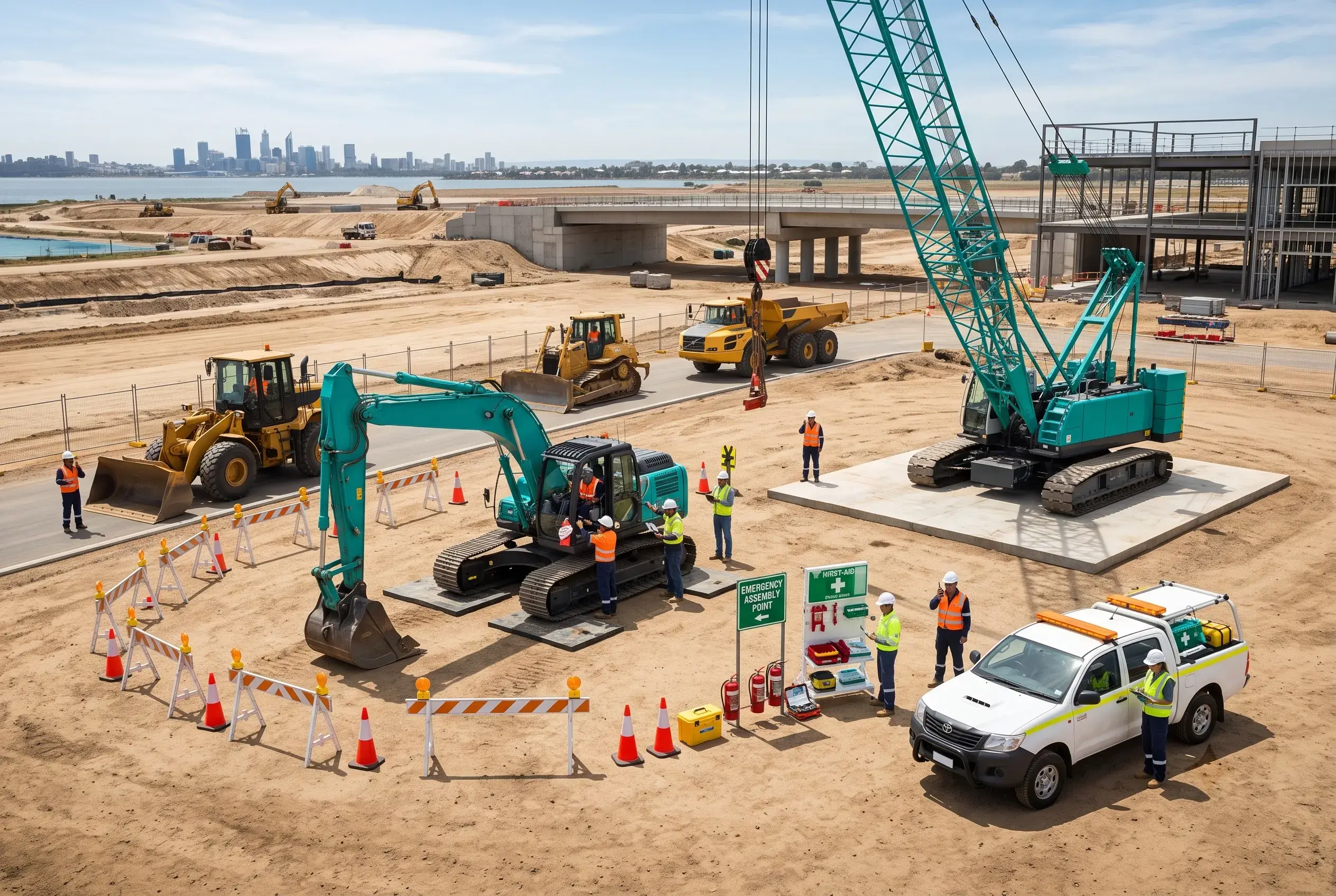
Safety protocols are essential for heavy equipment in active sites. They protect the crew, prevent workplace accidents, and manage mechanical failures.
When a machine experiences a sudden loss of control, brake failure, or engine fire, the operator must execute an immediate emergency shutdown. The primary rule is to isolate the machine's energy sources instantly by cutting the engine and engaging the primary emergency stop button.
Simultaneously, if hydraulics are still functional, the operator must lower all attachments, such as buckets, blades, or booms, completely to the ground to prevent gravity-driven drops. Once the machine is secured, the operator must set the mechanical parking brakes before attempting a safe, orderly evacuation away from the hazard zone.
A high-pressure hydraulic line rupture can release toxic, superheated oils that pose extreme risks of skin penetration and environmental contamination. If a leak is detected, the machine must be turned off immediately to drop system pressure.
Crew members on the ground must immediately establish an exclusion zone to keep unauthorized personnel away from the spray. Specially trained spill-response teams should deploy absorbent booms, pads, and non-reactive granular materials to prevent fluids from entering local waterways or soil systems.
Rollover incidents involving heavy dump trucks or compactors are among the most dangerous hazards on uneven terrain. In a rollover situation, the absolute golden rule for the operator is never to attempt to jump out of the cabin mid-tilt. Modern heavymachinery heavy machinery is built with a reinforced Rollover Protective Structure designed to withstand massive crushing impacts.
Operators must brace themselves firmly by holding onto the steering wheel, planting their feet flat, and letting their seatbelt secure them within the protective cab envelope until all movement stops.
Once the immediate physical danger of an equipment emergency has passed, the site must enter a strict documentation and inspection phase. The involved machinery must be safely locked out and tagged out to prevent accidental restarts while investigations are underway.
Certified mechanics and safety officers must thoroughly inspect structural frames, electronic control modules, and hydraulic lines to pinpoint the exact root cause of the failure. Detailed incident reports must be logged with local safety authorities before the equipment can be formally cleared to return to active production duties.
Written safety protocols are completely useless if your field crew does not know how to execute them under high-stress conditions. Construction firms must integrate realistic emergency simulation drills into their weekly or monthly safety toolboxes. Check 2026 Volvo A40 Rental Fleet
These hands-on training sessions teach operators how to locate emergency cut-off switches blindfolded, practice rapid cabin evacuations, and use heavy-duty fire extinguishers properly. Regular practice builds the split-second muscle memory needed to protect lives and minimize expensive asset damage during a real job site crisis.
Implementing robust emergency protocols for heavy equipment on active sites protects your workers, secures your expensive machinery fleet, and insulates your business from severe legal liabilities. True site safety requires a continuous cycle of clear communication, immediate technical response, and rigorous post-incident analysis. By building a proactive safety culture where every crew member knows exactly how to act during a mechanical failure, you ensure your high-production job sites remain secure, efficient, and resilient.
The operator must immediately shut off the engine, activate the emergency stop button, lower all hydraulic attachments fully to the ground, and engage the parking brake to stabilize the machine completely.
Modern heavy machines feature a highly reinforced Rollover Protective Structure (ROPS) that shields the cabin. Jumping out during a roll almost always results in the operator being crushed by the falling machine.
Ground crews must stay clear of the pressurized spray to avoid high-pressure injection injuries. They should quickly isolate the area and deploy specialized fluid-absorbent materials to block environmental contamination.
It is a vital safety practice where a damaged machine is physically locked with a padlocked device and labeled with a warning tag. This setup ensures nobody can accidentally start the machine while it is undergoing inspection or repair.
Basic safety protocols should be covered weekly during toolbox talks, while hands-on emergency drills—like emergency exit evacuations and fire responses—should be conducted at least quarterly.


Leave a comment
Your email address will not be published. Required fields are marked *