




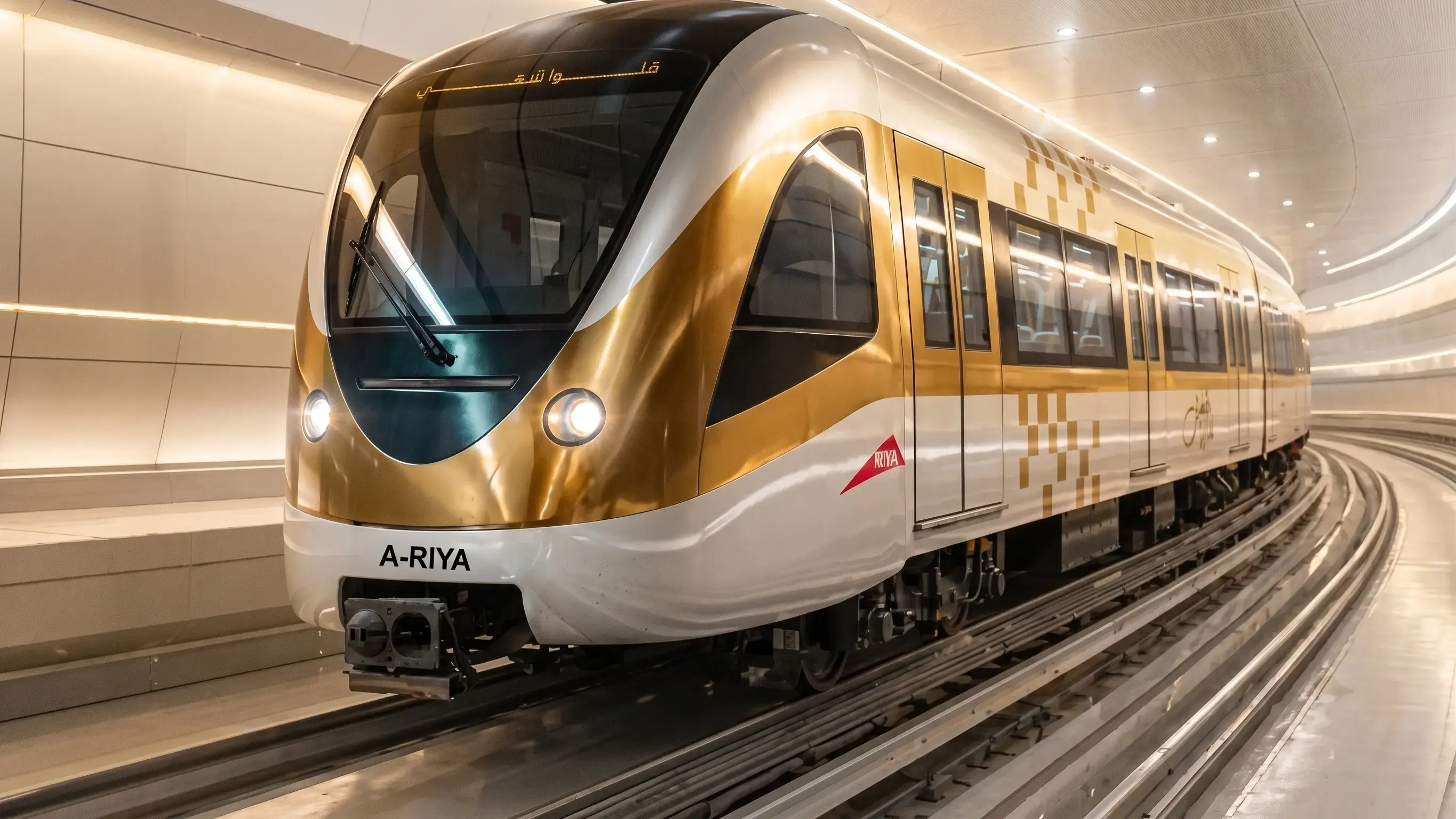
Learn how the Dubai Metro Gold Line, the first fully underground rail system in the city, is being built by a fleet of specialized [company_name] The project will cost AED 34 billion and utilize advanced tunnel boring technology.
In a rapidly growing global metropolis, transit solutions are needed that bypass the surface traffic completely. The newly announced AED34 billion Dubai Metro Gold Line, which has been approved by the leadership of the emirate, is expected to be the most ambitious subsurface transit network ever built in the history of the emirate. This mega-project, which spans 42 kilometers and is Dubai's first underground metro line, represents a huge civil engineering challenge. This is a massive task that depends on a fleet of heavy equipment working around the clock.
The Dubai Metro Gold Line is a new transit system designed to link historic neighborhoods with rapidly expanding residential developments and master-planned business areas.
The 42-kilometer underground alignment connects 15 strategic areas and creates vital loop connections throughout the city. It starts in Al Ghubaiba's historic district and ends at Jumeirah Golf Estates. This line will also seamlessly interchange with the Red and Green lines, as well as Etihad Rail, the national network that is being built by Meydan.
To build a 40-meter rail corridor beneath a bustling city, open-cut excavation is out of the question. Contractors are using giant Tunnel Boring Machines to carve out twin-rail tunnels.
These massive machines are underground factories in motion. A massive rotating cutter head at the front easily eats through soil and rock layers. The TBM uses robotic arms and computerized systems to install pre-cast concrete segment rings. This allows it to build permanent, watertight walls behind itself.
Crews must first dig large launching pits and then extraction shafts. The heavy earthmoving phase is carried out by crawler excavators with long reach and heavy-duty rock buckets.
These heavy excavators dig down to the desired tunnel depth in enclosed, tight urban construction zones. heavymachinery heavy excavators work with wheel loaders of high capacity and tipper trucks of heavy-duty to quickly remove hundreds of thousands of tons of excavated dirt, thus keeping city streets clear.
Lifting power is required to lower massive components of tunnel boring machines, heavy cutting heads and thousands of concrete tunnel segments into deep pits. The logistical backbone of every shaft site is made up of giant mobile cranes, crawler cranes with high capacities and large all-terrain cranes.
The heavy-lift cranes are capable of performing continuous and high-precision operations. They lift structural steel and lower heavy materials with millimeter accuracy into the pits. Surface-level, telescopic forklifts and versatile handlers are used to keep supply lines flowing smoothly. They organize material yards so that shaft teams can get what they need quickly.
Deep tunnels and stations are often built near coastal areas that have been developed. This poses a structural challenge due to the high soil pressures on both sides and the shifting of groundwater levels. Contractors deploy hydraulic diaphragm walls and high-torque pile rigs to secure excavation sites before digging begins.
The heavy rigs are used to drill deep into the earth in order to build strong interlocking secant walls of concrete and drive steel sheet piles. The result is a watertight, highly secure retaining perimeter which prevents soil from collapsing and protects skyscraper foundations. To keep deep work zones dry and safe, high-pressure grouting pump systems work in conjunction with a heavy dewatering system.
The Dubai Metro Gold Line showcases masterful urban planning, backed by the heavymachinery of the highest quality. Dubai's transport future is being built with the help of heavy-duty excavating, lifting and ground stabilization vehicles. Specialized heavy equipment is working under the streets to ensure a connected, sustainable and world-class Dubai in decades to come.
The Gold Line, the first underground metro in Dubai, is a 42-kilometer project that has just been approved for AED 34 billion.
The line will have 18 stations, connecting 15 districts, including Al Ghubaiba, Business Bay, Meydan, Jumeirah Village Circle, JVC and Jumeirah Golf Estates.
The transit line will be carved out at depths of up to 40 meters below ground using heavymachinery and advanced tunnel boring technology.
The Gold Line will allow for easy interchanges between the Red and Green Metro Lines and the Etihad Rail Network at Meydan Golf Estates and Jumeirah Golf Estates.
The project follows a multi-phase strategic timeline with the grand opening scheduled for 9 September 2032.


Leave a comment
Your email address will not be published. Required fields are marked *