





Learn about the specialized heavy equipment and technical methods used to build Ramhan Island, which is Abu Dhabi's biggest and most expensive project.
Abu Dhabi is undergoing a remarkable transformation of its shoreline through the ambitious Ramhan Island project, envisioned by Eagle Hills. This opulent waterfront development is set to feature luxurious villas, upscale marinas, and elite hotels nestled amidst unspoiled nature. To realize this grand vision, extensive engineering efforts are essential, involving the movement of millions of tons of coastal materials and the construction of marine structures right at the juncture of desert sands and the sea.
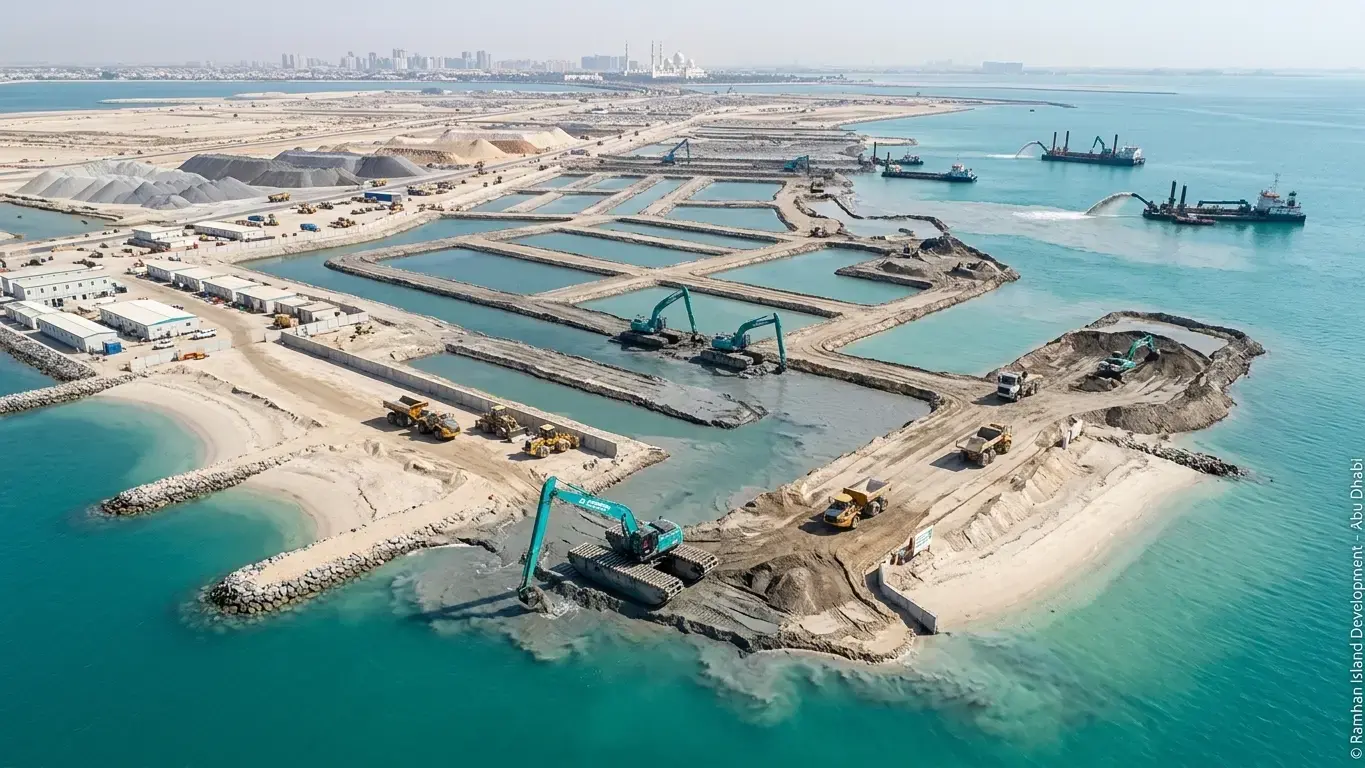
Converting a natural island into a sophisticated luxury community requires overcoming unique civil engineering challenges. Typical earthmoving equipment struggles with the site’s deep mud, tidal flats, and unstable, waterlogged sands. To address these issues, specialized amphibious machinery and long-reach marine tools are utilized along the coast to carve out canals while safeguarding local ecology. Read Biggest Heavy Machines Showcased at CONEXPO 2026
Heavy machinery equipped with specialized pontoon bases enables operators to traverse soggy terrain without sinking. This equipment design allows construction teams to consistently form deep waterways and clear marine channels, facilitating the safe passage of luxury yachts to the island's docks once completed.
This coastal project unfolds in specialized stages to ensure stability on shifting shorelines.
Deep Channel Dredging
Amphibious excavators and cutter-suction dredgers are employed to create deep underwater channels. This ongoing dredging process guarantees effective water circulation within the island’s new bays, preventing stagnation and supporting the nearby mangrove ecosystems.
Constructing Durable Breakwaters
After the channels are established, large wheel loaders and high-capacity dump trucks transport substantial armor rocks to the shoreline. Heavy cranes meticulously position these stones to construct sturdy breakwaters that protect luxury beachfront homes from powerful waves and natural erosion.
Operating a vast fleet of machinery along the coast poses ongoing mechanical challenges. Marine contractors implement specialized maintenance strategies to ensure uninterrupted work:
- Anti-Corrosion Treatments: Heavy machinery is coated with specialized epoxy marine primers to resist saltwater-induced corrosion.
- Sealed Hydraulic Systems: Excavator joints are filled with top-quality waterproof grease to keep sand and salt from damaging internal components.
- Low Ground Pressure Tracks: Equipment features wide track pads that distribute weight, preventing deep ruts on soft beaches.
The ongoing efforts on Ramhan Island exemplify a successful blend of innovative civil engineering and mechanical power. By utilizing specialized amphibious tools, operators can reshape sensitive coastlines while preserving the ecosystem. This initiative serves as a model for future marine infrastructure projects, demonstrating that with the right equipment and diligent maintenance, developers can create stunning waterfront communities in even the most challenging environments.
What heavy equipment is essential for the Ramhan Island development?
Amphibious and long-reach excavators are crucial, featuring extended booms and floating pontoon tracks that allow them to excavate deep channels safely without sinking into soft mud.
How do construction teams prevent machinery from sinking into sand?
Contractors use heavy equipment designed with low ground pressure tracking systems and wide triangular tracks to disperse the machine's weight, enabling smooth movement over soft surfaces.
Why is continuous marine dredging vital for this luxury island?
Ongoing dredging facilitates wide navigational channels for private yachts and enhances water circulation, ensuring clear waters and supporting local marine ecosystems.
How are beachfront villas shielded from ocean waves and erosion?
Engineers construct significant breakwaters and rock revetments on the outer coast, with cranes and loaders strategically placing large stones to absorb wave impacts and mitigate erosion.
What maintenance practices safeguard against salt and sand damage?
Machines are thoroughly washed daily to remove salt deposits, and mechanics apply durable anti-corrosion sprays and ensure sealed hydraulic fittings to prevent rust and enhance longevity.


Leave a comment
Your email address will not be published. Required fields are marked *