





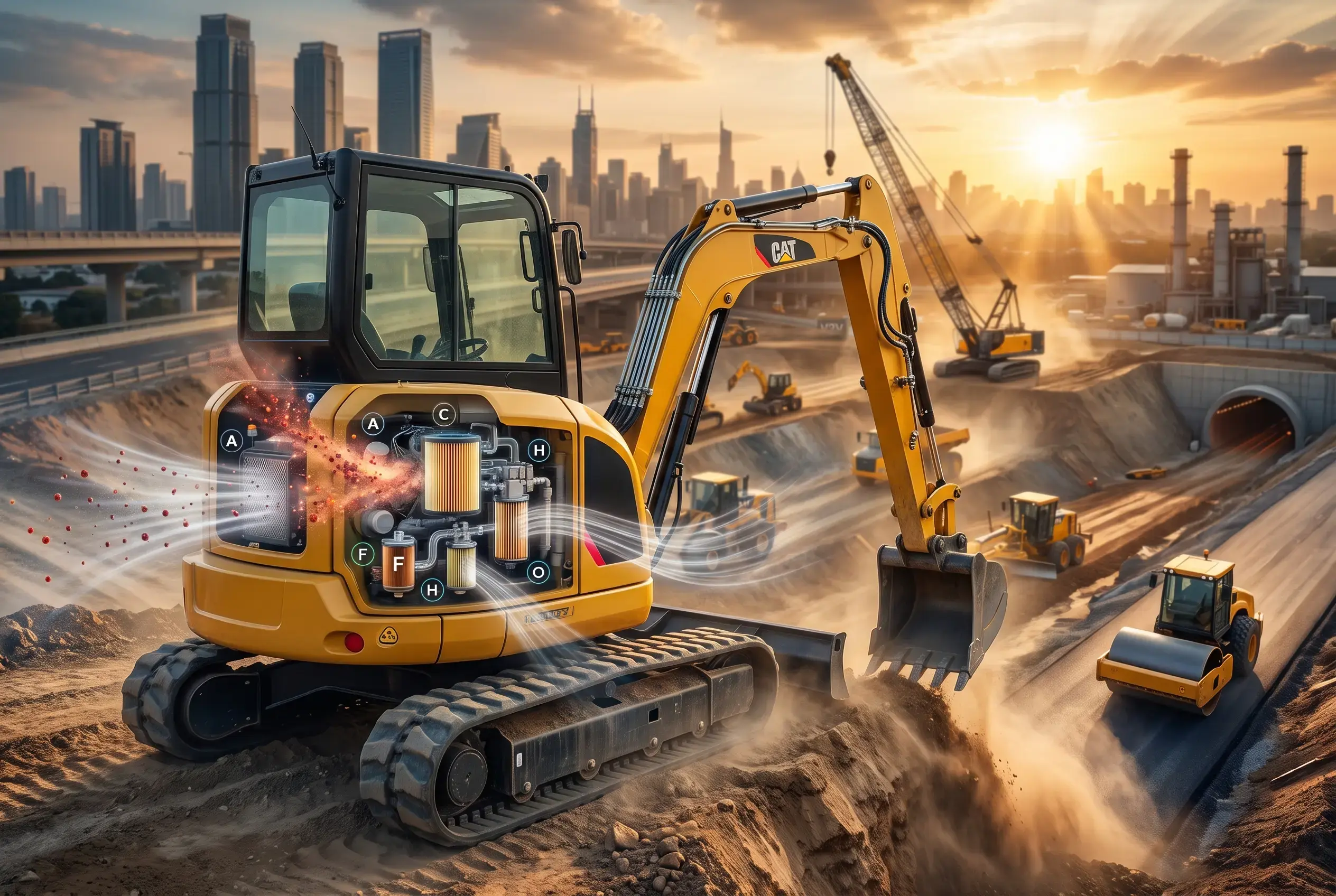
Understand how the quality of filtration systems can directly impact machine uptime and costs. This guide explains the main filter networks which protect your mini-excavator against abrasive dust particles and microparticles. Simple, structured maintenance procedures will help you to avoid unexpected engine wear and protect your precision hydraulic loops.
To achieve the best possible performance from a compact excavator, fleet owners must prioritize the role of filtration in maintaining engine power. Quality filter materials do more than catch larger dirt particles; they also prevent tiny debris, measured in microns, from entering sensitive internal systems.
When an excavator is fitted with high-quality filtration, it allows the engine to intake cleaner air, optimize fuel usage, and sustain ideal internal pressures. These improvements result in enhanced control, quicker cycles, and significant reductions in fuel consumption, potentially saving operators thousands annually. Our Triple Win Sets the Pace for Sharjah’s Racing Season
Ignoring these vital protective barriers leads to a series of mechanical inefficiencies that can delay project timelines. An inferior or blocked filter increases internal vacuum pressure, which forces the machine to exert more effort for routine digging tasks. This additional load leads to quicker wear and tear on components, the creation of hot spots, and decreased breakout force.
By investing in filters that meet original equipment manufacturer standards, you ensure that your machine consistently operates at its peak power, even under the toughest excavation conditions.
Internal combustion engines rely heavily on a significant flow of clean air for optimal diesel combustion, which makes the air filter the first defense against dirt and dust on the job site. Compact excavators typically feature a dual-element air filtration system, consisting of a sturdy outer primary filter and a fine inner safety filter. The outer filter captures larger dust particles, while the inner filter serves as an extra layer of protection for the intake manifold during routine maintenance.
Using a mini excavator with a blocked or subpar air filter restricts airflow, disrupting the vital air-to-fuel ratio necessary for efficient combustion. This blockage can lead to incomplete fuel burning, slow throttle response, black exhaust smoke, and a sudden 5% to 10% decrease in fuel efficiency. Operators should check the air filter indicator daily, use regulated compressed air to clean reusable outer filters from the inside out, and avoid washing paper filters with water or oil.
The hydraulic system is the powerhouse of a mini excavator, functioning under high pressure to move the boom, arm, bucket, and tracks. As hydraulic fluid circulates through precise control valves and pumps, internal contaminants can cause immediate damage. The reliability of this system is protected by a series of filters designed to capture wear particles.
As hydraulic fluid ages and is subjected to extreme temperatures, tiny metal shavings and fragments from seals can accumulate in the oil reservoir. Standard return filters effectively catch these contaminants before they can re-enter the main hydraulic pump, thus preventing the detrimental occurrence known as pump cavitation. Replacing hydraulic filters every 500 operating hours ensures the fluid remains clean, allowing for smooth joystick control, preventing arm drift, and avoiding costly pump failures.
Modern diesel engines depend on advanced high-pressure fuel injection systems to boost power and lower emissions. However, the tight tolerances of fuel injectors make them highly susceptible to damage from water and rust found in storage tanks. A robust fuel filtration system includes a primary water separator and a secondary fine-particle filter to clean the diesel fuel thoroughly.
Water is a major threat to fuel systems and can condense in the metal tank overnight as the machine cools. The water separator filter collects this moisture at the bottom of a clear bowl, making it simple to drain before each workday. Regularly replacing fuel filters prevents injectors from clogging or corroding, ensuring a consistent fuel spray pattern and avoiding engine misfires.
Engine oil performs crucial functions in a diesel engine, including lubrication, heat dissipation, and the suspension of carbon particles. The engine oil filter is essential for removing combustion residues, carbon flakes, and fine metal dust. Without a trustworthy filter, engine oil can quickly become abrasive and detrimental to internal components.
Changing the oil filter during scheduled preventative maintenance, approximately every 250 hours, keeps the oil clean and effective. High-quality spin-on oil filters are designed with durable steel housings and features that prevent dry starts in cold conditions. Taking the time to replace this cost-effective filter preserves engine compression, reduces internal friction that compromises power, and extends the operational life of your equipment.
To maximize the efficiency of a mini excavator, consistent maintenance is vital, with filtration quality being a critical factor in equipment longevity. By adhering to a disciplined maintenance schedule for air, hydraulic, fuel, and oil filters, owners can significantly reduce the likelihood of unexpected breakdowns on job sites.
Reliable filtration not only maintains essential component tolerances but also enhances fuel savings, ensuring that machinery consistently operates at peak performance. In the competitive construction industry, well-maintained machines yield higher profits. Treat your filtration systems as an essential investment in your operation, ensuring that your compact equipment delivers high-performance results for years.
How often should I replace the hydraulic filters on my mini excavator?
Hydraulic line and return filters should generally be replaced every 500 operating hours. However, if you're using heavy hydraulic attachments like concrete breakers, consider checking the filters more frequently due to increased wear.
Can I clean the inner air safety filter with compressed air?
No, the inner safety filter is a one-time-use item and should not be cleaned. It’s essential to keep it intact to protect the engine while the larger outer filter is being cleaned.
What signs indicate that my fuel filter needs to be replaced?
Common signs of a clogged fuel filter include a noticeable decrease in engine power, difficulty starting, rough idling, and engine hesitation. A severely blocked filter may completely restrict fuel flow, leading to stalling or misfiring.
Why is it risky to fill a new fuel filter with diesel before installation?
Filling a new filter with diesel can allow unfiltered fuel to enter, which could damage the precision components of the fuel injectors, even if the particles are microscopic.
How does a dirty air filter affect fuel consumption?
A dirty air filter limits the amount of clean air entering the engine, prompting it to burn more diesel to maintain its RPM. This often results in a 5% to 10% increase in fuel consumption and excessive carbon buildup in the combustion chamber.


Leave a comment
Your email address will not be published. Required fields are marked *