





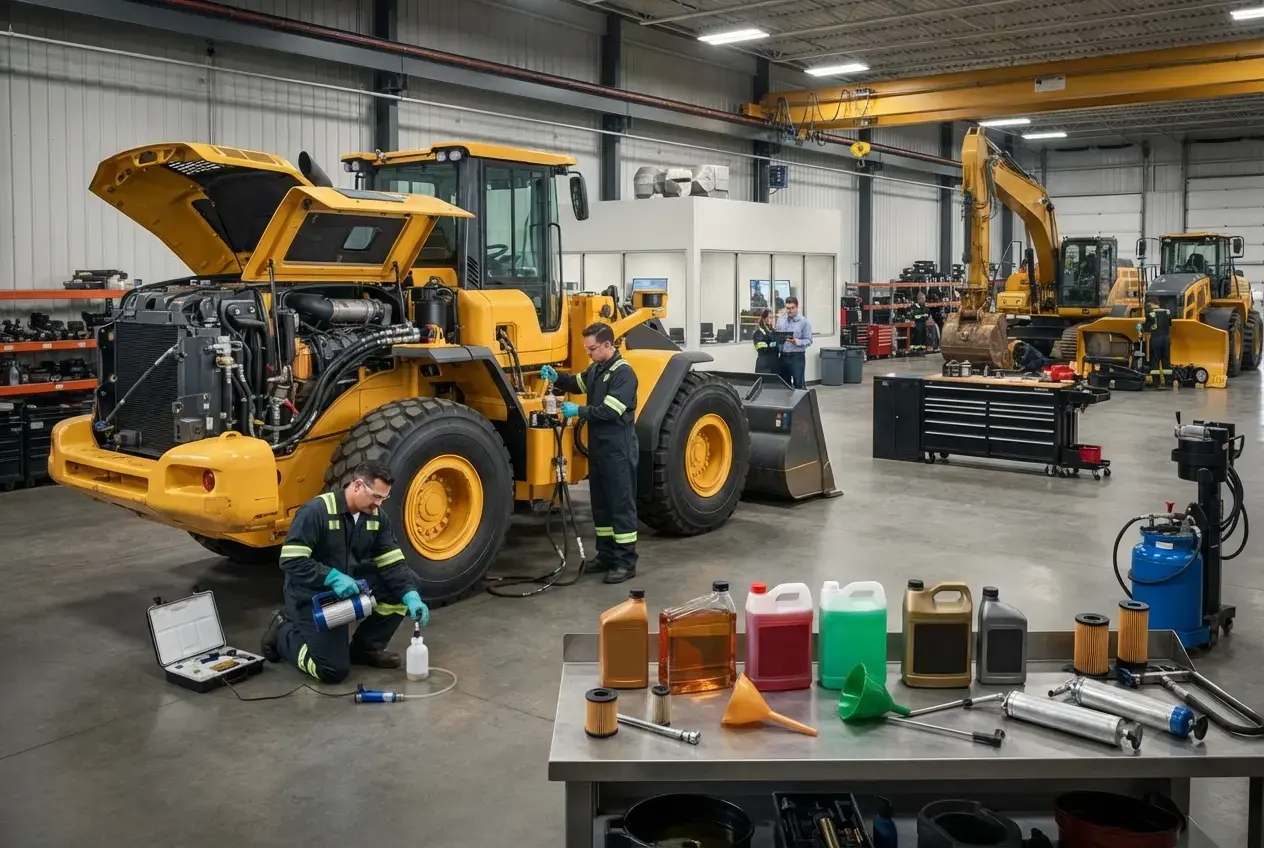
Our comprehensive guide to fluid maintenance will help you maximize the performance and life of your heavy earthmoving machinery. This article highlights six essential fluids that are required to protect engine, transmission and hydraulic systems against premature wear. Discover how daily fluid checks and regular fluid analysis can help prevent catastrophic component failures.
Wheel loaders are the muscle of choice for large-scale projects in infrastructure, mining and quarrying. These industrial workhorses operate in harsh environments with high temperatures and dense dust.
Operators must focus on the internal health of lubrication to keep these complex machines operating efficiently. It is important to keep your fluid reservoirs clean and properly stocked. This will help you avoid unexpected breakdowns and protect your investment.
The Rise Tower: Saudi Arabia’s New Tallest Icon
Implementing a fluid inspection program will protect your heavy equipment against the main causes of premature component wear. Metal surfaces are rubbed together violently when internal lubricants are low or contaminated by abrasive particles. Benefits of Renting a Luxury Car for Special Occasions
This causes intense friction and heat buildup. This gradual degradation damages delicate hydraulic seals and internal valves. It also puts excessive strain on the main powertrain. By monitoring these vital lifelines, maintenance crews can detect minor leaks or system abnormalities earlier. This keeps your fleet reliable and active.
Engine oil is the key to your machine's performance. It lubricates internal parts at high speeds. Engine oil absorbs heat from combustion and directs harmful soot particles to the filter system. It also reduces metal-to-metal contact within cylinders.
The engine oil dipstick should be checked daily before starting the shift. This will ensure that the system is filled to the correct volume and prevent internal scoring. You should replace your filter or inspect the seals if you notice an abrupt drop in oil or a burnt, dark texture.
The wheel loader's main digging and lifting abilities are entirely dependent on its hydraulic system. The hydraulic fluid is the medium of energy transfer, pushing heavy cylinders in order to operate the front bucket and steering joints smoothly.
Low fluid levels can introduce air bubbles to the lines, which causes spongy responses and slow cycle times. Pump cavitation is also a danger. The operators must verify that the oil in the main hydraulic reservoir is clean and free from water contamination by checking the clear view glass.
Transmission systems are put under tremendous structural stress by the immense torque needed to push a bucket full of rock into a densely packed face. Transmission fluid is responsible for cooling, lubrication of gears, and hydraulic pressure needed to shift gears under maximum payload stress smoothly. Low or scorched transmission oil can cause internal clutch slippage and gear delay, as well as excessive heat buildup which damages internal gears. This fluid level can be checked while the engine idles to ensure that your machine retains its full tractive force without wasting any fuel.
The cooling system of heavy earthmoving engines can easily melt internal components. The engine coolant is a mixture of antifreeze and water that circulates in the engine block to absorb and dissipate heat. Low coolant levels and incorrect chemical balance can cause engine overheating.
This leads to cracked cylinder heads and costly downtime. Every pre-shift inspection should include checking the overflow reservoir for blockages and the radiator core for debris.
The wheel loader hubs and axles are equipped with heavy-duty planetary systems to handle rotational forces as well as ground shocks. The axle gear oil cushions the massive steel teeth to prevent chipping and friction wear when running high-load transport across rough quarry terrain.
These gear compartments, which are close to the ground, are very vulnerable to seal damage caused by hidden rock impacts or wire debris. You can detect internal oil contamination and slow leaks by checking the oil level plugs located on the axles.
To ensure that a wheel loader capable of carrying up to 20 tonnes can safely stop on steep ramps in a quarry, it is essential to have braking systems with complete reliability. Modern loaders often use brake fluid or specialized hydraulic oils to activate the heavy-duty disc brakes inside the axles.
Contaminated fluids can reduce the boiling point, resulting in dangerous brake fade when hauling at high speeds. By checking the brake fluid reservoir and testing line pressures daily, you can ensure that your operators have the maximum stopping power on tight job sites.
Fluid management is essential to maintaining top performance on construction and mining sites. You can protect your vehicle from premature wear by regularly monitoring the engine oil, transmission fluid, hydraulic fluids, axle gear oils, brake fluids, coolant and axle oil.
These simple daily checks may take a few minutes more before each shift, but they can save you thousands in emergency repairs. In the end, your wheel loader fleet will remain strong, safe and highly productive if you keep these six fluids properly topped off and clean.
It is important to check the sight glass of the hydraulic fluid reservoir every day before you start your shift. This will ensure that the system has been properly refilled and free from any air bubbles or discoloration.
The oil will appear milky or cloudy or even frothy when water or coolant has leaked into the engine oil. This is a sign that you should check your head gasket immediately.
You should not mix different transmission fluids. This is because the chemical additive packages in each can cause conflict. This could lead to poor gear shifting, reduced lubrication properties and increased clutch wear.
The planetary gears in the axles are subjected to extreme torques and shocks. Specialized gear oils contain extreme-pressure additives which stick to metal teeth and prevent direct wear.
Brake fade occurs when old, moisture-contaminated brake fluid boils due to the intense heat generated during heavy braking, creating air pockets that severely reduce your total stopping power.


Leave a comment
Your email address will not be published. Required fields are marked *