





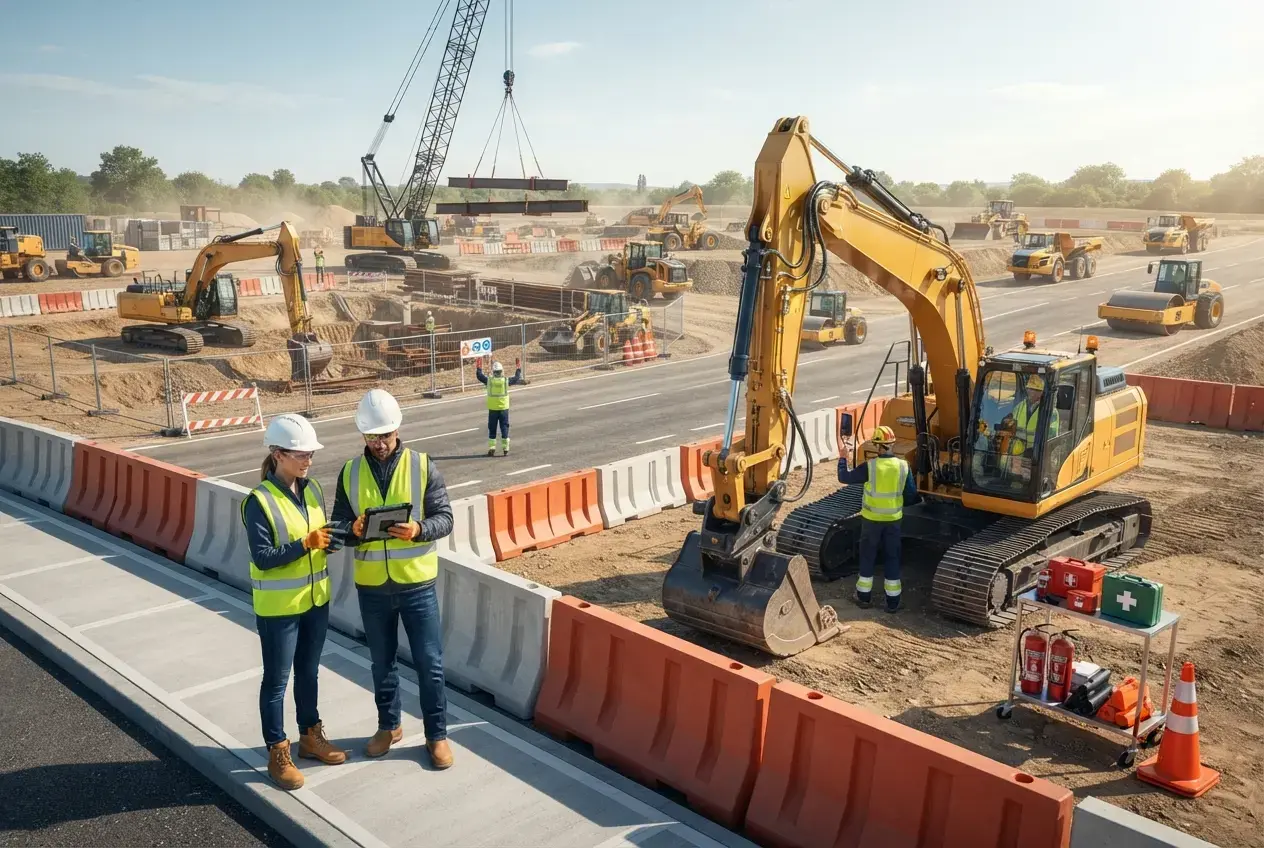
The most important priority for any construction project is to maintain a safe work environment. The risks of operating massive earthmovers and cranes are so high that strict protocols must be followed. Our ultimate guide will reveal the five strategies that your team must implement to avoid accidents, prevent costly gear damage and ensure your job site is completely secure.
Construction sites are dynamic, fast-changing environments where heavy machinery and ground crews share confined spaces. In order to manage fleet operations effectively, it is important to prioritize the safety of all personnel on the ground as well as project deadlines. Inadequate equipment maintenance or lapses in situational awareness may cause serious injuries and financial liability, as well as project delays. The best way to reduce job site risks is by implementing rigid, everyday safety measures.
Smarter Heavy Machinery with Komatsu API Integration
Five essential practices for ensuring total safety around large machines
Your machine operators are the foundation of any truly safe project. Uncertified or untrained employees stepping into an excavator cab, bulldozer cab, or crane cab is a huge liability and violates international labor regulations. Before anyone can be cleared to operate alone, comprehensive onboarding programs should combine intensive classroom training with hands-on evaluations in the field. Regular refresher training ensures that experienced operators are always up-to-date on the latest safety features, electronic systems updates and risk management strategies.
Before starting any engine, a structured and brief inspection can reveal hidden mechanical faults. This will prevent them from becoming serious field failures. Crew leaders should require operators to use a daily checklist that requires them to check for leaks of hydraulic fluid, structural steel cracks and worn tires or tracks. Operators must also test internal functions such as backup alarms and active brake systems before entering active zones. If any component fails the inspection, it should be immediately tagged out until certified mechanics have completed repairs.
Heavy machinery has large blind spots, which make it hard for the operator to see ground crews or utility structures in proximity. Before moving near running machines, ground crews should maintain a safe distance and make eye contact with the operators. When performing complex maneuvers or reversing into tight corridors, using highly trained spotters with radios and standard hand signals can be extremely helpful. Creating clear and physically separate paths for pedestrians, heavy vehicles, and workers will also prevent accidents.
Surprisingly, many construction site accidents occur when workers climb into or out of the operator's cabin. Workers must always adhere to the three-point rule. This means that two hands and one leg (or two legs and one hand) should be securely gripping the machine's handrails and steps at all times. The crew must not carry any loose items, such as documents or personal belongings, while climbing. This compromises the grip stability. It is also important to note that it should be prohibited under any circumstances for crew members to jump down from high cabs or exit moving vehicles.
Unattended massive equipment or equipment incorrectly parked can create extreme safety risks for the next shift and nearby traffic. When an operator leaves a machine, they must lower all hydraulic attachments (such as buckets for excavators, arms for loaders, and blades for bulldozers) flat against the solid surface. The engine must be completely turned off, the transmission locked in neutral, and the parking brake engaged. Workers must use durable wheel chocks to prevent rolling if parking on a slope cannot be avoided.
To create a safe workspace for heavy equipment, you need to be persistent, communicate clearly, and refuse to take shortcuts. You can eliminate most field accidents by implementing daily inspections and requiring thorough operator certifications. Protecting your employees does more than ensure regulatory compliance. It also protects you from costly liability claims and safeguards the heavy financial investments that your company has made.
The ground worker should immediately move back to a safe distance and make direct eye contact without any obstruction with the operator. Before moving forward, they should wait until a positive hand signal is given or a radio confirmation confirms their presence.
Protocols such as lockout-tagout prevent machines from accidentally being started or from releasing harmful residual hydraulic pressure when mechanics are performing work. This practice is vital to protect technicians from unexpected, sudden component movements.
The slippery surfaces of the construction site can be a result of heavy rain, snow and ice. This can lead to heavy machinery slipping or falling over. Operators need to constantly assess the ground conditions and adjust their driving speed accordingly.
Modifying structural equipment or adding unapproved attachments to the machine can seriously compromise its engineered weight distribution. This will also affect its rated lifting limit. Unauthorized tampering often leads to mechanical failures or vehicle rollovers.
All personnel should wear a high-visibility vest so that operators can spot them. They must also wear hard hats to protect against impact, steel-toed shoes to prevent crushing injuries and safety glasses.


Leave a comment
Your email address will not be published. Required fields are marked *