






17.5-Ton Wheeled Excavators: The Urban Infrastructure & Utility Guide
Major road rehabilitation, city utility expansions, and rapid infrastructure updates across the United Arab Emirates require heavy equipment that balances strong digging power with fast road mobility. Classic crawler-track machines dominate large, open desert job sites. However, active urban developments require nimble, rubber-tired excavators that move quickly between job sites on their own power without damaging finished road surfaces.
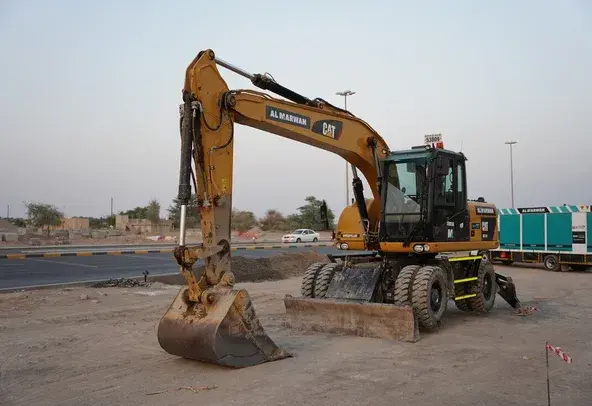
The 17.5-ton wheeled excavator stands out as an essential utility workhorse for top contractors in Dubai, Abu Dhabi, and Sharjah. Equipped with a heavy-duty standard boom, a 17.5-ton wheeled unit helps contractors avoid expensive low-bed trailer transport costs, maneuver easily through busy city streets, and keep time-sensitive projects on schedule.
Technical Performance Profile of 17.5-Ton Wheeled Excavators
Operating rubber-tired equipment in the Middle East exposes electronics, structural frames, and drive systems to harsh environmental wear. Intense summer heat, fine airborne sand, and dense subsurface gypcrust demand heavy-duty machinery built to withstand extreme conditions.
Our machinery facility in Dubai supplies 17.5-ton wheeled excavators featuring specialized components designed for tough local environments:
- High-Torque Powertrains with Fast Road Travel: A fuel-efficient, turbocharged diesel engine powers this 17.5-ton machine. Engineers tuned the engine to deliver high torque at low speeds. As a result, the excavator digs continuously through dense caliche and hardpan without stalling. Additionally, a smooth hydrostatic transmission allows the machine to travel between urban job sites at speeds up to 35 km/h, saving fleet managers significant transport costs.
- Independent Flow Control and High-Pressure Hydraulics: Dual-displacement axial piston hydraulic pumps convert raw engine output into strong physical force. Advanced hydraulic architecture processes high fluid volumes at elevated system pressures. Consequently, operators can break through worn rock, packed gravel, and thick asphalt without losing speed or hydraulic pressure.
- Tropicalized Thermal Management Systems: Surface temperatures in the UAE frequently exceed 50°C during summer months. To prevent fluid breakdown and system overheating, our 17.5-ton excavators use a side-by-side tropicalized cooling package. Oversized engine radiators, independent hydraulic oil coolers, and automatic reversing fans keep internal temperatures stable during double-shift summer workloads.
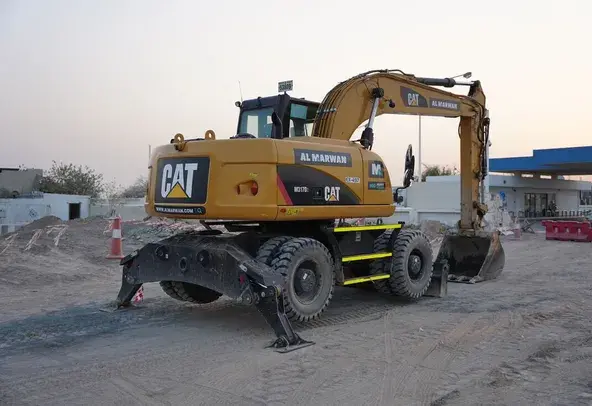
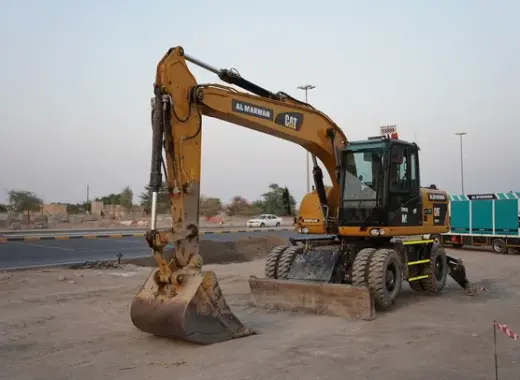
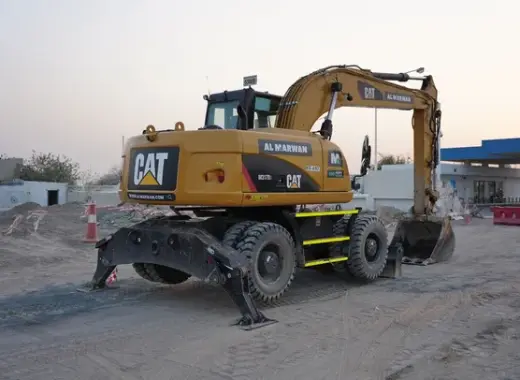
- Heavy-Duty Drive Axles and Outrigger Stabilizers: Unlike crawler excavators that rely on wide steel tracks for balance, wheeled machines operate on heavy-duty rubber tires. Oversized oscillating drive axles absorb heavy shock loads during travel. When digging or lifting heavy loads, operators deploy a front dozer blade and hydraulic outriggers to lock the frame securely to the ground, providing a rock-solid work platform.
Key Operational Advantages
Configuring a 17.5-ton wheeled excavator with a standard boom offers distinct operational and financial benefits for urban civil works:
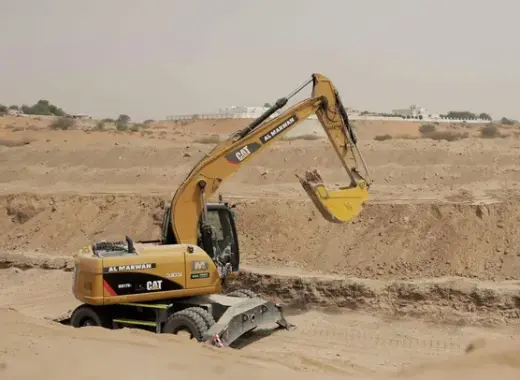
- Efficient Digging Dynamics: The standard boom geometry keeps the bucket close to the machine's primary pivot pins. Because the frame experiences minimal flex under load, hydraulic power flows directly to the bucket edge without wasting energy.
- Enhanced Load-Handling Stability: A heavy upper frame keeps the machine's center of gravity close to the middle. Thanks to this balance, crews can safely lift, swing, and set utility vaults, trench boxes, and heavy concrete pipes with minimal chassis movement.
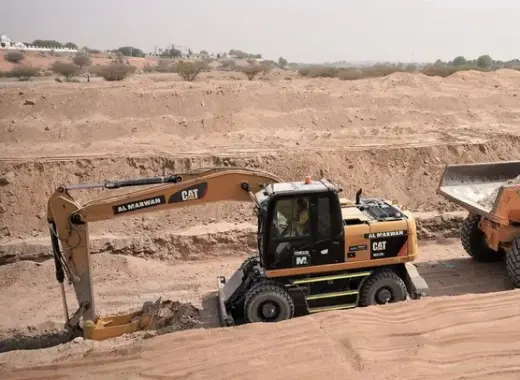
- Fast Truck Loading Cycles: Deploying the outriggers creates a rock-steady digging base that supports large 0.6 m³ to 0.9 m³ buckets. As a result, operators fill standard double-axle dump trucks in fewer passes to keep haul fleets moving quickly.
- Torsional Load Absorption: Thick, high-tensile steel castings and internal cross-baffling strengthen key stress points across the boom. Consequently, the frame absorbs heavy bending forces during tough digging, preventing weld fatigue and stress cracks over thousands of working hours.
Primary Uses and Job Site Applications
A 17.5-ton wheeled excavator is a versatile asset across several key UAE sectors thanks to its high digging output and easy mobility:
- Asphalt Repair & Urban Roadwork: Municipalities prohibit steel-tracked machines on finished city streets. In contrast, a wheeled excavator drives directly onto asphalt surfaces, uses a hydraulic breaker to open old pavement, digs out sub-base layers, and loads dump trucks without damaging surrounding road lanes.
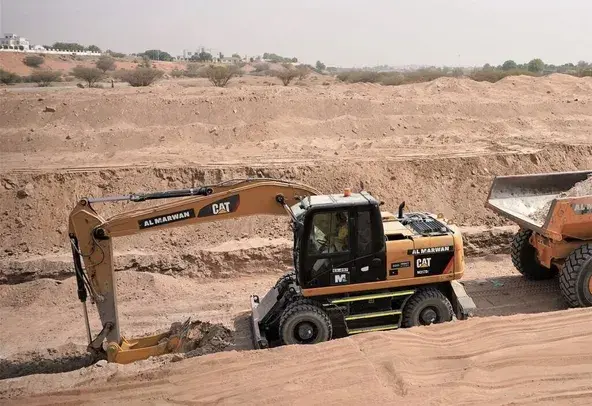
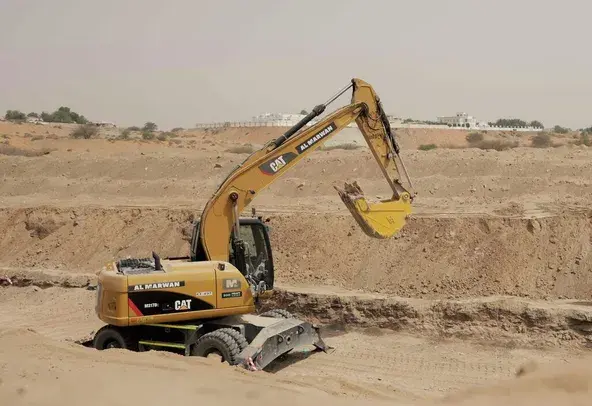
- Mainland Trenching for Municipal Utilities: Expanding cities require miles of new trenches for water mains, sewer lines, and district cooling networks. A 17.5-ton wheeled excavator cuts cleanly through hard surfaces, straddles open trenches, and quickly drives out of traffic lanes when shifts end.
- Emergency Utility Repair & Public Works: Public works departments value wheeled excavators for urgent repairs. If a water main bursts or a landslide blocks a mountain road in the Northern Emirates, a wheeled unit can deploy from the depot and drive straight to the site at highway speeds—eliminating lowboy transport delays.
Overview
Investing in a 17.5-ton wheeled excavator with a standard boom is a smart choice for contractors managing municipal, roadwork, and utility projects in the United Arab Emirates. This platform helps teams meet tight deadlines while protecting operating margins by combining high digging output with low transport logistics and simple maintenance needs.
Ultimately, heavy equipment performance relies on a strong local dealer network. At our heavy machinery facility in Dubai, United Arab Emirates, we support your equipment throughout its entire service life. We provide full technical service, scheduled maintenance packages, and a comprehensive stock of genuine replacement parts to keep your job sites working every day.
Frequently Asked Questions
1. What popular excavator models fall into the 17- to 19-ton wheeled class?
Well-known models in this weight class include the Caterpillar M318, Komatsu PW160 / PW180, Volvo EWR150E / EW160E, and Liebherr A 918. Generally, these machines produce between 140 and 175 horsepower.
2. How fast can a 17.5-ton wheeled excavator travel on public roads in the UAE?
Most modern 17.5-ton wheeled excavators feature multi-speed hydrostatic transmissions that allow road travel speeds up to 30–35 km/h. This allows operators to drive between city job sites quickly without using a flatbed lowboy trailer.
3. Why are outrigger stabilizers and dozer blades necessary on a wheeled excavator?
Rubber tires flex under heavy loads, which can cause chassis instability during deep digging or heavy lifting. Hydraulic outriggers and a front dozer blade press firmly into the ground to lift the tires slightly, creating a wide, rigid base that equals the stability of a tracked machine.
4. How does a wheeled excavator prevent damage to finished asphalt roads?
Unlike steel crawler tracks that scratch, crack, and gouge road surfaces during turns, a wheeled excavator uses large pneumatic rubber tires or solid dual-rubber tires. These tires distribute the machine's weight smoothly, allowing it to work on paved urban streets without damaging the asphalt.
5. What attachments are commonly used with a 17.5-ton wheeled excavator for city utility work?
City utility teams frequently equip 17.5-ton wheeled excavators with tiltrotators, hydraulic breakers, asphalt cutters, compaction wheels, and trenching buckets. A quick-coupler system allows the operator to switch tools in seconds directly from the cab.