






98-Ton Rigid Dump Trucks: The Heavy Mining & Bulk Hauling Guide
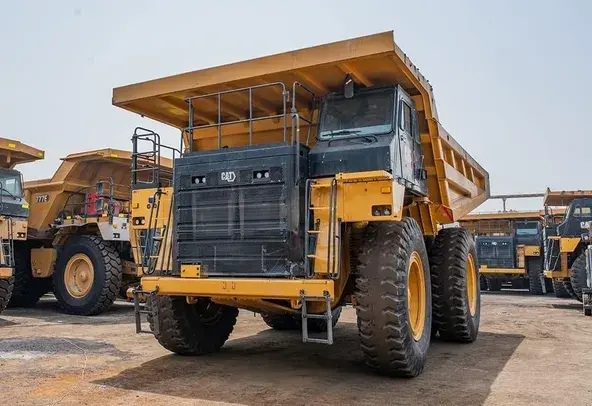
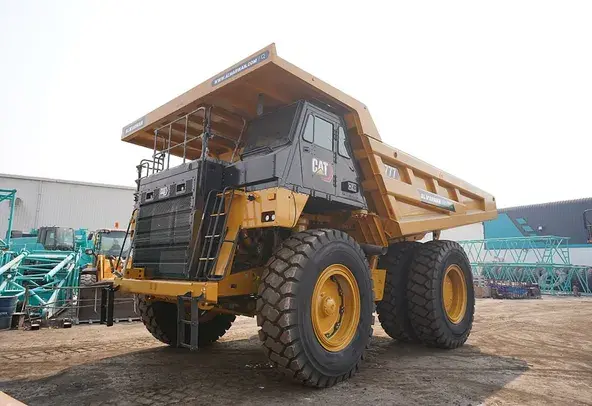
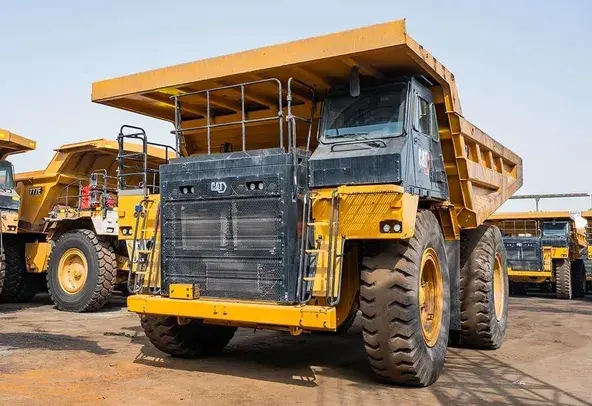
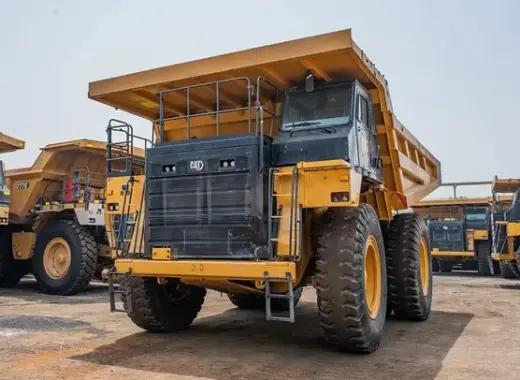
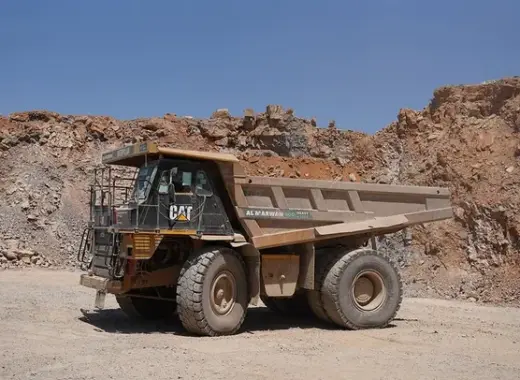
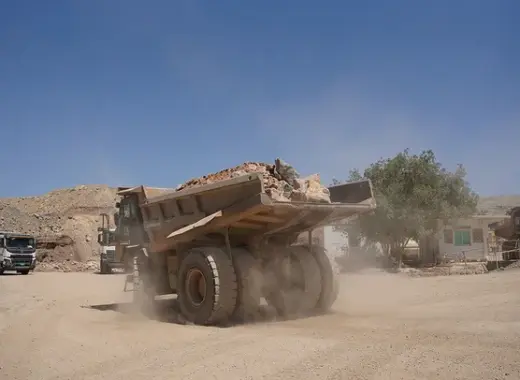
The ultimate goal in mass excavation and resource extraction is moving bulk material quickly at the lowest cost per ton. While articulated haulers excel on soft or uneven ground, 98-ton rigid dump trucks represent the primary workhorses for high-tonnage hauling on established roads. In fact, weighing about 200,000 lbs empty and twice that when fully loaded, this heavy equipment class delivers incredible structural durability.
Engineering and Structural Design
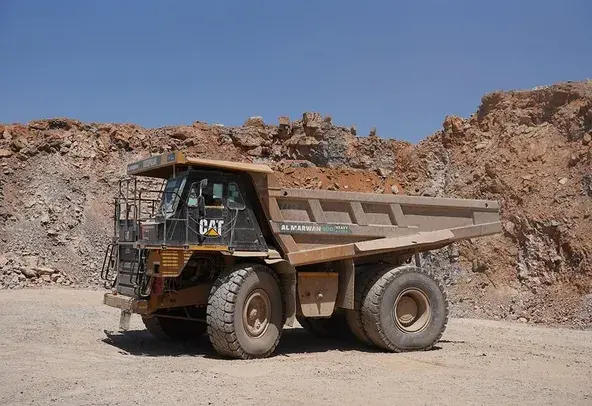
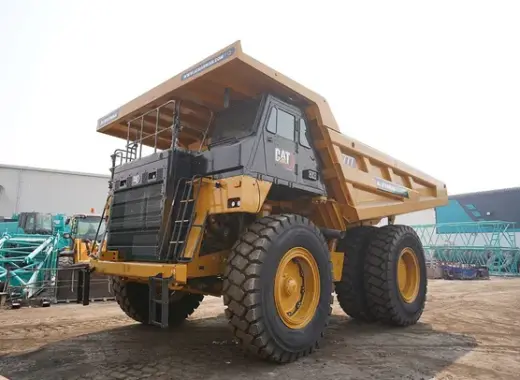
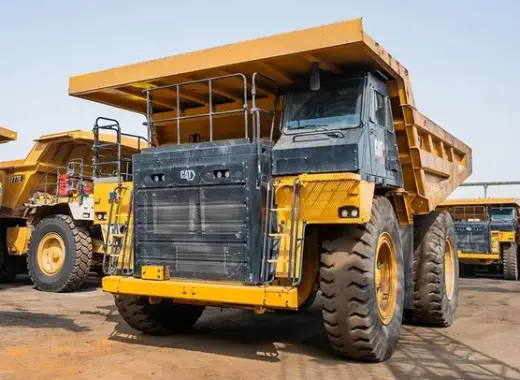
A single, heavy-duty box-section frame serves as the foundation of a 98-ton rigid dump truck:
- Heavy-Duty Rigid Chassis: Unlike articulated trucks that bend at a central joint, a rigid truck uses high-strength steel castings in key stress areas. As a result, this design easily absorbs the heavy impact forces of large mining excavators dropping tons of rock into the dump bed.
- High-Output Turbocharged Powertrain: A large-displacement diesel engine paired with an advanced electronic planetary transmission powers the truck. Consequently, this setup maintains high travel speeds while climbing steep, fully loaded haul road inclines.
- Downhill Braking & Safety: Oil-cooled multi-disc brake systems provide fade-resistant retarding during continuous downhill cycles. Therefore, the truck stays safe and fully under control even on steep pit declines.
Primary Uses and Applications
Engineered for high-cycle, high-output environments, the 98-ton rigid dump truck excels on busy haul routes where speed and payload maximize revenue:
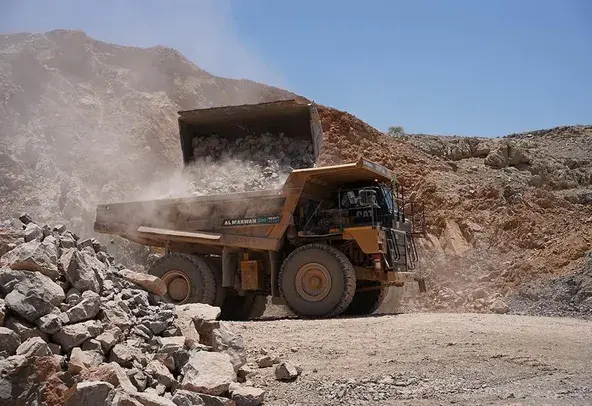
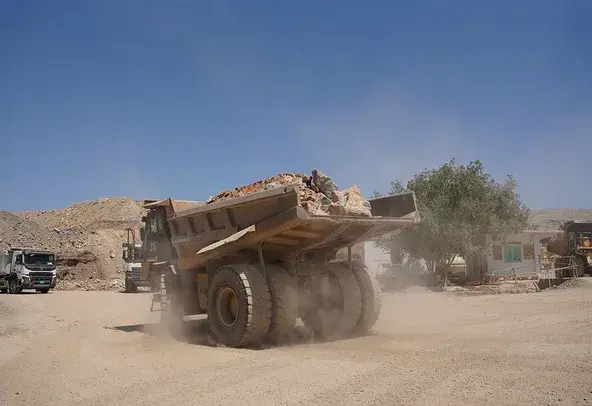
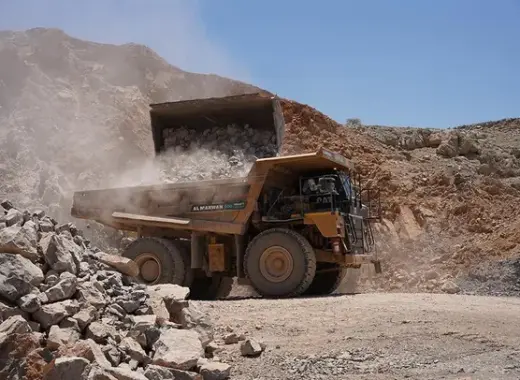
- Large-Scale Open-Pit Mining: Serves as a core fleet asset in open-pit mines for iron ore, coal, copper, and gold. Operating directly under large mining excavators and wheel loaders, these trucks haul massive payloads from deep pits straight to processing plants.
- Commercial Aggregate Quarries: Moves thousands of tons of crushed limestone, granite, and gravel daily from the active quarry face directly to primary crushers.
- Large Earthen Dam Construction:In addition, it hauls massive volumes of rock, clay, and core materials required for major civil infrastructure projects like hydroelectric dams and reservoirs.
- Overburden Removal & Land Reclamation: Efficiently moves thick layers of topsoil and weathered rock to clear mining sites. Furthermore, it works just as effectively during late-stage land reclamation by returning clean earth to restore natural landscapes.
Key Operational and Financial Benefits
- High Ton-Per-Hour Output: Moves significantly more material per shift than smaller haul trucks, thereby reducing project timelines and operating costs.
- Long Frame Lifespan: Eliminating a central articulation joint reduces frame twist. As a result, these heavy-duty chassis can operate for tens of thousands of hours through multiple component overhauls.
- Fuel-to-Payload Efficiency: Features lock-up torque converters, smart fuel management systems, and eco-shift modes to ensure the engine burns minimal diesel per payload ton.
- Integrated Payload Weighing: Electronic sensors measure suspension compression to give real-time weight data. Consequently, this prevents both inefficient under-loading and tire-damaging over-loading.
- Safe Downhill Speed Control: Advanced hydraulic retarders maintain safe downhill speeds without wearing out the primary service brakes on steep pit ramps.
Overview
The 98-ton rigid dump truck serves as an essential cornerstone for the global mining, quarrying, and heavy civil construction sectors. By pairing an unbreakable structural chassis with high travel speeds and smart payload monitoring, this machine solves high-volume material transport challenges. Whether climbing steep open-pit ramps or supplying a large aggregate crusher, a 98-ton rigid truck keeps operations safe, efficient, and profitable.
Frequently Asked Questions
1. What popular truck models belong to the 98-ton rigid dump truck class?
Key models in this 90- to 100-ton payload category include the Caterpillar 777 (such as the CAT 777G), Komatsu HD785, and Hitachi EH1700.
2. What is the average engine horsepower for a 98-ton rigid dump truck?
A 98-ton rigid dump truck is typically powered by a heavy-duty 12- or 16-cylinder industrial diesel engine producing between 1,000 and 1,200 net horsepower.
3. How many passes does it take to load a 98-ton rigid dump truck?
A 98-ton rigid truck is pass-matched to fill in 3 to 5 quick cycles when paired with a 100-ton+ mining excavator (like a CAT 6015 / 6020) or a 116-ton wheel loader (like a CAT 993).
4. What type of haul road is required for a 98-ton rigid dump truck?
Rigid dump trucks require firm, well-maintained, well-drained haul roads with compacted rock or gravel bases. However, they are not designed for deep mud or soft, uncompacted soil, where articulated dump trucks perform better.
5. How are 98-ton rigid dump trucks transported between job sites?
Because of extreme weight and width, a 98-ton rigid dump truck cannot travel on public roads. Therefore, it is disassembled—removing the dump body, cab overhang, tires, and counterweights—and transported across multiple heavy-haul trailers before reassembly on site.