






14-Ton Medium Excavators: The Urban Infrastructure & Utility Guide
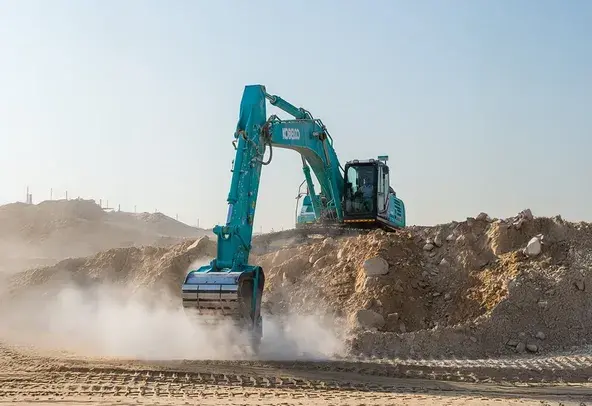
Developing contemporary commercial properties, residential complexes, and intra-city transit systems across the United Arab Emirates requires heavy gear that strikes a balance between raw power and precise maneuverability. While deep hillside quarries call for massive 50-ton heavy excavators, dynamic metropolitan job sites need adaptable, fast-cycling equipment that operates cleanly close to ongoing traffic, existing structures, and underground utilities without shutting down entire city blocks.
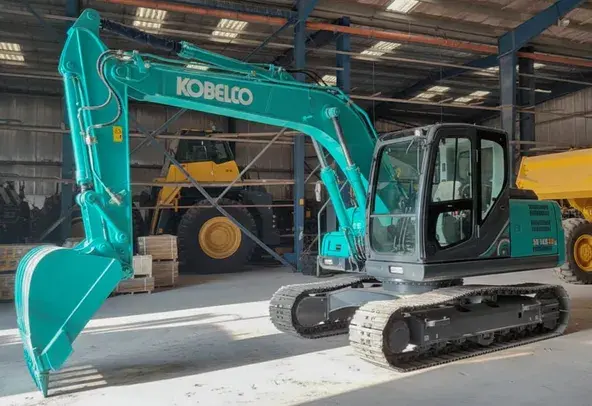
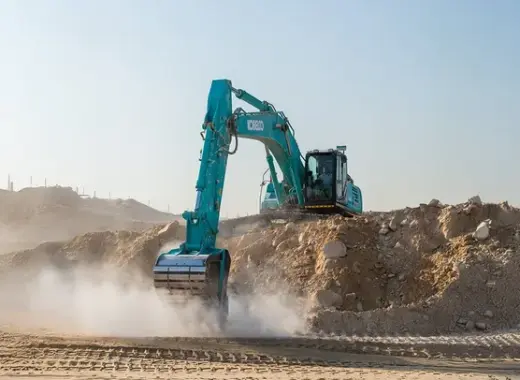
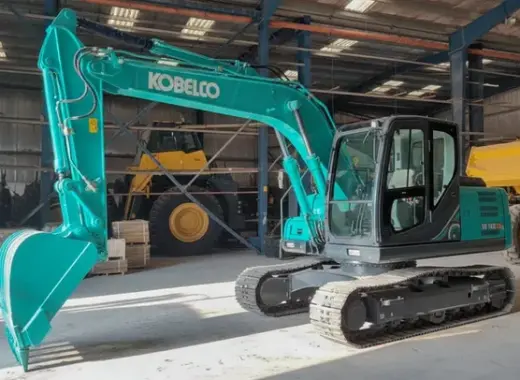
The 14-ton medium excavator represents the benchmark for urban utility engineering in the global construction sector. For civil contractors operating in Dubai, Abu Dhabi, and the Northern Emirates who must optimize daily material movement in space-restricted environments, it is an ideal choice. Equipped with a sturdy standard boom structure, a 14-ton excavator delivers the exact breakout forces, fuel efficiency, and straightforward logistics needed to keep busy municipal contracts on schedule.
Technical Performance Profile of 14-Ton Medium Excavators
Operating mid-sized crawler equipment across the Arabian Peninsula subjects a machine's architecture to severe environmental stress. Standard imported equipment can quickly overheat, lag, or suffer component wear due to ambient summer heat waves, fine airborne silica particles, and dense subsurface gypcrust layers.
Units deployed through our Dubai commercial depot are built to a tropicalized specification to handle these local challenges. Every system is modified to maintain high-production cycles at demanding Middle Eastern job sites:
- Intelligent Load Sensing in High-Density Powertrains: A low-emission industrial diesel engine set up for optimal low-end torque density serves as the main power source. This engine produces high digging force early in the power band at lower RPMs. When the bucket encounters embedded limestone or deep caliche, this mechanical tuning prevents engine dragging. Integrated Electronic Control Units (ECUs) continuously analyze load-sensing data from the main pumps to dynamically reshape fuel-injection maps, optimizing fuel economy per cubic meter of displaced material.
- Dynamic Force Matching with High-Pressure Hydraulics: High-pressure, dual-displacement axial piston hydraulic pumps convert raw engine output into physical force. The hydraulic architecture optimizes bucket breakout and arm crowding forces while processing large volumes of fluid at high system relief pressures. This allows operators to cut through weathered rock, gravel beds, and thick asphalt without dropping hydraulic pressure or extending cycle times. The result is smooth simultaneous multi-function control, allowing the operator to hoist, swing, and dump in a single fluid motion.
- Tropicalized Thermal Management Arrays: Surface and track-level temperatures in the UAE frequently reach 50°C and higher. Our 14-ton medium excavators use a side-by-side tropicalized cooling kit combining an independent, high-capacity hydraulic oil cooling matrix with an extra-wide core engine radiator. An automated, variable-speed hydraulic fan with a self-cleaning reversing cycle keeps internal temperatures stable throughout continuous summer shifts.
- Sand-Isolated Undercarriages with Heavy Rock Shields: Fine-grain desert sand acts as an abrasive grinding compound on exposed moving parts. Lower crawler assemblies feature fully sealed and permanently lubricated track chains (SALT design) to prevent abrasive grit from entering pin-and-bushing joints. Additionally, thick steel bottom rock guards and full-length track guides support the undercarriage, protecting against track derailments and structural twisting on uneven quarry floors or demolition debris fields.
Operational Advantages of the Standard Boom Layout
Setting up a 14-ton medium excavator platform with a sturdy standard boom assembly yields a balanced mechanical footprint for site development, urban utility layouts, and civil works. The standard boom geometry offers key structural and commercial benefits:
- Maximum Tear-Out Force & High-Efficiency Digging: The standard boom's physical dimensions minimize the distance between the work tool and the machine's primary pivot pins. Its compact leverage structure ensures heavy hydraulic cylinder pressure travels directly to the bucket edge with minimal structural flexing. By optimizing these power angles, 14-ton excavators deliver breakout and tearing forces that allow operators to cut through tough subsurface layers faster than thin, long-reach configurations.
- Improved Ground-Level Balancing & Load Handling: The standard boom configuration maintains a safer center of gravity during high lifts by keeping the payload closer to the heavier upper frame. This structural balance maximizes lifting capabilities over a full 360-degree swing radius. Ground personnel can safely lift, swing, and install large pre-cast concrete stormwater bends, steel trench boxes, and industrial utility vaults with minimal chassis rocking.
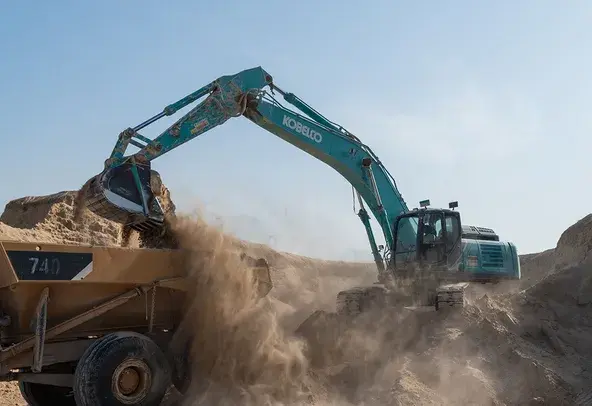
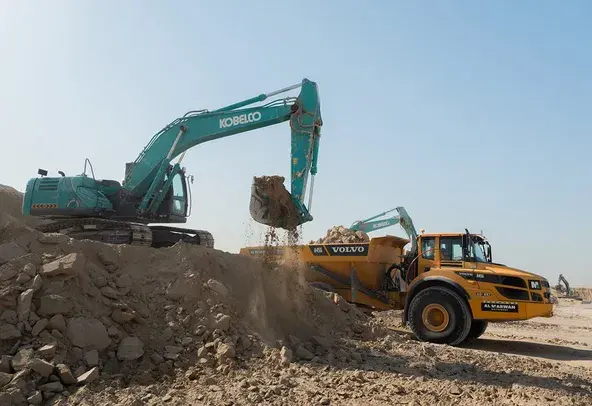
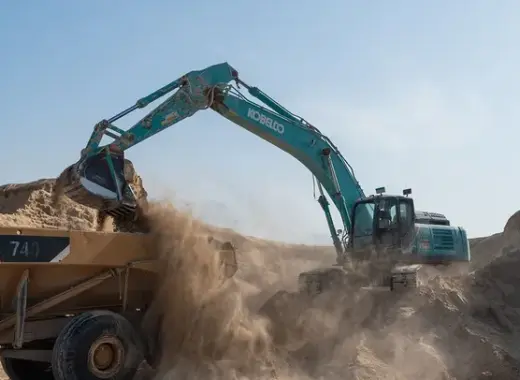
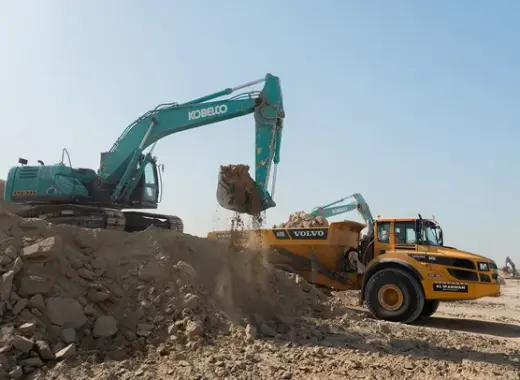
- Optimized Bucket Volume & Faster Truck Cycles: Because the conventional boom maintains high platform stability, fleet managers can outfit 14-ton excavators with heavy-duty or high-capacity general-purpose rock buckets. This balance keeps the front end from diving when handling dense materials, reducing overall truck-idle overhead and speeding up haulage cycle times by enabling operators to load medium articulated dumpers or double-axle tippers in fewer passes.
- Torsional Load Absorption & Fatigue Resistance: Standard booms feature internal cross-baffling plates supporting thick, high-tensile steel castings at crucial stress areas. Over thousands of hours of high-impact excavation, this structural design absorbs bending pressures to prevent weld fatigue and stress cracks.
Primary Uses and Job Site Applications
The 14-ton standard boom excavator's versatile footprint and material output make it a multi-role asset across several key UAE sectors:
- Urban Civil Infrastructure & Site Preparation: Comprehensive land grading and earthwork are necessary before commercial towers, retail establishments, or master-planned communities rise. The 14-ton machine excels at bulk excavation, mass land leveling, creating foundation layouts, and excavating basements in densely populated areas.
- Utility Mainline Pipeline Installation: Large-scale infrastructure networks require miles of deep trenches to install high-capacity district cooling lines, freshwater mains, and main sewerage networks. The 14-ton machine carves out these broad channels cleanly while providing the lifting stability required to lower concrete and composite pipe sections into position.
- Transportation Infrastructure & Roadworks: Expanding the UAE's highway network requires removing outdated road bases, cutting through varying terrain elevations, and loading continuous lines of multi-axle tipper trucks. The 14-ton medium excavator is a popular choice for transport infrastructure fleets due to its quick cycle times and mobility.
Overview
Investing in a 14-ton medium excavator with a standard boom is a strategic decision for commercial contractors looking to execute earthmoving, road construction, and utility infrastructure projects in the United Arab Emirates. This platform combines high material processing output with simple over-the-road transport logistics and lower overall maintenance costs.
The reliability of a heavy asset depends on the regional dealer network supporting it. We concentrate on the full operating lifecycle at our heavy machinery facility in Dubai, United Arab Emirates, providing comprehensive technical support, scheduled maintenance packages, and an inventory of genuine spare parts to keep your fleet running smoothly.
Frequently Asked Questions
1. What popular excavator models belong to the 13- to 15-ton weight class?
Key models in this weight class include the Caterpillar 313 / 315, Komatsu PC138US, Volvo EC140E, and Hitachi ZX135US. These production excavators typically deliver between 100 and 120 net horsepower.
2. What is the standard bucket capacity for a 14-ton excavator?
Depending on material density and arm length, a 14-ton excavator generally operates with general-purpose or heavy-duty buckets ranging from 0.5 to 0.8 cubic meters in capacity.
3. Why are short-tail swing (compact radius) options popular in 14-ton excavators?
Short-tail swing designs allow the upper frame to rotate within or slightly beyond the track width. This enables operators to work safely against building walls, inside tight highway lanes, or between urban utilities without risking counterweight collisions with nearby traffic or obstacles.
4. Can a 14-ton excavator be transported on a standard flatbed truck without special permits?
Yes. Due to its compact operating weight and narrow transport width (typically around 2.5 to 2.6 meters), a 14-ton excavator can be moved easily across Emirates on a standard double-axle flatbed trailer or lowboy without requiring special oversize transport permits.
5. How many passes does a 14-ton excavator take to load a standard double-axle dump truck?
When equipped with a standard 0.65 to 0.75 cubic meter bucket, a 14-ton excavator can load a conventional 10- to 12-ton double-axle tipper truck in approximately 7 to 9 quick cycles, keeping urban utility operations moving efficiently.