





38-Ton Medium Amphibious Excavators: The Coastal & Wetland Dredging Guide
In the United Arab Emirates, environmental infrastructure and civil engineering projects often cross the boundary between open water and solid land. Earthmoving machinery that functions well on shifting terrain is necessary for developing upscale waterfront estates, cleaning up urban canal networks, and restoring coastal mangroves. Conventional marine dredging barges cannot maneuver through narrow, shallow waterways, and standard crawler tracks soon sink into tidal mud.
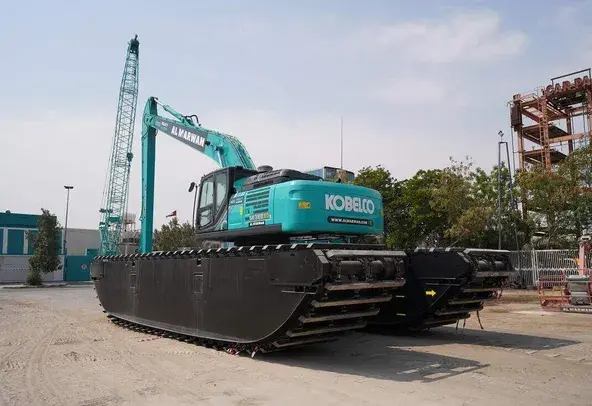
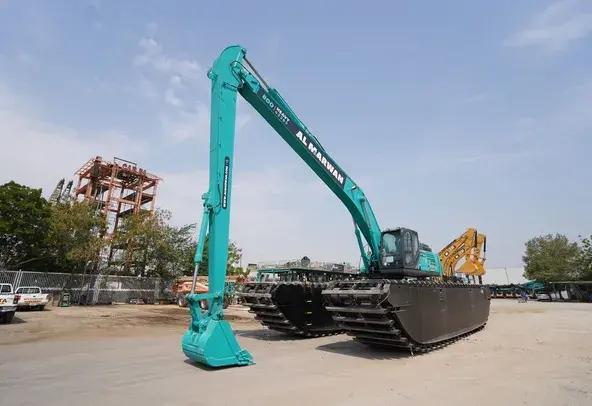
Marine contractors and civil engineering fleets use 38-ton medium amphibious excavators with a 17-meter long-reach boom to handle these difficult settings. This unique machine seamlessly transitions from dry ground to deep mud and floating water situations, making it an essential asset for high-value maritime and infrastructure developments throughout Dubai, Abu Dhabi, and the wider GCC region.
Understanding 38-Ton Medium Amphibious Excavators
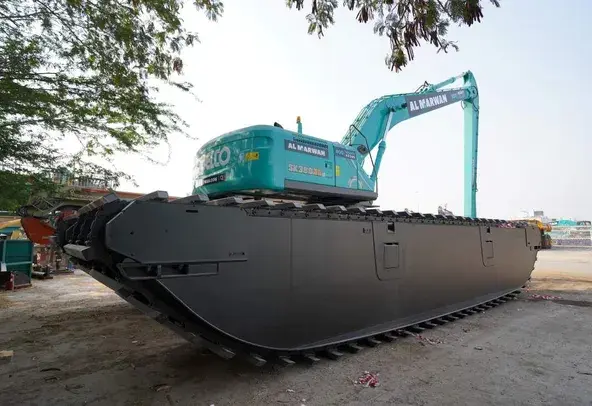
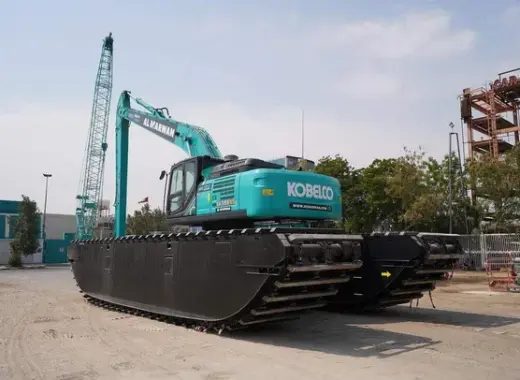
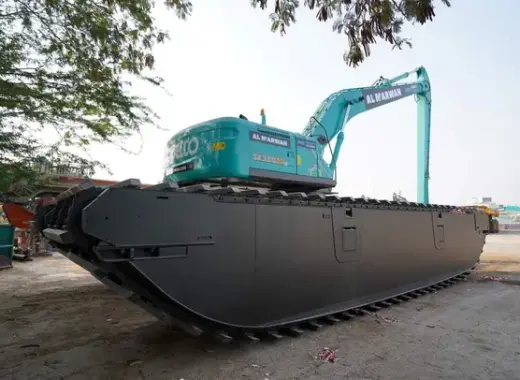
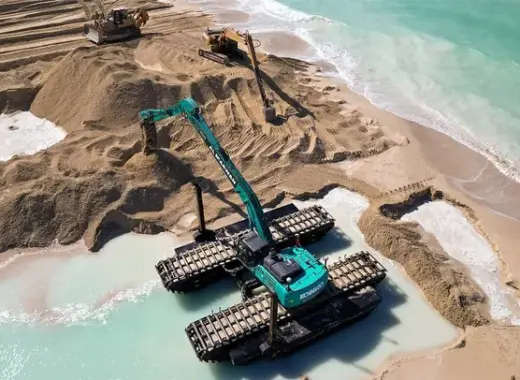
A highly unique undercarriage construction sets a 38-ton amphibious excavator apart from a typical track machine. In place of conventional steel track links wrapped around tight frames, these machines feature enormous, multi-chambered hollow steel pontoons.
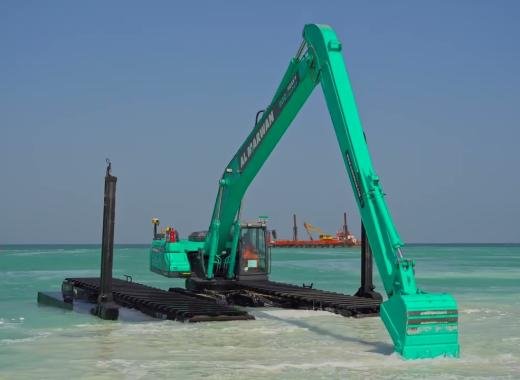
The displacement from these twin pontoons creates enough buoyancy to keep the 38-ton machine floating in open water. Heavy-duty steel or polymer cleats (spuds) are mounted to wide track chains running along the outside of the pontoons. Acting as paddles, these cleats propel the excavator through deep muck, bogs, and open water channels.
Key Technical Features
Operating a floating, mid-sized machine requires an exceptional blend of structural stability, precise hydraulic control, and durability:
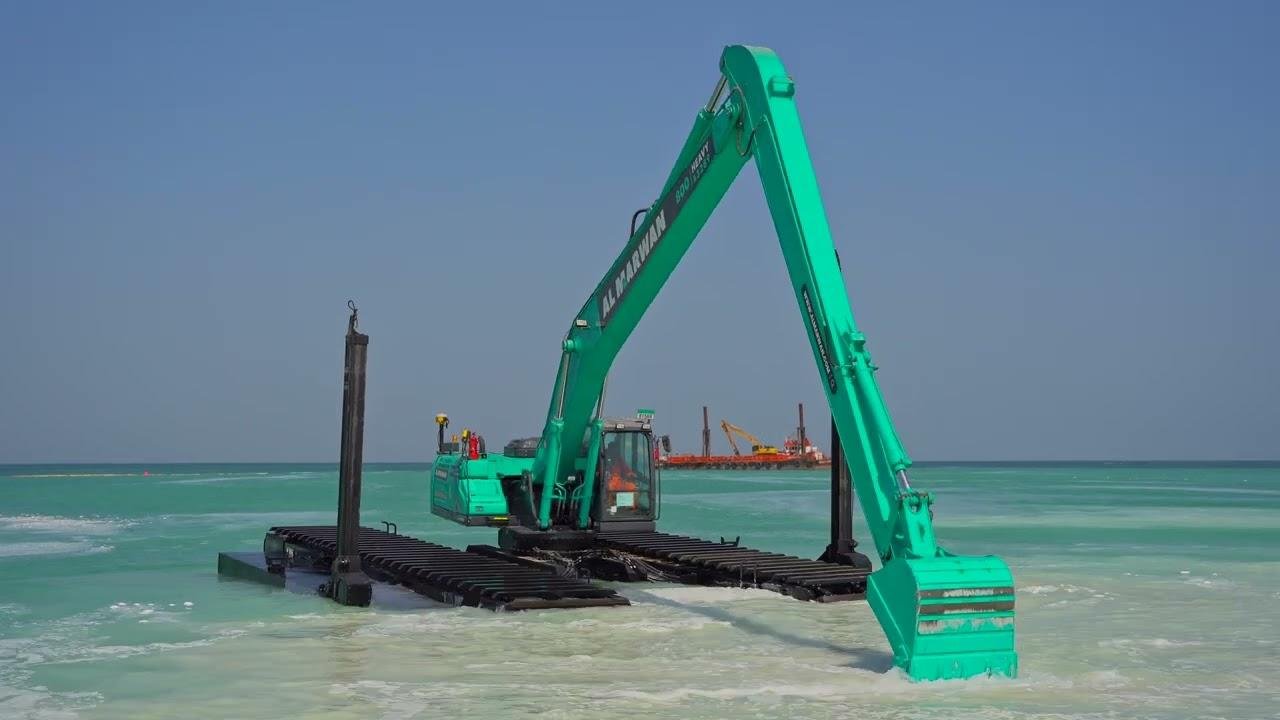
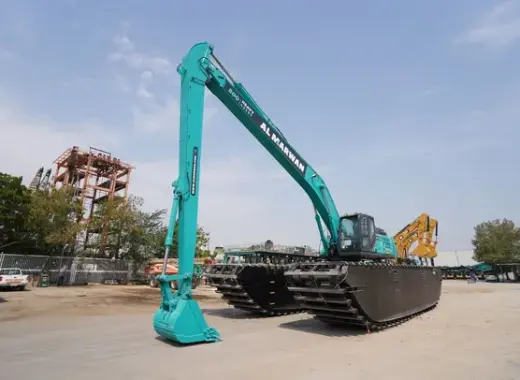
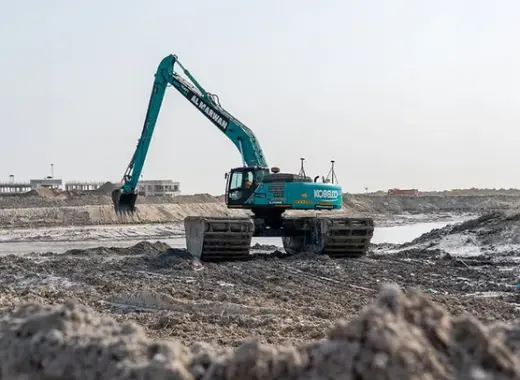
- 17-Meter Long-Reach Boom: Provides an extended operating radius so operators can clear channel beds, grade slopes, or build embankments from a distance without constantly repositioning the chassis.
- Extendable Pontoon Tracks: The pontoons retract hydraulically to fit standard low-bed trailers for transport across UAE highways. When the 17-meter boom extends under load, the pontoons slide outward to create a wider, more stable footprint.
- High-Torque, Sealed Travel Motors: Large hydraulic travel motors are housed inside waterproof pontoon sections to prevent water intrusion and deliver strong tractive effort through thick coastal clay.
- Marine-Grade Corrosion Packages: Features polyurethane topcoats, multi-coat marine epoxy primers, chrome-plated hydraulic cylinders, and heavy-duty grease seals to resist saltwater and harsh coastal humidity.
Strategic Advantages
Adding a 38-ton medium amphibious excavator with a 17-meter boom to your project fleet offers clear logistical and commercial benefits over traditional dredging setups:
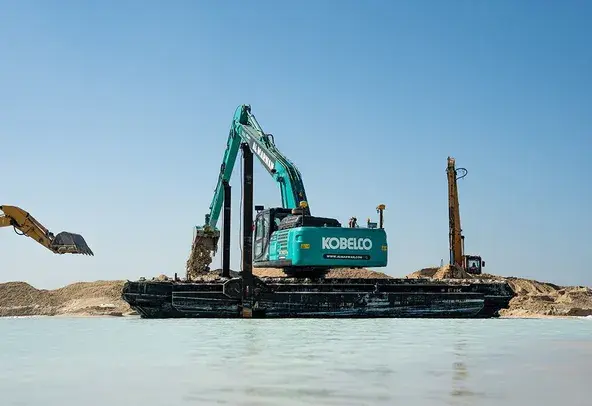
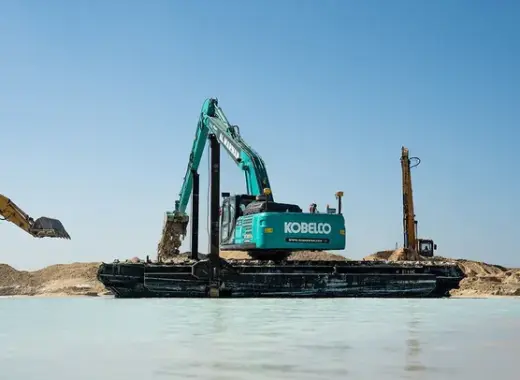
- Total Machine Autonomy: Replaces the costly setup of a crane, flat-top barge, tugboats, and mooring anchors. The amphibious excavator enters the water directly from land, performs the dredging task, and drives itself out when the shift ends.
- Elevated Mobility in Shallow Water: Excels in shallow "in-between" zones where a standard boat would run aground and a conventional crawler excavator would sink.
- Maximum Security in Tidal Areas: Integrated hollow pontoons provide buoyancy, keeping the operator, engine, and hydraulic control valves dry and safe during rising tides.
Primary Uses and Job Site Applications
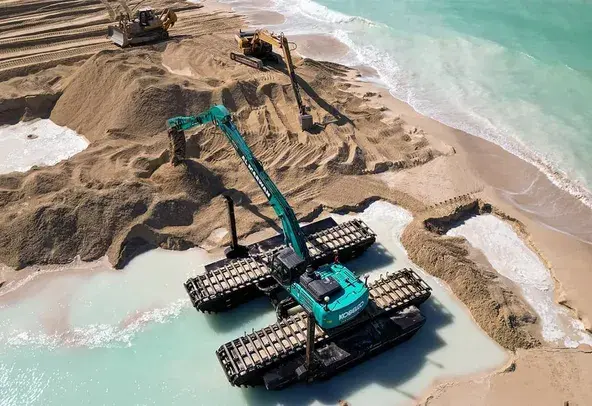
- Inland Canal & Marina Dredging: Removes underwater silt and sediment along Dubai's inland canals and man-made lagoons without damaging seawalls or waterfront structures.
- Coastal Reclamation & Mangrove Preservation: Exerts minimal ground pressure, enabling the machine to navigate delicate wetland environments and mangrove forests without harming coastal ecosystems.
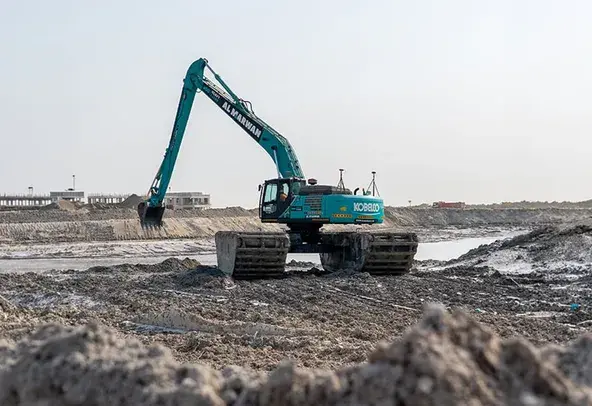
- Industrial Sludge & Settlement Pond Clearing: Walks directly into environmental settlement ponds and waste lagoons at refineries and power facilities to clear compacted sludge.
Overview
A 38-ton medium amphibious excavator with a 17-meter long-reach boom transforms how contractors tackle difficult marine, wetland, and civil infrastructure projects. Investing in a platform built to endure both harsh saltwater environments and intense desert heat allows teams to execute complex coastal improvements with complete confidence.
Purchasing specialized heavy machinery requires a partner that offers top-notch equipment backed by comprehensive industry support. We specialize in sourcing, configuring, and maintaining specialized excavators tailored to Middle Eastern site requirements at our facility in Dubai, United Arab Emirates.
Frequently Asked Questions
1. How does a 38-ton amphibious excavator float without sinking?
The excavator replaces standard tracks with large, sealed, multi-chambered steel pontoons. The total volume of air displaced by these hollow pontoons creates enough buoyant force to keep the machine's 38-ton operating weight afloat in open water.
2. How deep can a 38-ton amphibious excavator operate?
In shallow water and mud (up to 1.5–2 meters), the pontoons rest on or near the bed. In deeper water (over 2 meters), the machine floats completely, using its track cleats as paddles or using supplemental hydraulic spud poles to anchor itself to the bed during digging.
3. What is the benefit of a 17-meter long-reach boom on an amphibious excavator?
A 17-meter boom gives the operator an extensive working radius. This allows the excavator to reach deep canal bottoms, deposit dredged material far onto the shore, or work in wide marshlands while remaining anchored in a stable position.
4. Can an amphibious excavator travel on public roads?
Yes, but the pontoons must be hydraulically retracted to reduce total machine width. For long-distance road transport across the UAE, the excavator is loaded onto a multi-axle lowboy trailer.
5. How are the hydraulic motors protected against saltwater damage?
The travel motors and planetary final drives are sealed inside waterproof pontoon compartments with heavy-duty mechanical face seals, protective guards, and marine-grade epoxy coatings to prevent saltwater ingress and rust.