






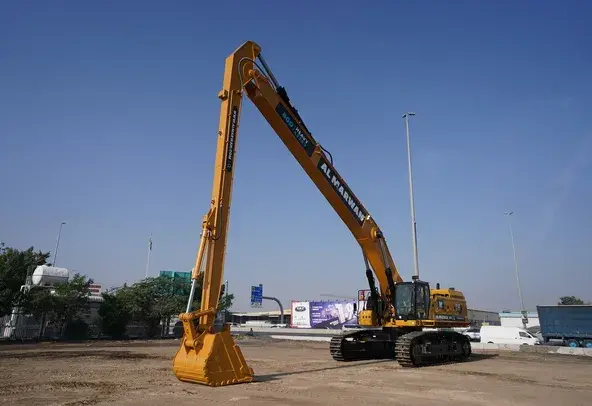
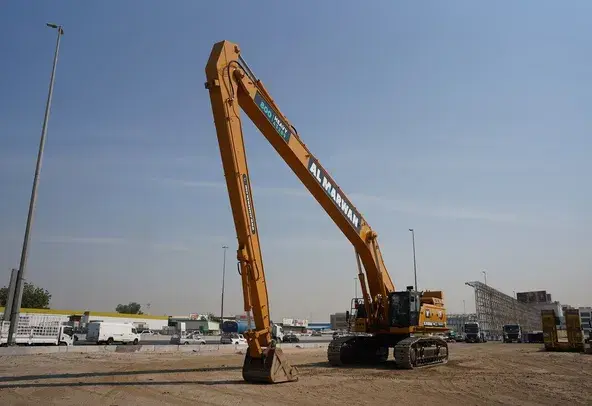
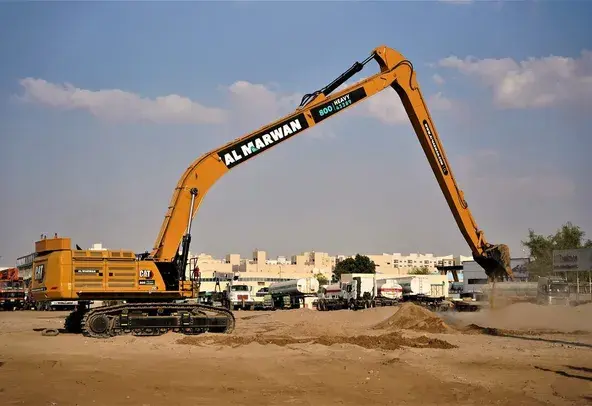
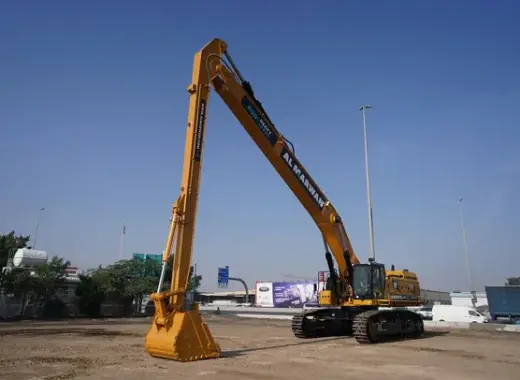
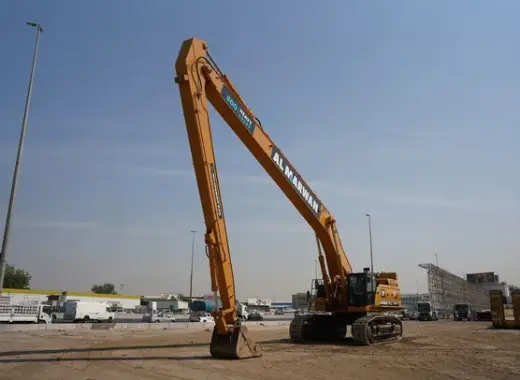
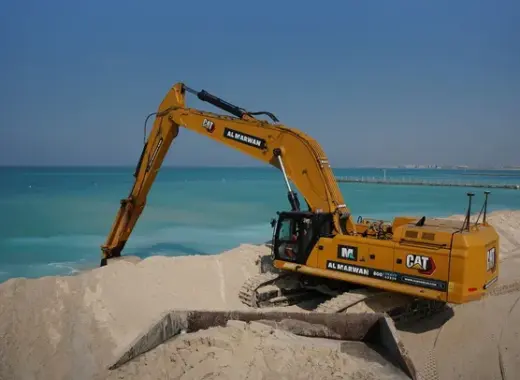
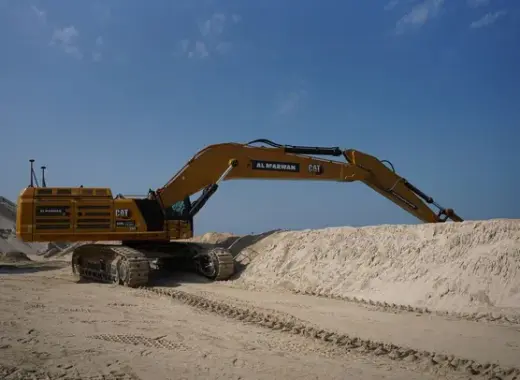
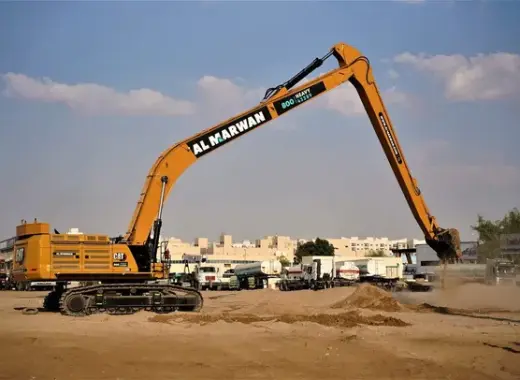
Details : Large Excavators, 95 ton, Long Boom 17-26 meters
Leverage and mass are two opposing forces that must be balanced when selecting machinery for heavy civil engineering, industrial deconstruction, and mass earthmoving. A machine's stability is compromised by extending its arms if it is too light.
The ultimate sweet spot is occupied by the 95-ton large excavators class. These devices transform from conventional mass-excavation tools into specialized, long-range platforms that can move enormous amounts of material from locations that ordinary equipment just cannot safely access when combined with high-performance 17 to 26-meter long booms.
Introduction: 95-ton large excavators
95-ton large excavators support a wide range of extended reaches, in contrast to smaller machines where a long arm is a one-size-fits-all upgrade. The excavator's operation on the ground is altered by the decision between a 17-meter structure and a maximum 26-meter configuration.
17–20-Meter Mid-Reach Configuration
Length keeps the bucket closer to the center of gravity and is frequently referred to as a heavy-duty "demolition front" or "deep-extraction" package. It keeps a significant amount of the 95-ton machine's natural breakout force. It is perfect for deep trenching through dense soils, heavy rock scaling, and foundation basement excavations.
Extreme-Reach Setup: 21 to 26 Meters
Horizontal and vertical operating envelope is maximized by this configuration. The unit becomes a high-end marine dredging and high-wall profiling asset when the reach is extended to 26 meters, or about 85 feet. The covering area per machine location grows exponentially while bucket size is adjusted to maintain stability at full extension.
High-Impact Work Environments: 95-ton large excavators
Using 95-ton large excavators maintains productivity on a range of challenging job sites:
Slope Profiling and Levee Reconstruction: It takes consistent accuracy to shape steep embankments alongside roads or canals. Operators can complete a lengthy slope from top to bottom in a single sweep with a 26-meter reach, eliminating the need to continually track up and down delicate embankments.
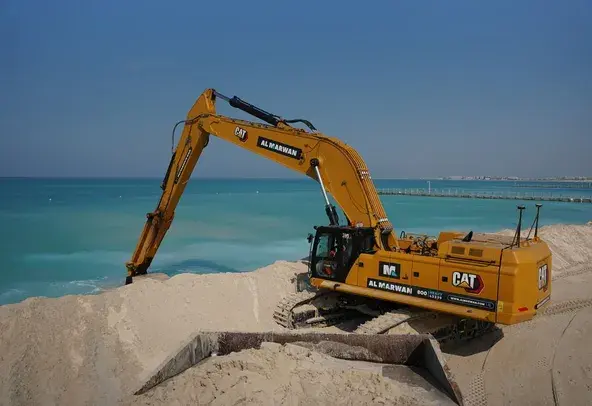
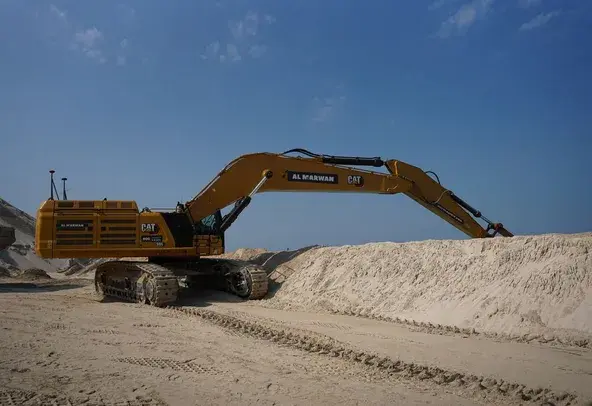
Industrial Aggregate & Sand Extraction: Deposits in quarries for sand and gravel frequently lie below deep water tables. While extracting large hourly tonnages from deep holes, 95-ton large excavators can sit securely on firm ground.
Port and Marina Sludge Management: Maintaining harbors requires cleaning out silt accumulations around docks. This configuration easily reaches past structural pilings from the shore or operates efficiently from standard maritime deck barges.
Stability First: 95-ton large excavators
Understanding structural physics is necessary to successfully operate a 95-ton long-reach machine. The tipping forces produced at 26 meters are enormous because the extended arm functions as a huge lever.
To combat these pressures, top manufacturers employ state-of-the-art engineering techniques. The boom structures, which are large, multi-plate box sections with inner baffle plates designed to endure extreme torsional twisting, are built from high-strength steel (such as Q690 grade).
95-ton large excavators with a low-folding boom arrangement may occasionally be transported on specialist heavy-haul trucks with minimal structural damage, but a 125-ton excavator nearly always needs to be completely disassembled. Your setup timeframes and cross-site movement expenses are thereby greatly decreased.
Maximizing Profitability in Heavy Industries- 95-ton large excavators
Adding 95-ton large excavators, 17–26-meter long-boom excavator to your fleet of equipment will undoubtedly save you money. Your squad can save fuel and tracks by clearing more ground from immobile, highly guarded vantage points by decreasing the number of machine repositioning cycles.
By bridging the operational gap between lower-capacity 50-ton long-reaches and very expensive mining shovels, this configuration provides the precise combination of raw power, wide reach, and transportable mobility needed to earn high-margin infrastructure contracts.