






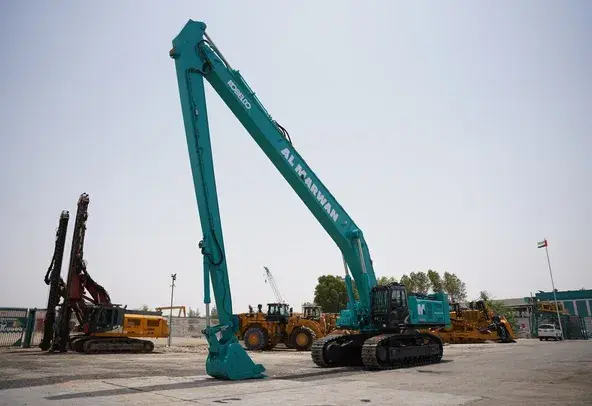
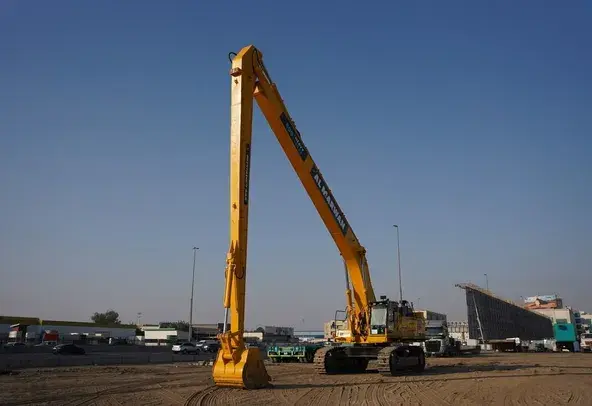
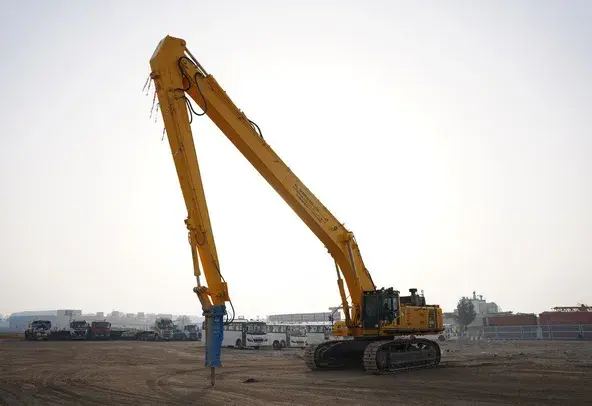
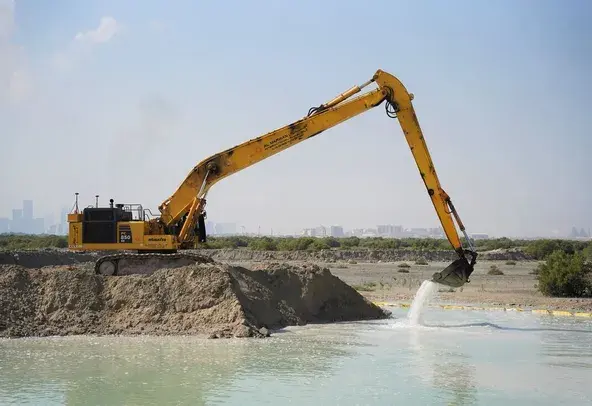
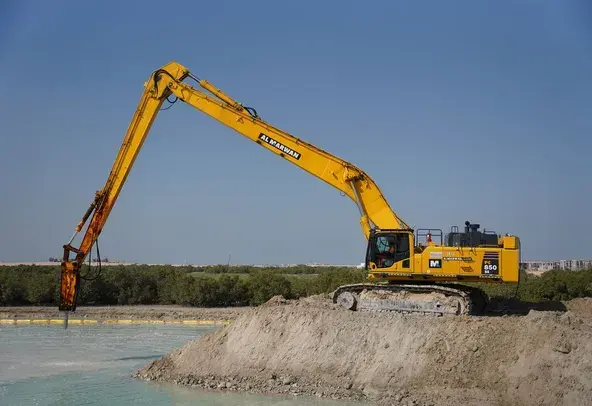
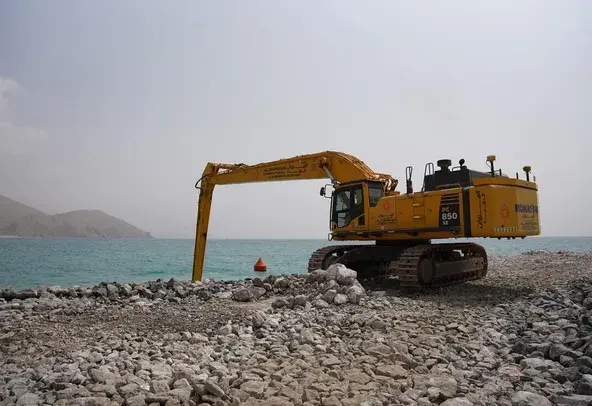
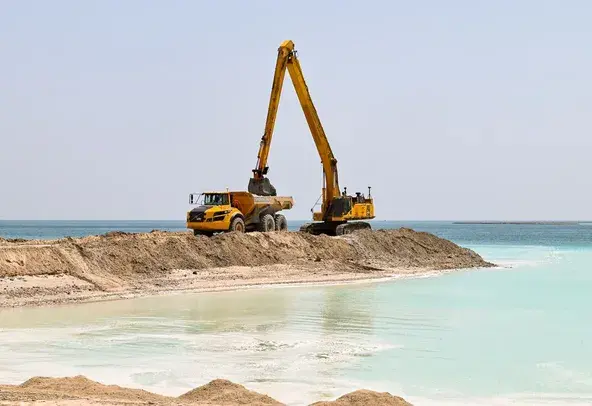
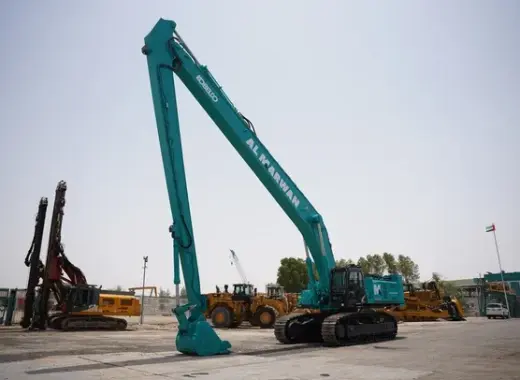
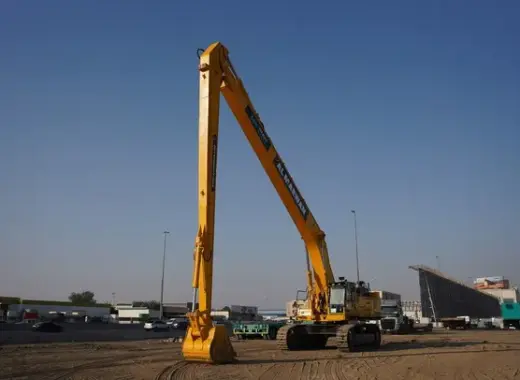
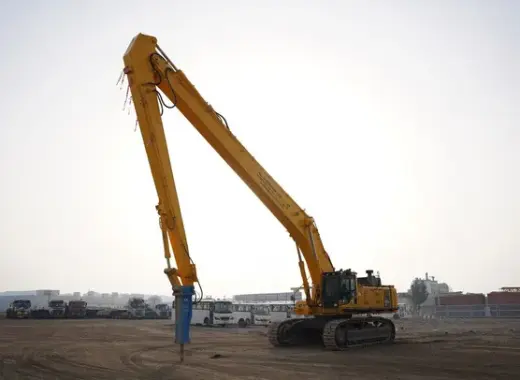
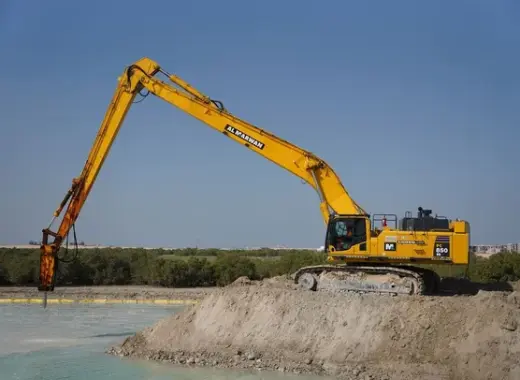
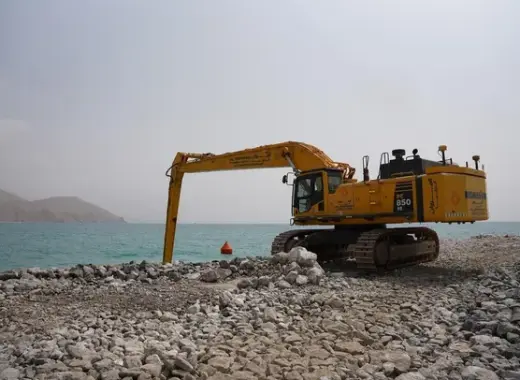
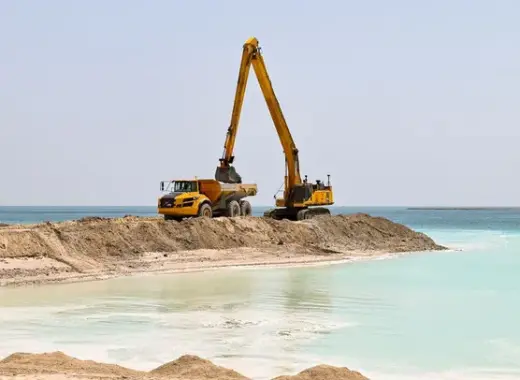
About : Large Excavators, 85 ton, Long Boom 21-26 meters
The ability to move materials across challenging geometry safely and effectively is a key component of success in heavy infrastructure, industrial earthmoving, and marine engineering. Standard production machinery is inadequate for projects requiring deep-water recovery or significant vertical scaling. Contractor’s use 85-ton large excavators with specially designed booms that are 21 to 26 meters long to overcome these obstacles.
Engineering behind the 85-ton large excavators
Massive structural leverage is produced by mounting a front-end attachment up to 26 meters in length. 85-ton large excavators would run the risk of tip-overs or structural fatigue without exact technical calibration. These setups need particular mechanical designs to maintain steady, efficient performance:
Reinforced Boom Geometry: To withstand severe torsional twisting (twisting forces) during high-swing cycles, the extended booms are constructed as huge, multi-plate box sections with internal structural baffles.
Proportional Hydraulics: To provide greater pressure at a controlled rate, manufacturers modify the hydraulic flow. This ensures smooth, extremely predictable bucket placement by preventing the long arm from whipping or vibrating.
Improved Counterweight Systems: To counteract the forward-reaching leverage, standard factory counterweights are usually extended outward or swapped out for heavier modules.
Crucial Applications of 85-ton large excavators
85-ton large excavators with a reach of 21 to 26 meters becomes a highly specialized long-range manufacturing asset instead of just a general digging instrument.
Maintenance of Tailings Dam
It is necessary to reach down steep, delicate inclines in order to maintain enormous water levees and mine tailings ponds. In order to remove silt or install rip-rap without endangering the structural incline, an 85-ton long-reach machine may sit securely back on a stable crest road and reach its 26-meter boom all the way down the slope.
Marina and Deep Wharf Dredging
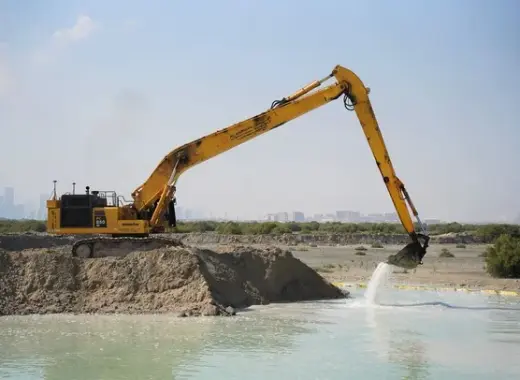
Conventional dredging vessels can be expensive and challenging to mobilize for inland rivers, canals, and harbor slips. This excavator arrangement, which can be operated from a normal barge or a shoreline, readily removes heavy clay buildup, sand, and deep silt from depths greater than 15 meters.
Foundation and Deep Shaft Excavation
Deep vertical cuttings are required for subway transportation tunnels and contemporary high-rise basements. This unit's reach of 21 to 26 meters allows it to stand firmly at ground level and excavate several stories down, transferring material straight into haul trucks that are waiting without the need for internal ramps.
Transport and Mobilization Advantages of 85-ton large excavators
Logistical flexibility is one of the main reasons tier-one contractors choose the 85-ton class over a larger 125-ton machine.
85-ton large excavators may frequently be transported with little breakdown, whereas ultra-large excavators need to be fully disassembled into several enormous truckloads. In many areas, the main machine and long boom can be moved on a typical multi-axle lowboy trailer by simply removing the counterweight and bucket. Heavy transport permitting fees, crane rental charges for assembly and lost time traveling between project sites are all greatly reduced as a result.
Summary: 85-ton large excavators
When bidding on complicated infrastructure projects, adding 85-ton large excavators with a boom that is 21 to 26 meters long to your fleet gives you a clear competitive advantage. This arrangement enables your team to perform deep maritime work, steep slope profiles, and big structural digs more quickly, safely, and with less operational overhead than standard multi-machine setups by skillfully balancing massive hydraulic power with a vast, safe working radius.