






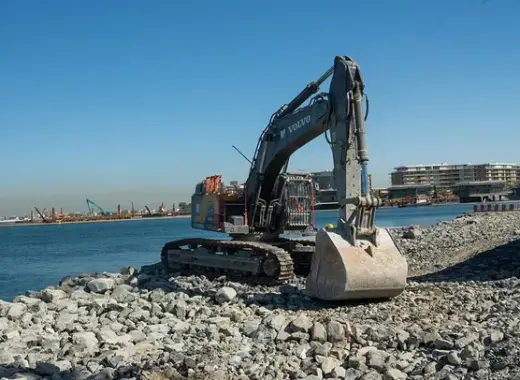
55-Ton Large Excavators: The Heavy Civil & Utility Guide
Heavy construction across the United Arab Emirates demands equipment that can handle massive workloads while moving efficiently between job sites.
Ultra-heavy mining shovels over 100 tons excel in open-pit quarries. However, deep utility trenching and urban infrastructure projects require a machine that balances brute digging power with practical mobility.
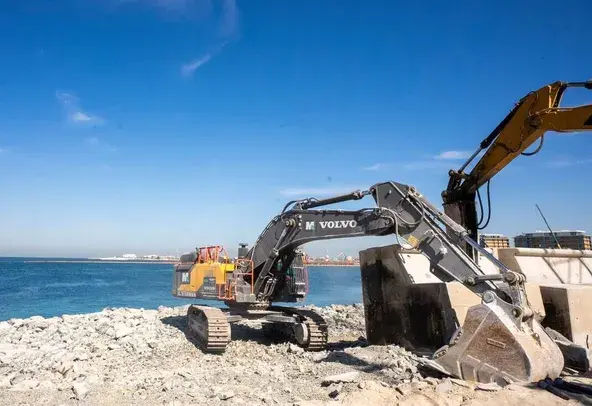
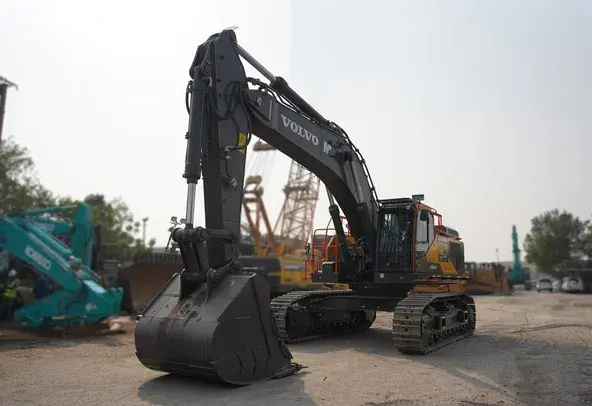
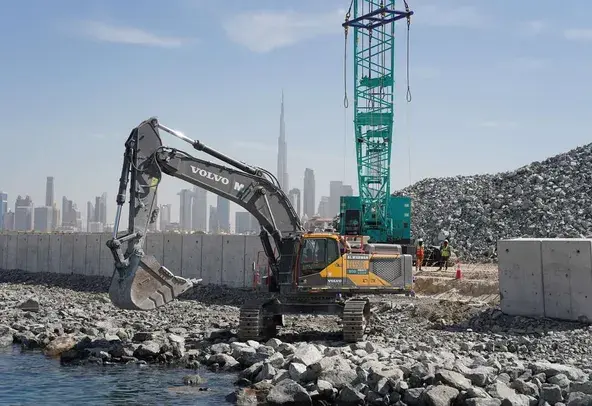
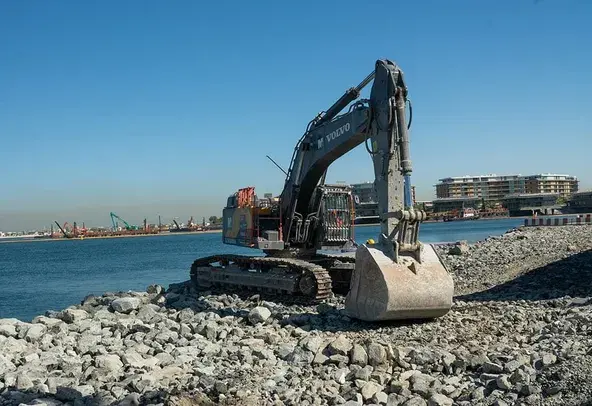
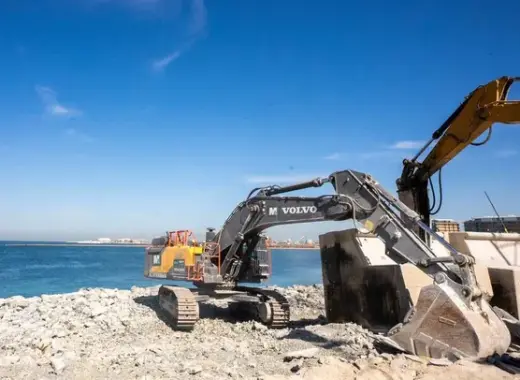
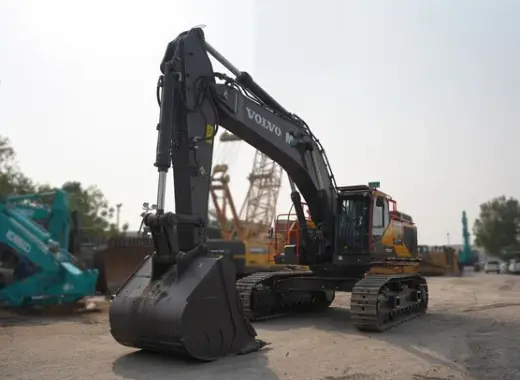
The 55-ton large excavator fills this exact need. It is compact enough to travel easily between projects in Dubai, Abu Dhabi, and the Northern Emirates. At the same time, it delivers the heavy-duty breakout force needed to tear through hard ground. Equipped with a standard boom, a 55-ton excavator serves as a vital revenue driver for top UAE contractors.
High-Performance Features of the 55-Ton Excavator
Operating heavy machinery in the Middle East puts extreme stress on mechanical and hydraulic systems. Severe summer heat, airborne sand, and hard rock quickly stall standard equipment. To ensure continuous uptime, 55-ton excavators supplied to the Dubai market feature heavy-duty systems:
High-Efficiency Industrial Engines: A turbocharged diesel engine powers this 55-ton machine. Designers tuned the engine to produce massive torque at low speeds. As a result, the excavator digs smoothly through hardpan and rock without engine strain. Furthermore, smart power modes automatically adjust fuel flow, saving thousands of liters of fuel each year.
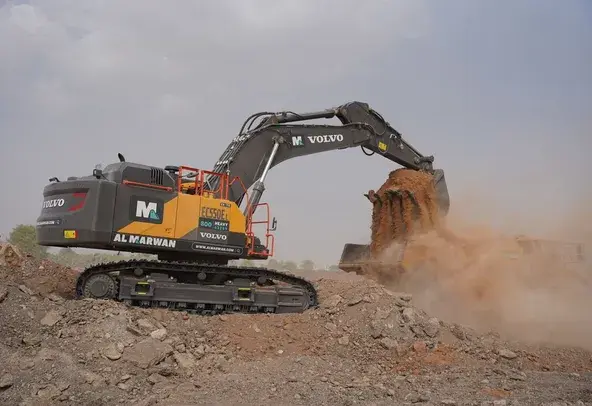
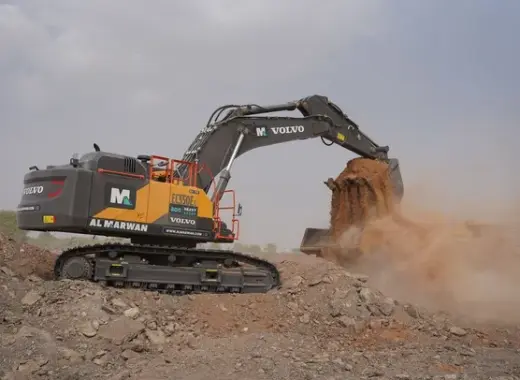
Smart High-Pressure Hydraulics: Dual-pump hydraulic systems send hundreds of liters of fluid per minute directly to the boom and bucket cylinders. Because this system processes high fluid volumes at top pressures, it creates extreme digging forces. Operators easily peel back hard caliche and broken rock without needing separate breaker tools.
Tropicalized Cooling Packages: Summer temperatures in the UAE frequently rise above 50°C. For this reason, reliable cooling systems are crucial to avoid job delays. Oversized radiators, separate oil coolers, and auto-reversing fans keep internal fluids cool through continuous double-shift schedules.
Shielded and Sealed Undercarriages: Fine desert sand acts like sandpaper inside moving track parts. To block grit, the undercarriage uses sealed track links, heavy idlers, and strong rollers. Additionally, thick steel rock guards shield the frame when tracking over sharp rocks.
Key Advantages of the 55-Ton Large Excavator
Adding a 55-ton excavator with a standard boom gives your fleet major operational advantages:
Maximum Digging Force: The standard boom balances digging depth with overall reach. Because the frame resists flexing, hydraulic power flows straight to the bucket teeth for maximum breakout force.
Outstanding Lifting Stability: A heavy rear counterweight keeps the center of gravity close to the middle. Thanks to this balance, operators can safely lift, swing, and lower heavy utility vaults and concrete pipes on busy job sites.
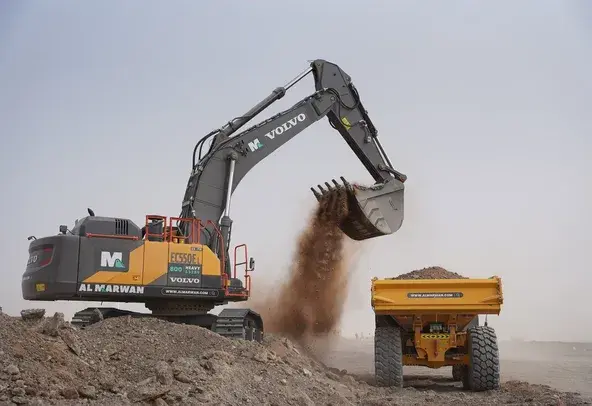
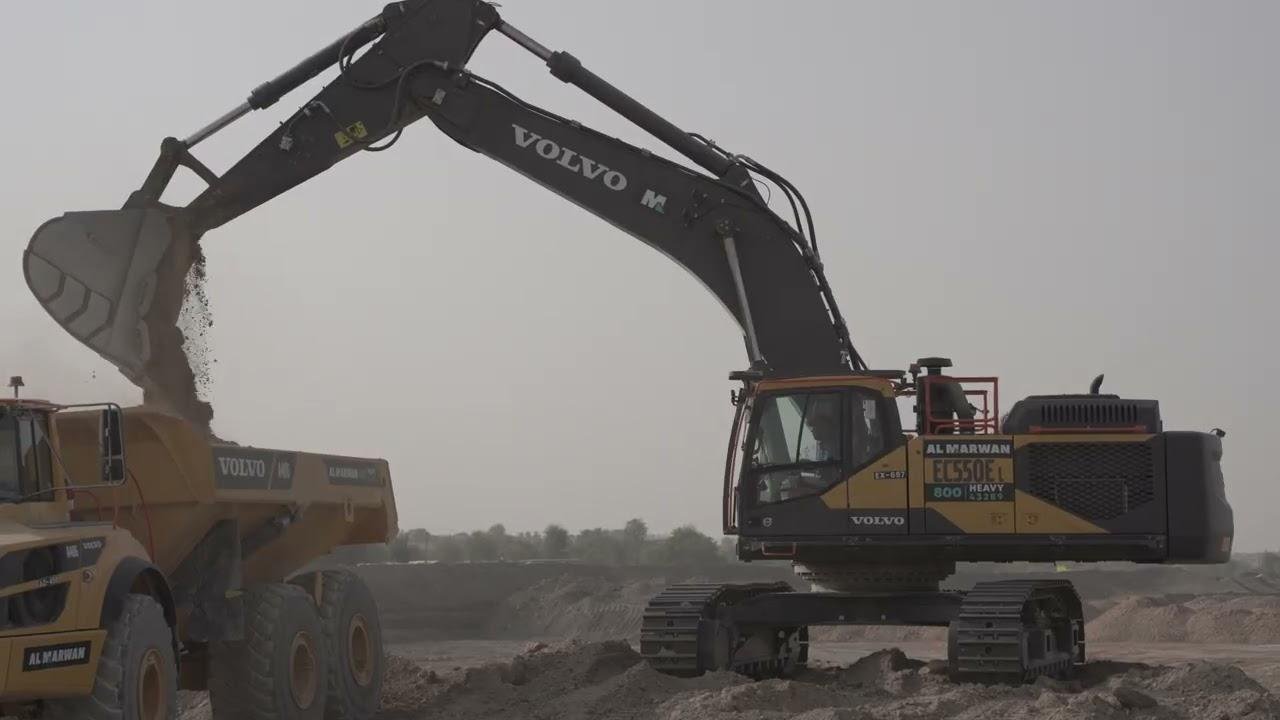
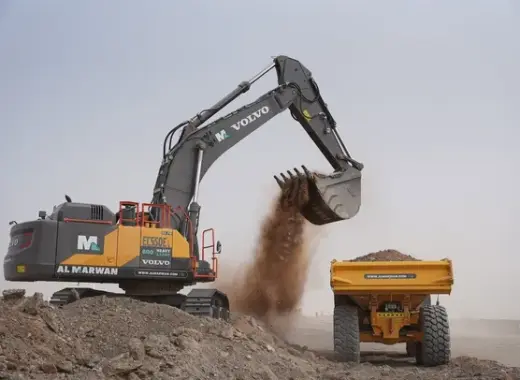
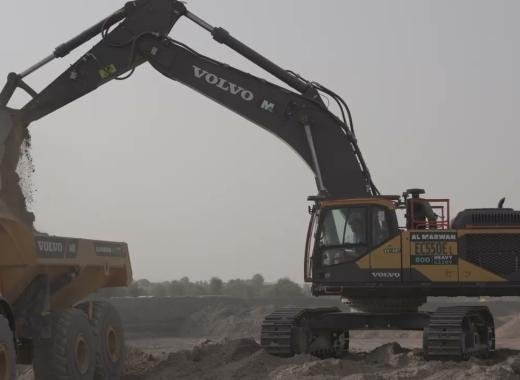
Ideal Truck Matching: The steady 55-ton frame supports high-capacity rock buckets with ease. Consequently, operators can fill standard 20- to 30-ton dump trucks in just a few quick passes to keep haul fleets moving.
Long Frame Life: Heavy steel castings and internal support plates strengthen key stress areas. Therefore, the boom handles years of heavy digging without developing stress cracks or weld failures.
Primary Uses and Applications
Thanks to its versatile footprint and high material output, a 55-ton excavator handles many key tasks across the UAE:
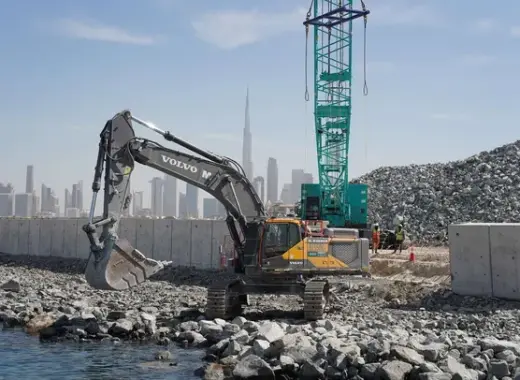
Deep Utility Trenching & Bulk Earthmoving: Foundations must be cleared before new building projects can start. In Dubai, 55-ton excavators dig deep basements and wide utility trenches quickly to keep projects on schedule.
Road Building & Highway Expansion: Expanding the UAE's road network requires moving massive amounts of earth. These excavators clear right-of-ways, grade embankments, and load rows of waiting dump trucks.
Secondary Quarrying & Aggregate Support: In Fujairah and Ras Al Khaimah, 55-ton excavators sort material, maintain haul roads, and feed crushing plants while 100-ton machines handle primary rock blasting.
Overview
Purchasing a 55-ton large excavator with a standard boom is a smart move for UAE contractors. This equipment combines high digging power with easy road transport and low running costs. Ultimately, it gives your team the reliability needed to hit tight deadlines and boost daily profits.
However, heavy machinery is only as reliable as the dealer network supporting it. At our heavy equipment facility in Dubai, United Arab Emirates, we support your assets throughout their operational lifecycle with comprehensive technical service, preventative maintenance, and genuine replacement parts to keep your job sites running every day.
Frequently Asked Questions
1. What popular excavator models belong to the 55-ton weight class?
Well-known models in the 52- to 58-ton range include the Caterpillar 352 / 355, Komatsu PC550, Volvo EC550, and CASE CX500D. Generally, these machines deliver between 400 and 450 net horsepower.
2. What is the standard bucket size for a 55-ton excavator?
Depending on arm length and material weight, a 55-ton excavator typically operates with heavy-duty rock or rehandling buckets ranging from 3.0 to 4.0 cubic meters in capacity.
3. How does a 55-ton excavator compare to a 45-ton excavator?
A 45-ton excavator is standard for general site prep and medium-heavy earthmoving. In contrast, a 55-ton excavator offers up to 20% more hydraulic digging force, accommodates larger bucket sizes, and features a wider track chassis built for heavy rock work.
4. Why is a sealed undercarriage critical on desert job sites?
Abrasive silica sand acts as a severe grinding compound inside moving track joints. Fully sealed and lubricated track links lock out sand contaminants, extending pin, bushing, and roller service life by thousands of hours.
5. How many passes does a 55-ton excavator take to load a 30-ton dump truck?
When fitted with a standard 3.5 cubic meter bucket, a 55-ton excavator can fill a 30-ton articulated dump truck in just 3 to 4 quick passes, keeping haul fleets moving efficiently.