






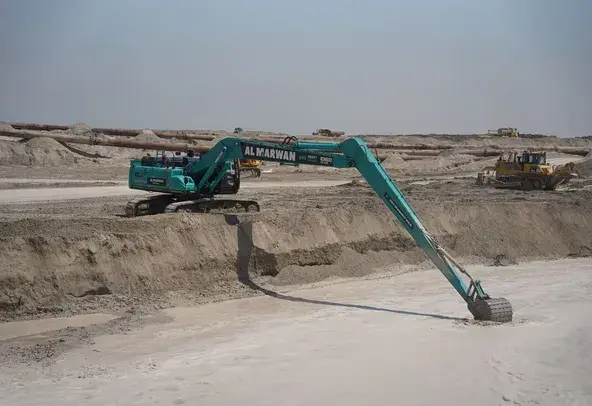
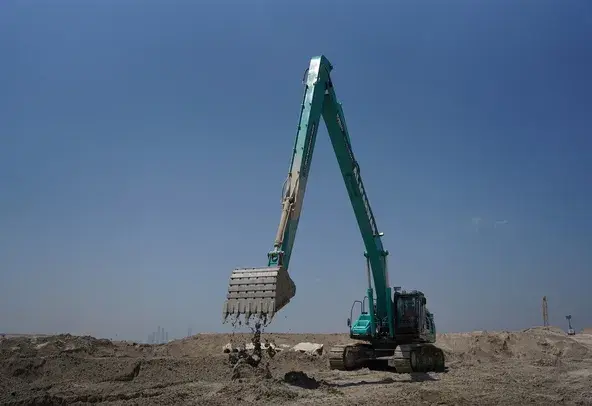
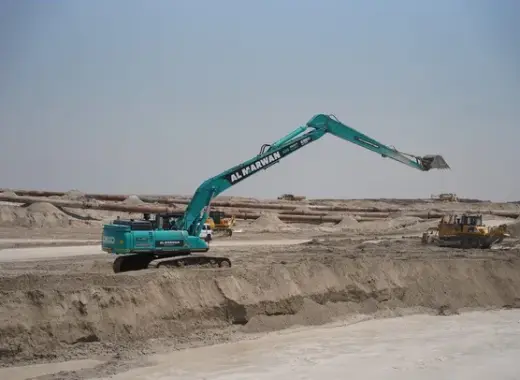
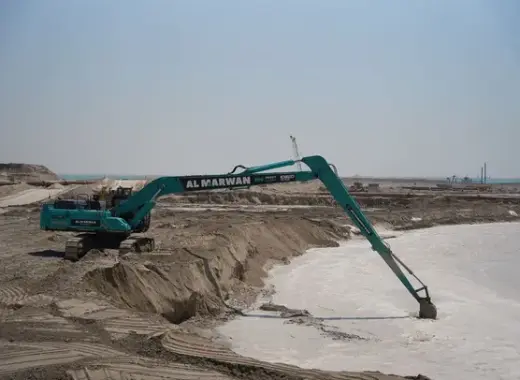
Complete Guide : Large Excavators, 50 ton, Long Boom 18-21 meters
When fleet managers evaluate massive infrastructure projects, they often run into a common constraint: site accessibility. Despite their amazing reach, 95-ton and 125-ton monsters are challenging to maneuver on urban job sites, narrow riverbanks, or highway expansion corridors due to their enormous footprints.
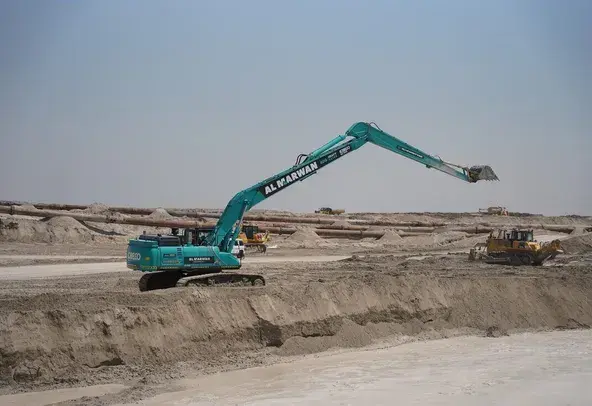
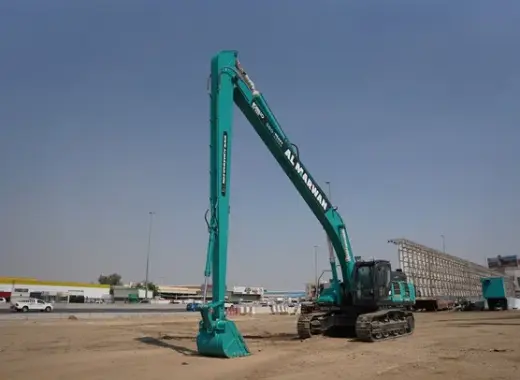
50-ton large excavators are the ultimate high-reach, extremely versatile multi-tool when equipped with a specialized 18–21-meter long boom. It retains the portability and agility of a typical heavy crawler while offering the deep-digging capacity of ultra-heavy machinery.
Engineering the 50-ton large excavator Formula
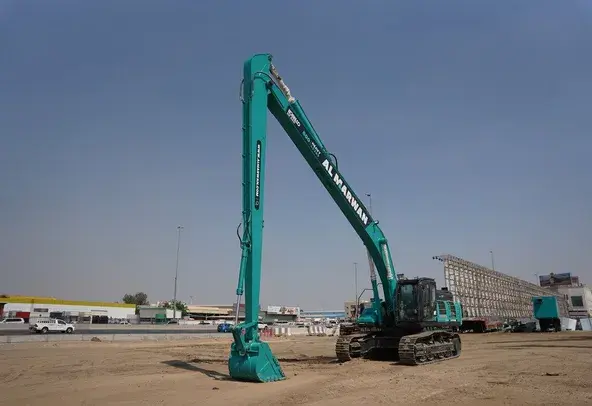
It takes careful engineering calibration to mount an 18 to 21-meter (or roughly 60 to 70 feet) front attachment onto 50-ton large excavators. Controlling the center of gravity is crucial to avoiding tipping because the base machine is lighter than its mining-class counterparts.Top manufacturers concentrate on three essential design components in order to preserve excellent structural equilibrium:
Heavy-Duty Undercarriages with Variability: Hydraulically expanding tracks are used in several 50-ton long-reach units. Here, the tracks stretch outward to maximize sideways stability during full-reach swinging after pulling inward for convenient transportation.
Optimized Cylinder Geometry: Unpredictable boom bounce is eliminated by repositioning or up scaling the hydraulic boom and stick cylinders to provide accurate, smooth control at maximum extension.
Targeted Counterweight Extensions: A large, low-profile counterweight is added to the rear frame to counteract forward leverage while maintaining operator visibility.
High-Utility Work Applications of 50-ton large excavators
Thanks to its balanced size and extensive reach, the 50-ton large excavators configuration is highly sought after across multiple specialized construction sectors:
Environmental River and Canal Dredging
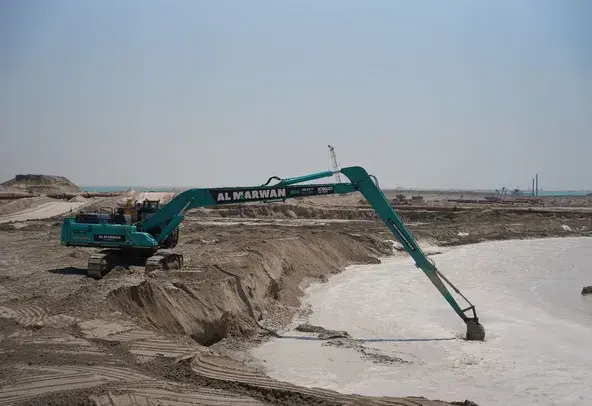
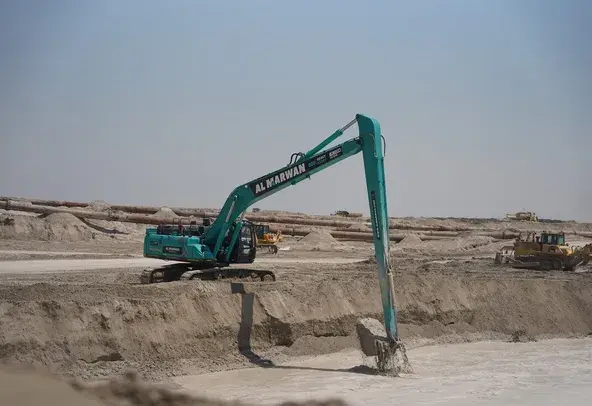
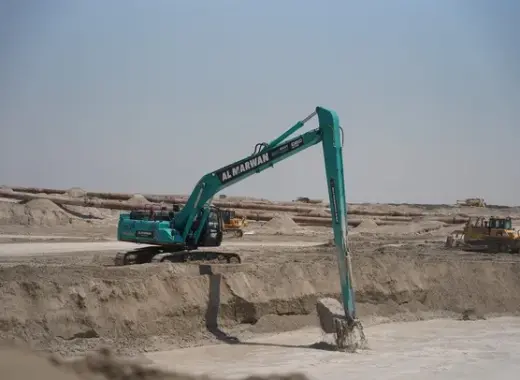
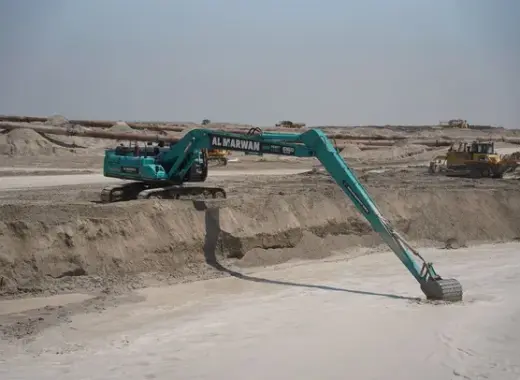
Cleaning urban canals, clearing silt from drainage networks, and reinforcing river embankments require a machine that can operate from narrow access roads. An 18–21 meter boom lets 50-ton large excavators reach completely across most waterways while operating safely from a single shoreline.
Basement and Utility Digs with Deep Foundations
Large utility tunnels and deep basements must be cut near existing structures in modern commercial construction. With this setup, the machine can dig vertically downward while resting on sturdy concrete or asphalt pads, loading debris straight into regular dump trucks.
Embankment Cutting and Highway Sloping
To avoid landslides, the slopes must be precisely graded when creating new highway routes through hillsides. Compared to smaller machines that must crawl up the hill, the 21-meter reach speeds up cycle times by enabling operators to grade large vertical inclines from a single position.
Operational Mechanics: The Leverage Reality
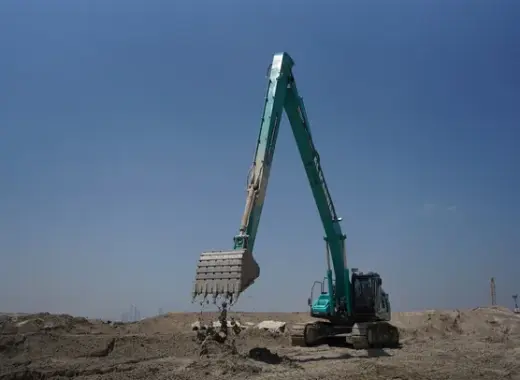
Operators must get weight distribution training before deploying 50-ton large excavators with a 21-meter boom. A bucket filled with heavy wet clay at a distance of 21 meters puts several times greater strain on the turntable than the same bucket snuggled close to the cab due to the laws of leverage.
Fleet managers should always give specialist long-reach buckets first priority.
These buckets have lighter structural steel and a thinner, broader profile. You can carry more weights each scoop without setting off the machine's hydraulic overload safety devices because this lowers the deadweight at the end of your stick.
Unmatched Transport Economics of 50-ton large excavators
Logistical economy is the key differentiator between the 50-ton large excavators class and its bigger 85-ton or 125-ton counterparts.
Massive multi-axle transport arrangements, costly police escorts, and significant machine disassembly at both ends of the trip are necessary when moving a 95-ton or 125-ton excavator. However, by just taking off the bucket, a 50-ton machine may frequently be transported in one piece on a typical heavy-haul trailer. This allows contractors to quickly mobilize, complete a short-term dredging or sloping contract, and move to the next site without sacrificing weeks of transit time and thousands of dollars in permitting fees.
Summary: 50-ton large excavators
Logistical economy is the key differentiator between the 50-ton large excavators class and its bigger 85-ton or 125-ton counterparts. Massive multi-axle transport arrangements, costly police escorts, and significant machine disassembly at both ends of the trip are necessary when moving a 95-ton or 125-ton excavator. However, by just taking off the bucket, a 50-ton machine may frequently be transported in one piece on a typical heavy-haul trailer.
This allows contractors to quickly mobilize, complete a short-term dredging or sloping contract, and move to the next site without sacrificing weeks of transit time and thousands of dollars in permitting fees.