






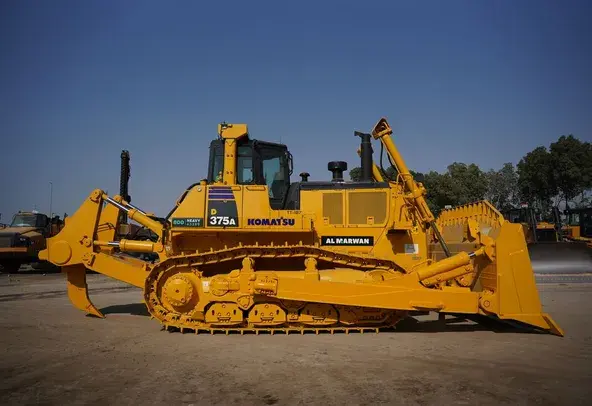
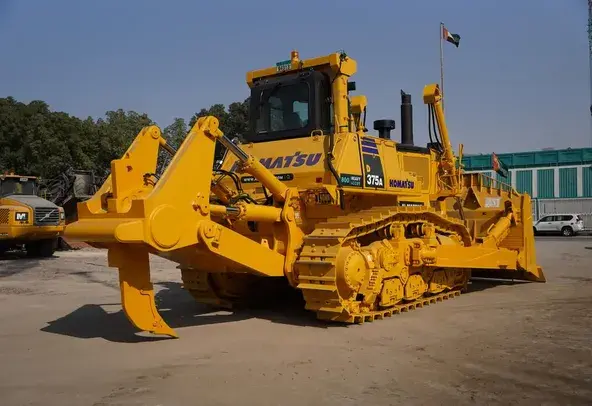
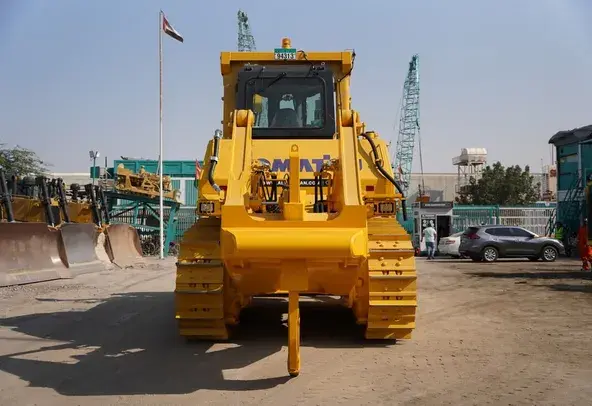
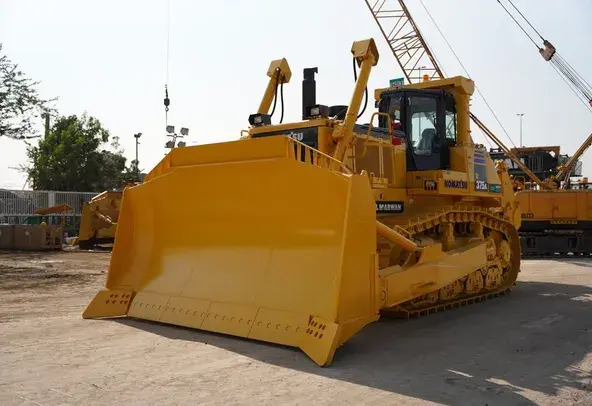
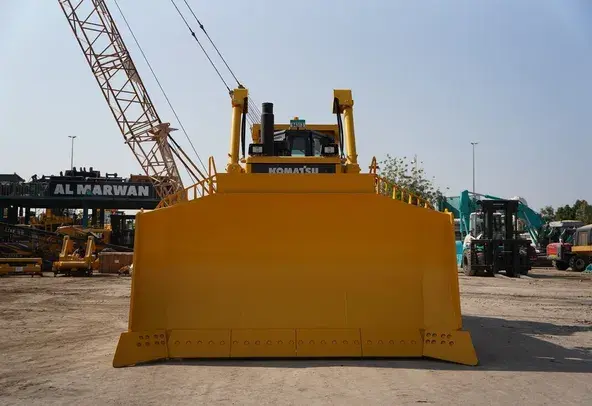
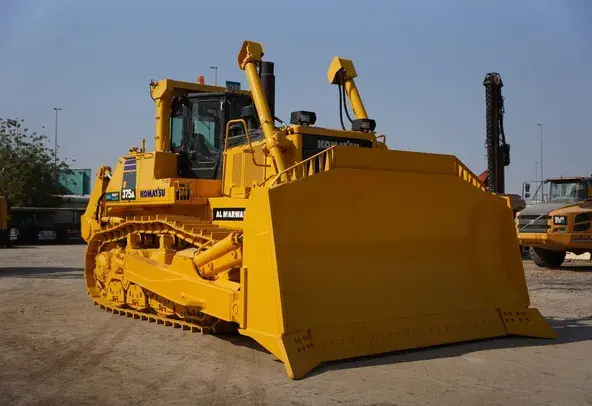
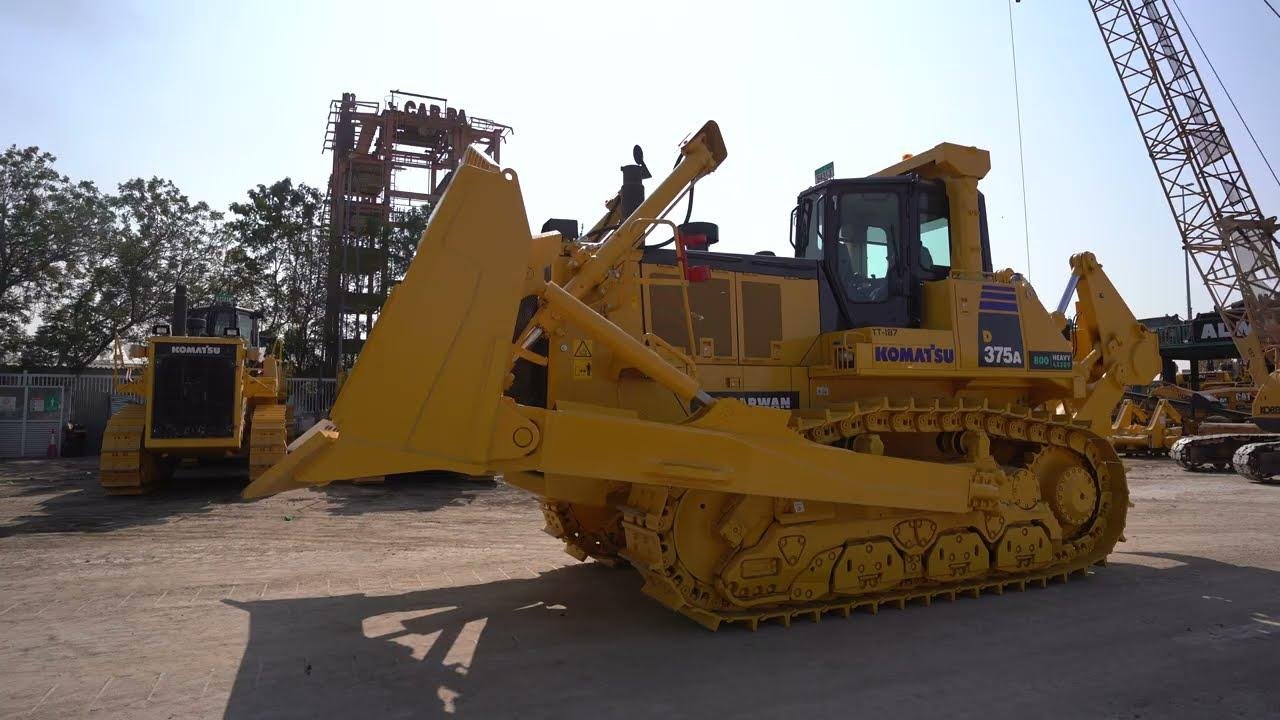
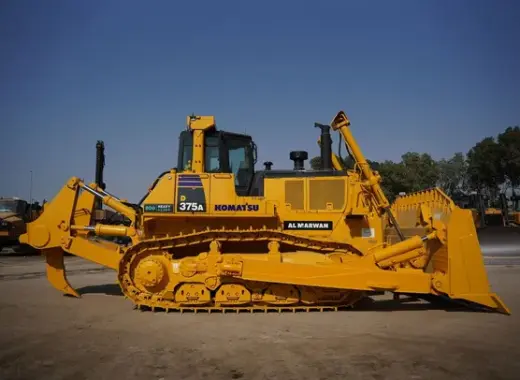
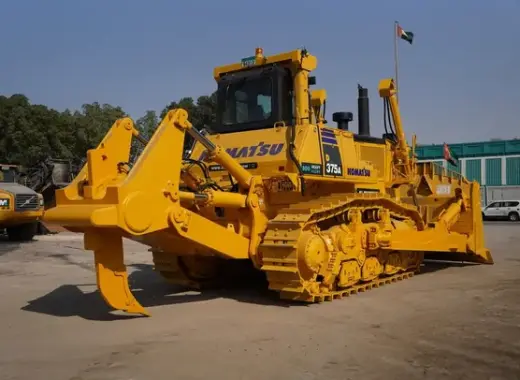
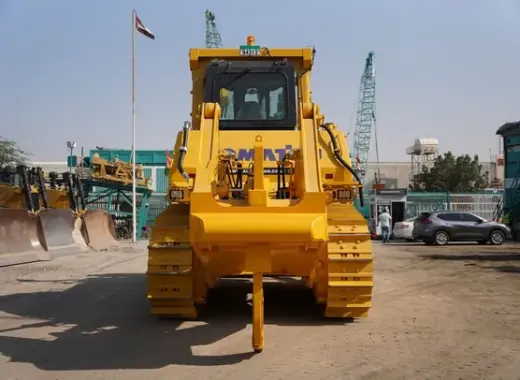
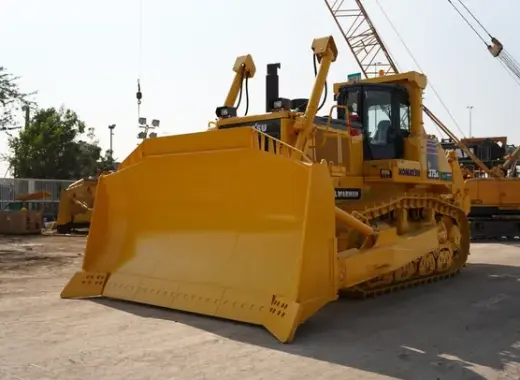
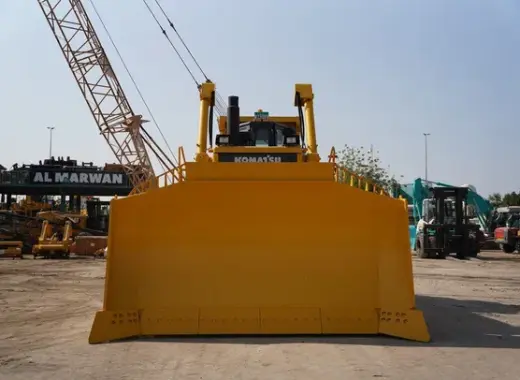
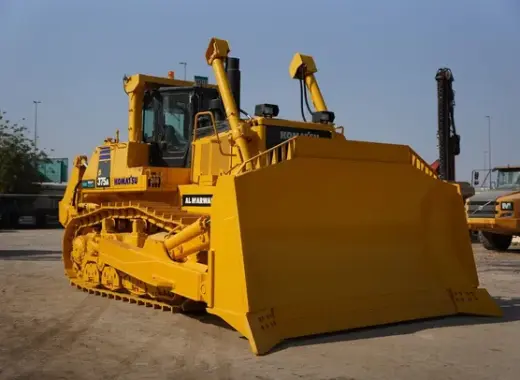
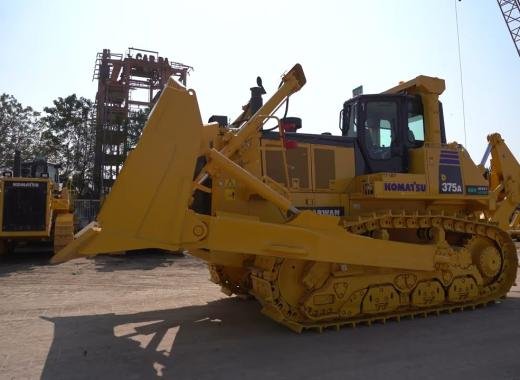
70-Ton Large Dozers: The Production Fleet Workhorse
In heavy earthmoving, project success depends on selecting the right equipment for the task. While 108-ton models dominate vast open-pit mines, 70-ton large dozers serve as the flexible workhorses of production fleets. Weighing approximately 140,000 pounds, this machine class achieves an ideal equilibrium between massive pushing force and practical site-to-site transportability.
Heavy-Duty Engineering & Structural Design
The structural design of a 70-ton dozer focuses on delivering maximum engine power directly to the ground as usable drawbar pull—the actual force applied to cut through dense, stubborn soils.
- Reinforced Main Frame: Serves as a sturdy foundation, isolating the engine and transmission from severe ground impacts and torsional twisting stresses.
- High-Displacement Turbocharged Diesel Engine: Generates massive low-end torque to maintain continuous pushing momentum without engine lug-down.
- Auto-Shifting Electronic Transmissions: Automatically adjust gear ratios based on real-time blade load, allowing the machine to maintain optimal travel speeds without constant operator input.
- Suspended Undercarriage with Bogie System: Flexible track frames adapt closely to uneven ground, absorbing severe shocks while keeping maximum track area in contact with the surface for superior traction.
Primary Uses & Job Site Applications
The true advantage of a 70-ton dozer is its operational versatility—it is large enough for high-production mining yet nimble enough for heavy highway construction:
- Extensive Civil Infrastructure: Performs deep rough grading, cuts drainage channels, and establishes sub-base layers for major highways, railways, and airport runways.
- Mining Overburden & Quarry Support: Works alongside large excavators in stone quarries and medium mines to strip topsoil, clear highwalls, and keep haul roads clean and safe.
- Deep Rock Ripping: Applies tremendous downward hydraulic pressure through a single-shank ripper to crack dense shale, limestone, and hardpan, eliminating expensive blasting.
- Landfills & Reclamation: Equips high-capacity trash blades to rapidly spread and compact high-volume waste, reshaping industrial land and reclamation sites.
Key Operational & Financial Benefits
- Streamlined Site Relocation: Transported between job sites far faster and with fewer special multi-axle permits than ultra-heavy 100-ton+ dozers.
- Superior Fuel-to-Material Ratio: Lock-up clutch torque converters and variable-flow hydraulics deliver power only when required, cutting fuel consumption during lighter cycles.
- Lower Operating Costs: Undercarriage components (track shoes, rollers, and pins) are lighter and significantly less expensive to replace than mining-class undercarriages.
- Integrated 3D GPS Grade Control: Connects factory grade-control software directly to the hydraulic valves to automatically raise and lower the blade, achieving digital blueprint accuracy in fewer passes.
- Modular Rebuildability: Modular powertrain assemblies allow fleet mechanics to swap out engines, transmissions, or final drives, extending the main frame's working life through multiple cycles.
Overview
The 70-ton large dozer is a vital asset across the global construction and mining sectors. By pairing high drawbar pull with manageable road logistics, it offers a high-yield alternative to bulkier, less versatile equipment—delivering heavy-duty productivity on schedule and within budget.
Frequently Asked Questions
1. What famous dozer models fall into the 70-ton weight class?
Key models in the 70-ton class include the Caterpillar D10 (such as the D10T2) and the Komatsu D375A. These heavy production dozers typically produce between 600 and 610 net flywheel horsepower.
2. How much material can a 70-ton dozer push in a single pass?
When fitted with a high-capacity Universal (U) blade, a 70-ton dozer can push approximately 22 to 28 cubic yards (25 to 35 tons) of loose material per pass, depending on ground slope and material density.
3. What is the difference between a 50-ton dozer and a 70-ton dozer?
A 50-ton dozer (like a CAT D9) generates ~400–450 HP and is widely used for heavy civil earthmoving and general site preparation. A 70-ton dozer (like a CAT D10) produces 600+ HP, weighs 40,000 lbs more, and is tailored for high-production mining overburden, heavy quarry rock pushing, and severe rock ripping.
4. Why do 70-ton dozers feature an elevated sprocket design?
The elevated sprocket design raises the final drives above the track roller frame. This isolates the sensitive drive gears from direct ground impacts, mud, and abrasive rocks, significantly extending transmission and drivetrain life.
5. How are 70-ton dozers transported between job sites?
While easier to move than 108-ton mining dozers, a 70-ton machine still requires partial disassembly for highway transport. Crews typically detach the blade, push arms, and rear ripper assembly so the main body can be safely hauled on a specialized multi-axle lowboy trailer.