






50-Ton Large Dozers: The Heavy Production Guide
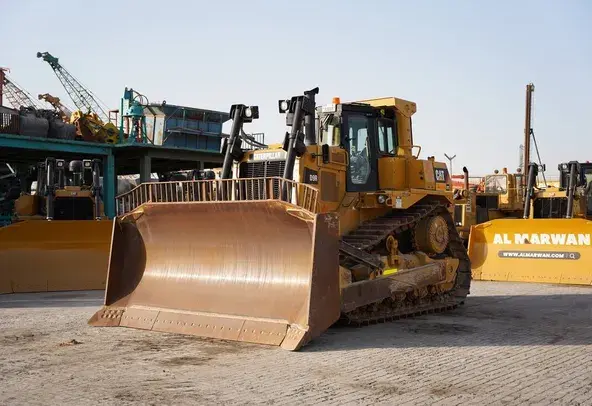
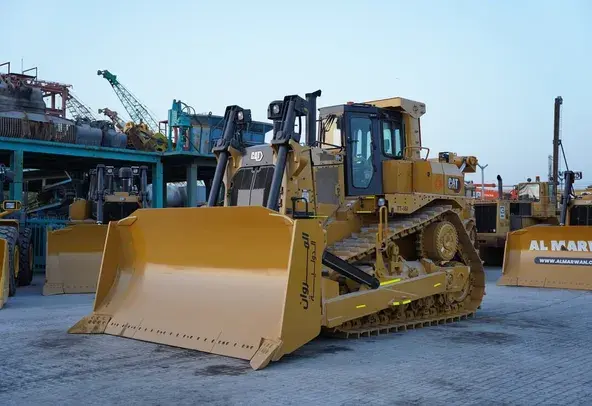
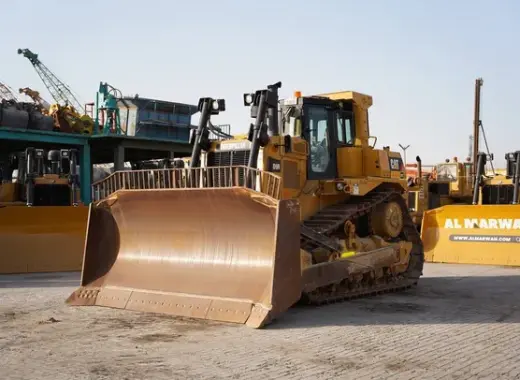
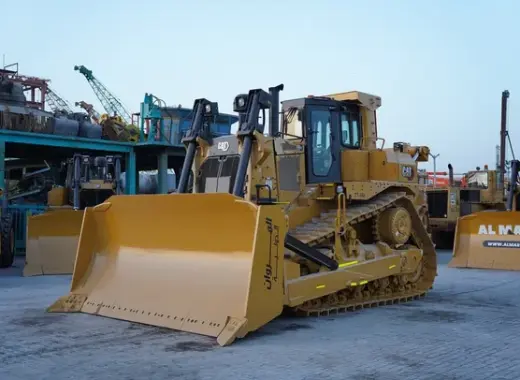
In the heavy machinery industry, 50-ton large dozers serve as a critical bridge between medium-sized site-prep tractors and ultra-class mining dozers. Weighing roughly 100,000 pounds (50 US short tons), this category delivers massive structural strength and pushing capacity while remaining practical to transport between major job sites.
Heavy-Duty Engineering & Design
The engineering of a 50-ton dozer focuses on converting high engine horsepower into ground-tearing drawbar pull.
- Reinforced Main Frame: Constructed with high-tensile steel castings and continuously rolled rails designed to absorb extreme torsional stress and shock loads.
- High-Torque Turbocharged Engine: Large-displacement diesel engines deliver significant torque rise, preventing engine stall when pushing dense, heavy material across uneven terrain.
- Variable-Displacement Hydraulics: Smart hydraulic pumps route fluid power to the blade or rear ripper only when needed, avoiding unnecessary power loss and saving fuel.
- Operator-Centric Cab: Pressurized, climate-controlled cabs feature panoramic views, electro-hydraulic joysticks, and noise suppression to maintain operator focus over long shifts.
Primary Uses & Job Site Applications
Thanks to its balanced size and high power-to-weight ratio, a 50-ton dozer is versatile enough for both large-scale civil infrastructure and continuous mining operations:
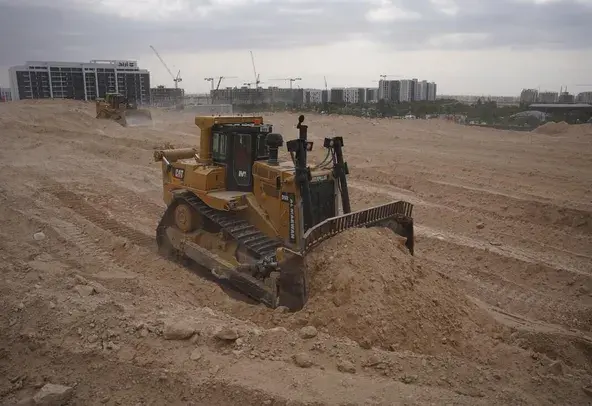
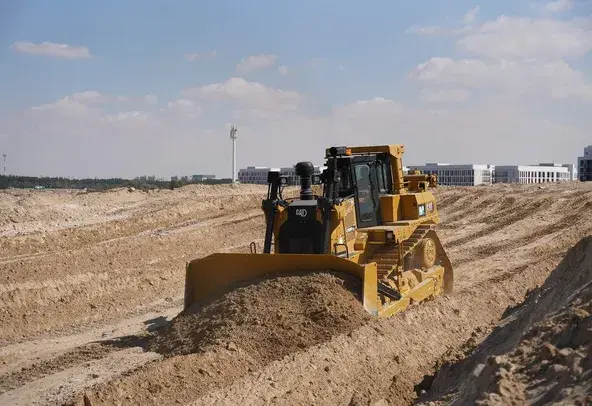
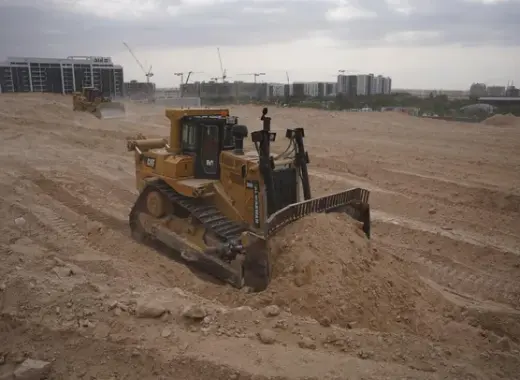
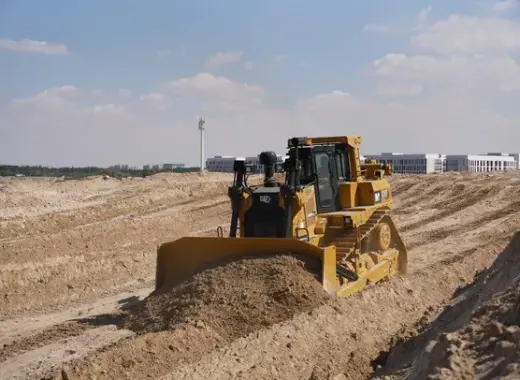
- Heavy Earthworks & Infrastructure: Fills deep ravines, cuts down steep ridges, and aggressively pre-compacts sub-base layers for highway corridors, airport expansions, and commercial land developments.
- Mining Support & Quarries: Strips rocky overburden, clears highwalls, and pushes blasted stone directly toward primary crusher plants.
- Heavy Rock Ripping: Forces single-shank or multi-shank rear ripper teeth deep into hardpack clay, shale, limestone, or frozen earth—eliminating expensive drilling and blasting.
- Industrial Bulk Handling: Uses high-capacity Universal (U) blades or coal blades to push massive volumes of coal, ore, or aggregate across seaports and processing facilities in a single pass.
Key Operational & Financial Benefits
- Easier Transport Logistics: Relocates between project sites far more easily than 70-ton or 108-ton mining dozers, saving time and transport permit costs.
- Lower Fuel Burn per Ton: Automatic transmissions and lock-up clutch torque converters match engine speed to blade resistance, maximizing fuel efficiency per cubic yard moved.
- Lower Maintenance Overhead: Undercarriages, final drives, and track shoes offer long wear life without the extreme price tag of ultra-class mining components.
- Factory 3D GPS Grade Control: Integrated grading technology automatically adjusts blade height to match digital site blueprints, eliminating manual staking and over-cutting.
- High Component Rebuildability: Modular powertrains allow mechanics to rebuild engines, transmissions, and final drives, extending the machine's service life across multiple cycles.
Overview
The 50-ton large dozer remains a core asset for production-driven fleets worldwide. By balancing raw drawbar pull, advanced digital grade controls, and manageable road logistics, it provides a dependable, high-yield solution for heavy earthmoving and resource extraction.
Frequently Asked Questions
1. What well-known dozer models belong to the 50-ton weight class?
The most prominent models in this size range include the Caterpillar D9 and the Komatsu D275A. These machines typically produce between 400 and 450 net flywheel horsepower.
2. How much material can a 50-ton dozer push in one pass?
When fitted with a high-capacity Universal (U) blade, a 50-ton dozer can move roughly 14 to 18 cubic yards (18 to 23 tons) of loose material per pass, depending on ground slope and material density.
3. What is the difference between a 40-ton dozer and a 50-ton dozer?
A 40-ton dozer (like a CAT D8) produces around 330–350 HP and is primarily used for heavy civil grading and site prep. A 50-ton dozer (like a CAT D9) produces 400+ HP, weighs 20,000 lbs more, and excels at heavy overburden stripping, quarry rock pushing, and deep rock ripping.
4. Can a 50-ton dozer be transported in one piece on a trailer?
Yes. While the dozer blade and rear ripper assembly are usually detached to meet highway width and weight limits, the main body of a 50-ton dozer can be hauled on a standard multi-axle lowboy trailer without complete disassembly.
5. How does a lock-up clutch torque converter save fuel?
During heavy pushing, the torque converter provides maximum torque multiplication. Once the dozer reaches travel speed, the lock-up clutch engages to directly connect the engine to the transmission, eliminating fluid slip and improving fuel efficiency by up to 15%.