






Large Crawler Cranes, 150 ton in Dubai
In the heavy construction and industrial sectors, efficiency relies on choosing the right tool for the job. The 150-ton large crawler cranes represent the perfect balance of raw lifting power, site mobility, and structural agility. It serves as a foundational workhorse for projects that require more muscle than a standard mobile crane can provide, without the massive footprint and transport logistical nightmares of larger, super-heavy lifting rigs.
Robust Undercarriage Track
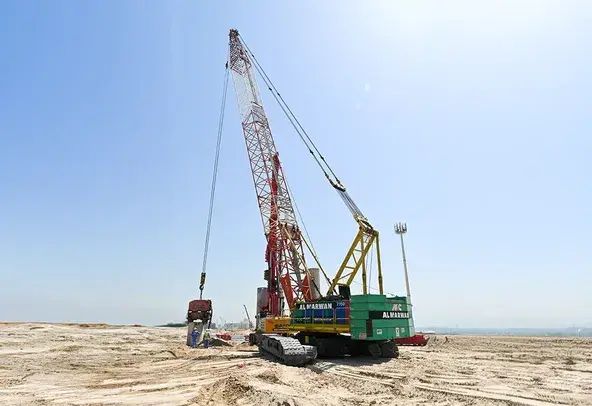
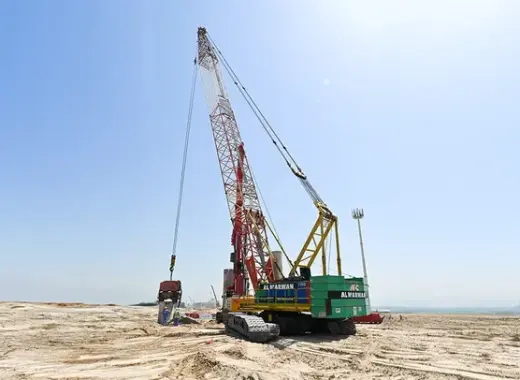
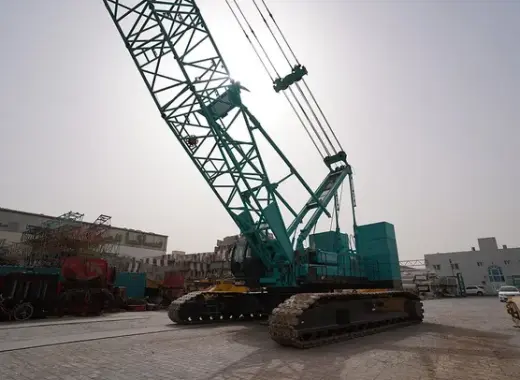
150-ton large crawler cranes continuous track system is what makes it unique. Instead of using wheels and hydraulic outriggers, the machine's whole weight is split equally between two enormous steel rails. The ground bearing pressure is significantly reduced by this engineering design. Because of this, the crane can move through and function securely on muddy, soft, or entirely unpaved terrain without sinking or losing stability.
Construction of High-Tensile Lattice Booms- 150-ton crawler cranes
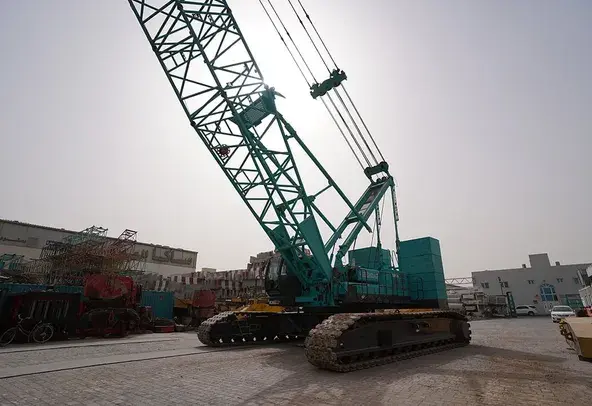
150-ton crawler cranes lifting arm, or boom, makes use of a well-designed lattice framework. The lattice design, which is made of lightweight, high-strength steel alloys, maximizes the structural rigidity of the boom while minimizing its dead weight. This enables the crane to manage large side-loading forces brought on the wind or small operating angles and lift enormous loads to astounding heights.
Smart and Modular Components
These days, 150-ton crawler cranes are incredible examples of modular engineering. They have quick-assembly systems that make it simple to separate the boom parts, tracks, and counterweights for transportation. The operator has micro-precise control over each lift, swing, and crawl movement thanks to internal variable-displacement hydraulic systems and sophisticated electronic control units.
Uses and Applications in Contemporary Industries - 150-ton crawler cranes
A 150-ton crawler crane's "pick and carry" capability, which allows it to raise a cargo and move across a construction site while holding it, making it an indispensable tool in a variety of industries.
Mid-Scale Bridge Construction and Infrastructure
Heavy concrete girders and structural steel beams must be lifted in order to construct contemporary rail bridges, overpasses, and highways. These bulky parts may be lifted from supply trucks and precisely positioned into concrete piers by 150-ton crawler cranes that can effortlessly maneuver along rough right-of-ways.
High-Rise Assembly and Commercial Construction
This type of crane is a mainstay on commercial construction projects, from erecting precast concrete walls for enormous warehouses to lifting steel framing for mid-rise skyscrapers. It can function well within constrained urban development limitations because to its small footprint in relation to its lifting capacity.
Port and Maritime Operations
Constant lifting power is needed in shipyards and busy ports to handle large cargo, assemble boat hulls, and maintain dock infrastructure. Because the 150-ton crawler crane can easily handle the moist, fluctuating ground conditions commonly found near riverbanks and coasts, it performs exceptionally well in these locations.
Projects using Foundation Drilling and Piling
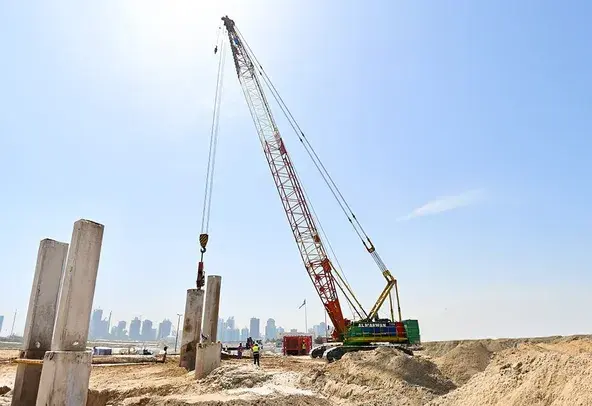
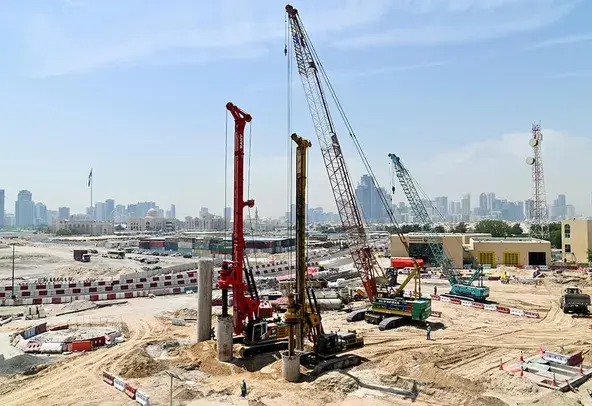
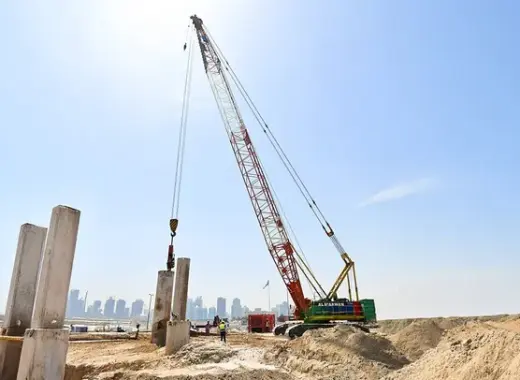
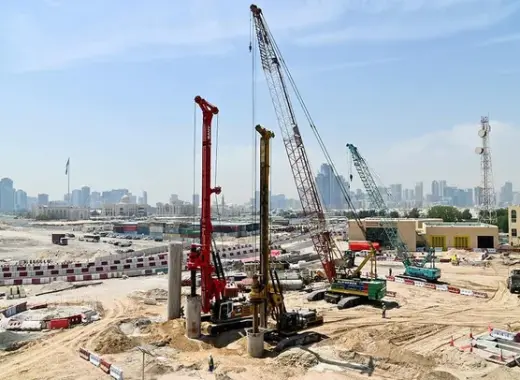
A mega-structure's foundation needs to be firmly anchored in the ground before it can rise. Large drilling augers, hydraulic piling rigs, and vibratory hammers are common heavy attachments for 150-ton crawler cranes. They are perfect for these high-vibration, continuous jobs because of their heavy-duty cycles and stable platforms.
Key Benefits of Utilizing 150-ton crawler cranes
Project managers have a number of clear strategic and financial benefits when they select a 150-ton crawler crane over other lifting options.
Excellent On-Site Mobility
Every time they move, conventional all-terrain or truck cranes need to be carefully leveled on outriggers. This phase is completely eliminated with a crawler crane. It can save hours of setup time each day by picking up a large load at one end of a construction site and walking it straight to the installation location.
Simplified Transportation and Logistics
150-ton crawler cranes are ideal for logistics even though it is categorized as a large crawler crane. The other parts can be transported on simple flatbeds, and the main body can usually be transported on a regular lowboy trailer without going over weight restrictions. Compared to 300-ton or 500-ton monsters, this drastically lowers transport permit costs and speeds up assembly.
Extremely Flexible Load Charts
A fairly generous load chart is guaranteed by the structural engineering underlying a 150-ton rating. The crane maintains exceptional lifting capabilities even at larger radii or when equipped with a luffing jib (an extra articulating arm extension). A single crane may perform a wide range of activities on a single site thanks to its versatility.
High-Tech Safety Systems
When doing heavy lifting tasks, safety is crucial. Sophisticated Load Moment Indicators (LMI) and real-time ground pressure monitoring systems are standard on contemporary 150-ton units. These onboard computers actively prevent the operator from adopting a hazardous configuration by continuously calculating the safety margin depending on the boom angle, load weight, and wind speeds.
Summary and Conclusion- 150-ton crawler cranes
An essential giant of the contemporary industrial scene is the 150-ton big crawler crane. It effectively closes a crucial gap in heavy lifting operations by fusing the renowned stability of a tracked undercarriage with extremely sophisticated lattice boom innovation.
Its adaptability is unparalleled, whether it's lifting large steel structures in a busy city center, driving foundation piles deep into the ground, or negotiating the muddy terrain of a new bridge project. For contractors all over the world, the practical advantages—which range from improved site mobility and economical transport logistics to state-of-the-art safety features—directly translate into time savings and lower overhead. The 150-ton crawler crane will continue to be a reliable cornerstone of international construction as contemporary infrastructure projects continue to seek greater efficiency.