





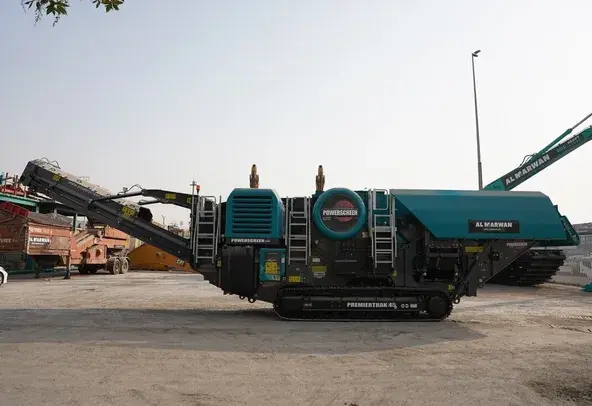
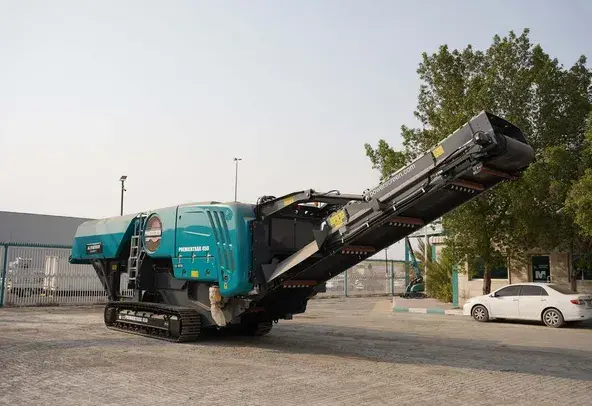
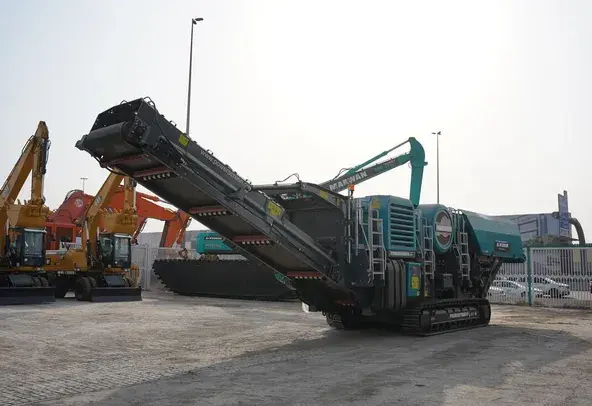
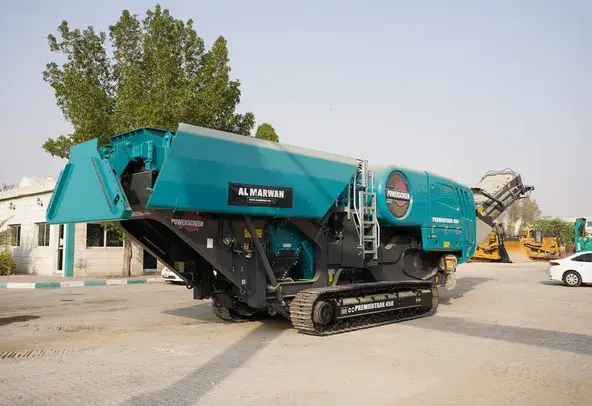
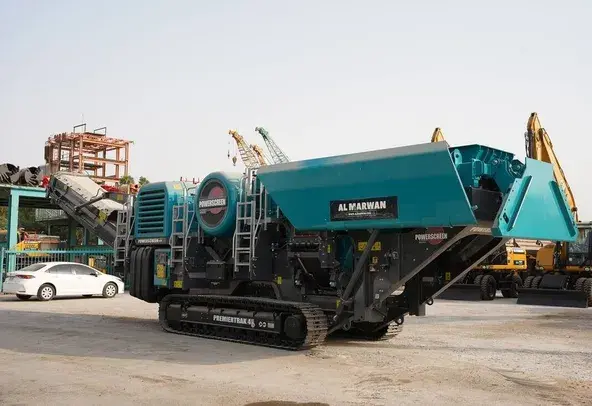
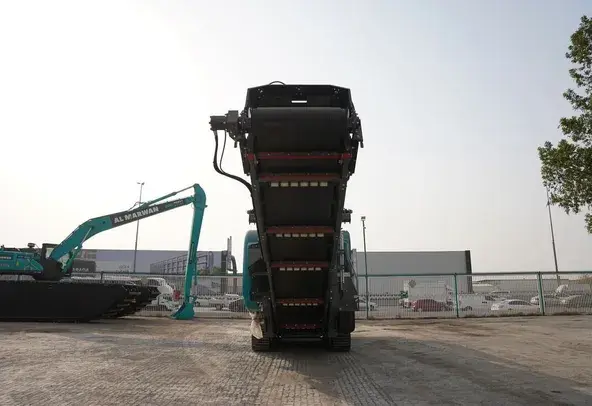
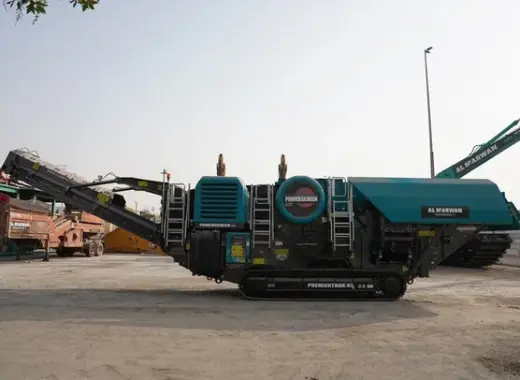
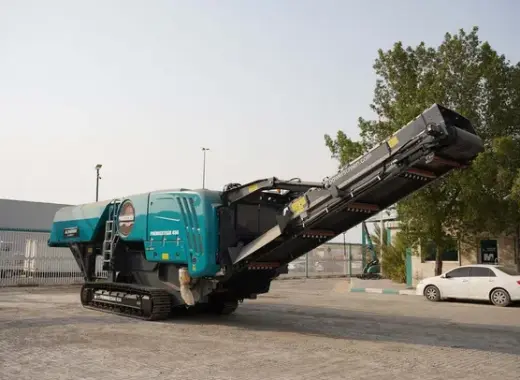
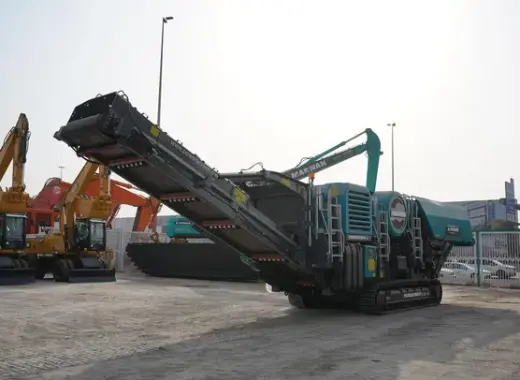
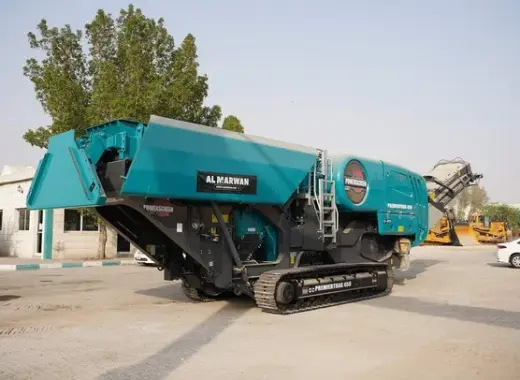
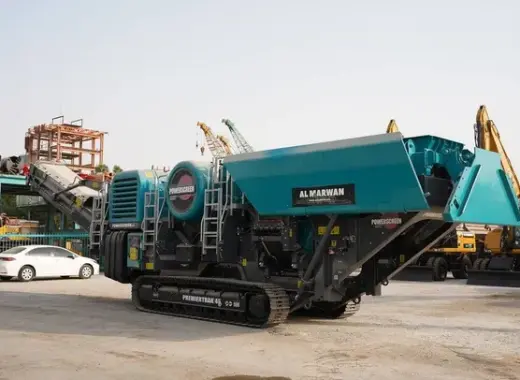
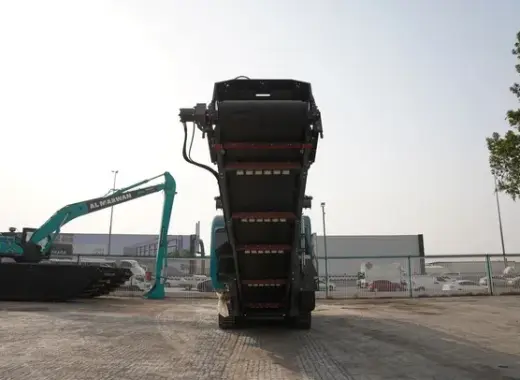
Jaw Crushers, 320 tph to 420 tph in UAE
The crushing of large boulders into manageable pieces is a demanding task in commercial mining, quarrying and recycling operations. The Jaw Crushers, 320 tph to 420 tph Category represents a heavy-duty primary reduction machinery designed to support high-volume feed. These systems, which can handle an output of between 320 and 420 tons per hour (TPH), are the key entry point in aggregate processing circuits around the world.
These jaw crushers are designed and engineered to be highly efficient and durable. They focus on fatigue resistance, stress distribution and compression kinematics. The unit's heart is a deep, rectangular crushing chamber with a fixed plate and a moving jaw opposite it.
This system is powered by a high-torque electric motor connected via V-belts with an eccentric shaft assembly flanked on either side by two counterbalanced, high-inertia flywheels. The eccentric shaft drives the pitman to crush rocks in an elliptical, aggressive motion as it rotates. These crushers are built within a monolithic steel or fully welded frame. They can easily withstand the enormous compressive forces required to break down tough granite and ores.
Jaw Crushers, 320 tph to 420 tph: Applications and Uses
The high-tonnage capacity and wide intake capability of Jaw Crushers, 320 tph to 420 tph Units, make them a foundational asset on countless industrial tracks that require extreme service. They are the first line of defense for complex material processing plants because they can accept large rocks directly from blast faces or demolition heaps.
High-volume industrial applications include
- Hard Rock Mining: Used to crush mined copper ore, iron ore and gold quartz before feeding the material to downstream cone crushing or milling circuits.
- Large Aggregate Quarries Essential for processing blasted granite, basalt and river gravel to high-grade aggregates used in commercial concrete and road base construction.
- Infrastructure concrete recycling: Widely used in urban recycling centres to crush massive reinforced slabs of concrete, bricks and asphalt panels, while safely separating the internal rebar.
- Heavy Civil Engineering: Instant, high-volume, ballast material is used on site at major construction sites, such as dams, highway expansions and tunnels.
These heavy-duty machines are ideal for processing abrasive stone in a quarry or recycling concrete at an infrastructure site. They ensure a continuous flow of material downstream.
Jaw Crushers, 320 tph to 420 tph: Key Benefits
The integration of a system of Jaw Crushers, 320 tph to 420 tph, into a material processing plant will yield immediate advantages in terms of both mechanical and financial.
- High Reduction Ratios for Structure: The deep chamber geometry of the and its optimized nip angles maximize compression efficiency. They can reduce raw materials in a ratio as high as 6:1 or 8.
- Hydraulic Closed-Side Setting (CSS Adjustment): Modern models from 320 TPH to 420TPH feature hydraulic CSS adjustments that allow operators to change the discharge size in just minutes using simple push-button controls.
- Extreme mechanical longevity: The use of reversible high manganese steel jaw liners and heavy-duty spherical bearings reduces the annual maintenance costs.
- Advanced non-blockage technology: These crushers are designed with larger throat openings and improved toggles to maintain processing speed, even when they encounter sticky, wet, clay or irregular, oversized rocks.
- Excellent energy efficiency: The perfectly symmetrical, oversized flywheels store enormous kinetic energies, which dramatically lowers the electrical power consumption for each crushed ton.
Conclusion of Jaw Crushers, 320 tph to 420 tph
The Jaw Crushers, 320 tph to 420 tph, remain the gold standard for high-intensity primary reduction in global material handling industries and mining. These machines simplify the production of high-capacity, high-quality aggregates by combining a monolithic, reinforced steel frame with high-inertia, flywheel dynamics and rapid hydraulic setting controls. If your operation focuses on high-grade highway gravel construction, extraction mining or large-scale recycling, a 320-420 TPH Jaw Crusher will provide the crushing power and structural durability you need to meet your daily processing needs.