





Here is your text simplified for maximum readability (Flesch Reading Ease 65+ / clear, plain language) with 5 helpful, clear Frequently Asked Questions (FAQs) added at the end.
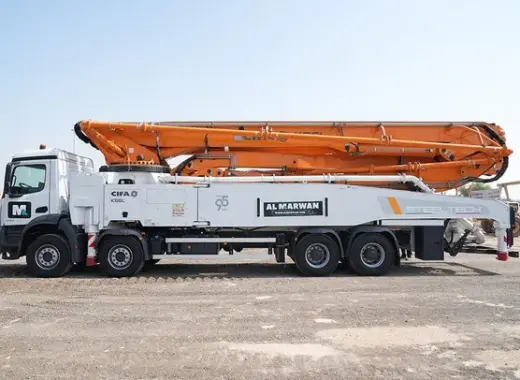
Concrete Pump Trucks (42–56 Meter Boom): The High-Reach Guide
In modern civil infrastructure and commercial building, placing liquid concrete exactly where it is needed—quickly, safely, and continuously—is a major logistical challenge. While small projects use line pumps or manual pours, large-scale projects require heavy specialized equipment.
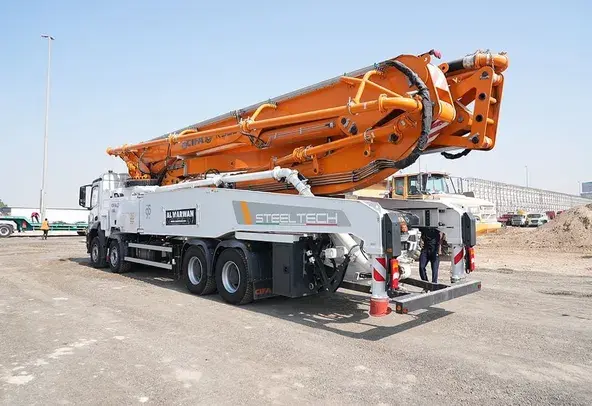
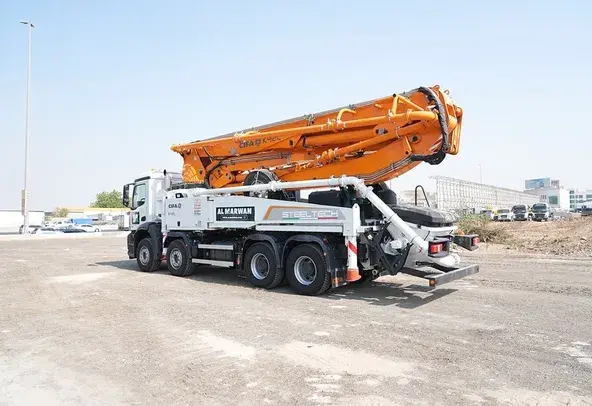
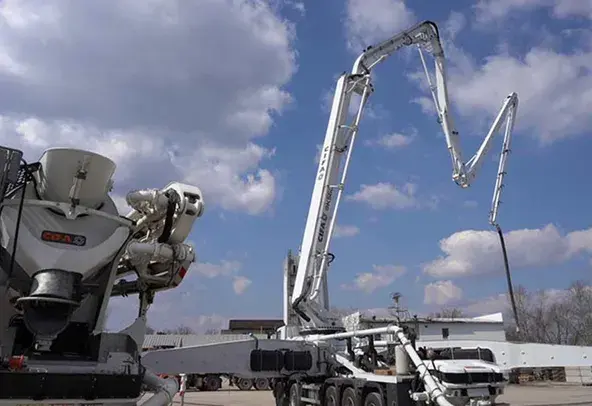
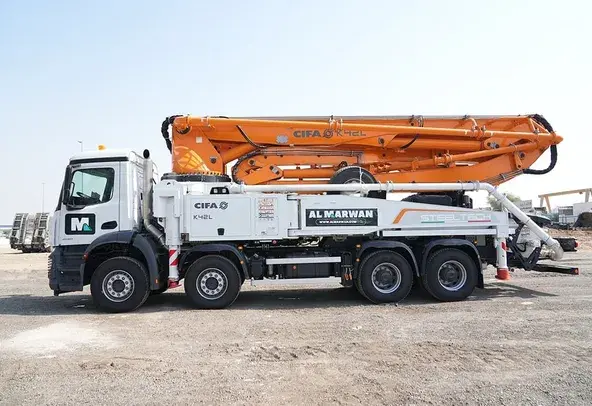
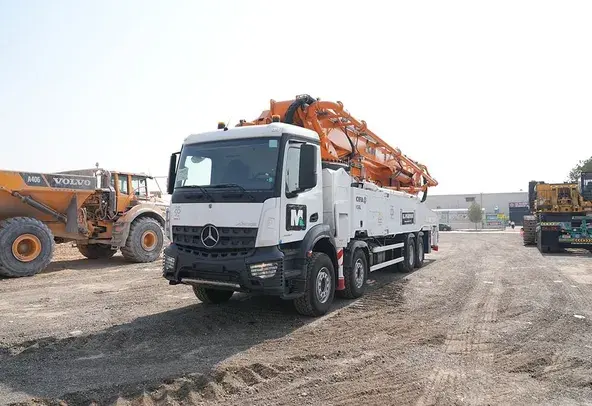
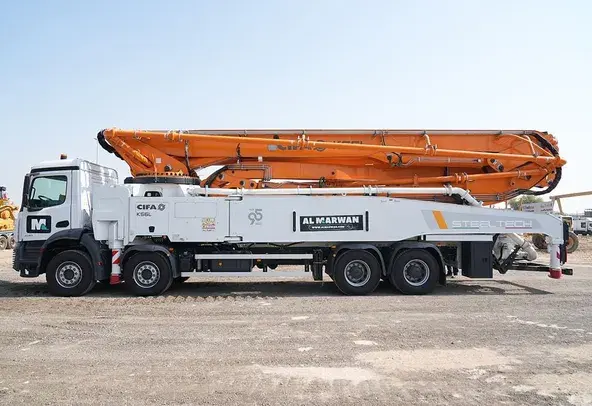
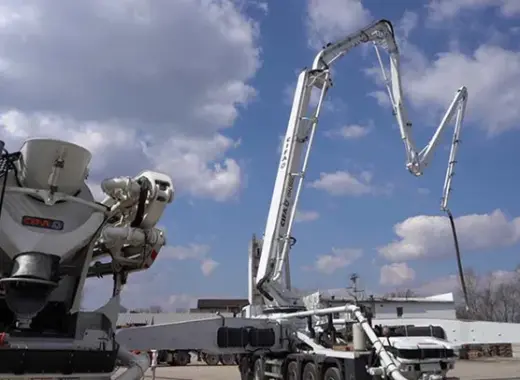
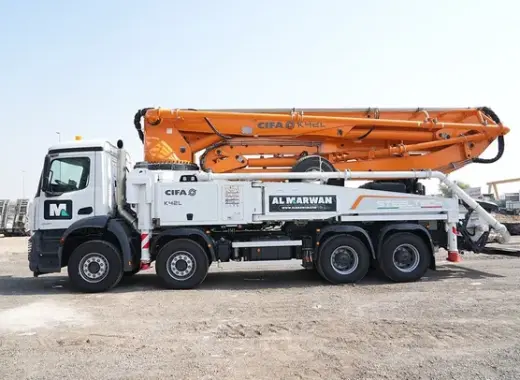
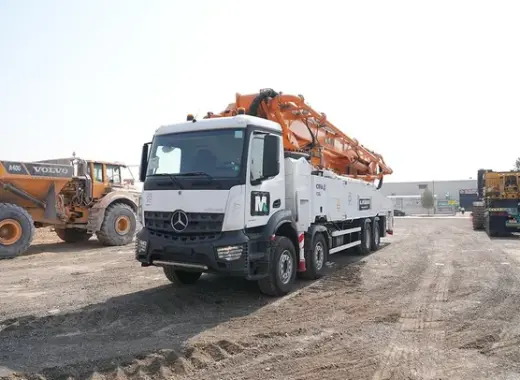
This is where concrete pump trucks with 42 to 56-meter booms (137 to 183 feet) become essential. Sitting at the top of the truck-mounted pump category, these long-reach machines combine massive pumping output with extreme vertical and horizontal reach.
How Long-Reach Boom Pumps Work
A long-reach pump truck relies on heavy-duty structural steel, high-pressure hydraulics, and smart stability systems.
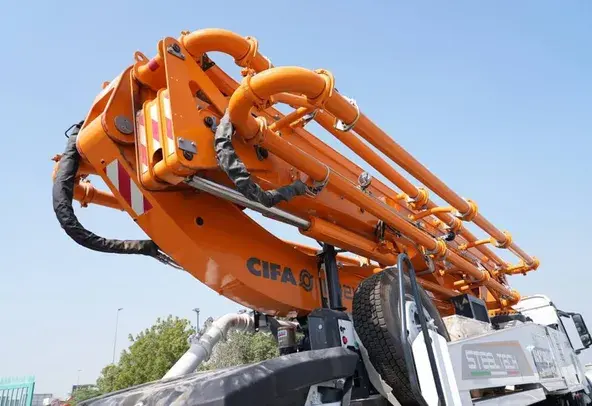
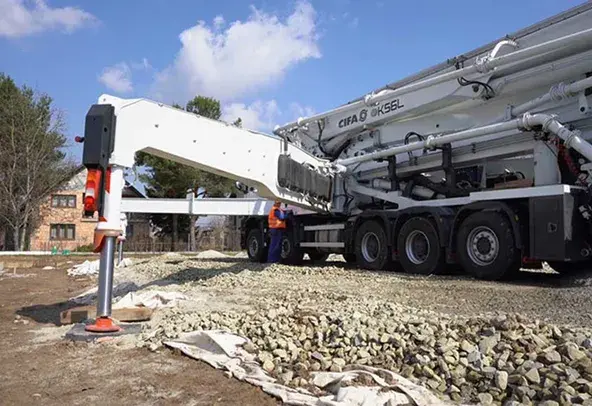
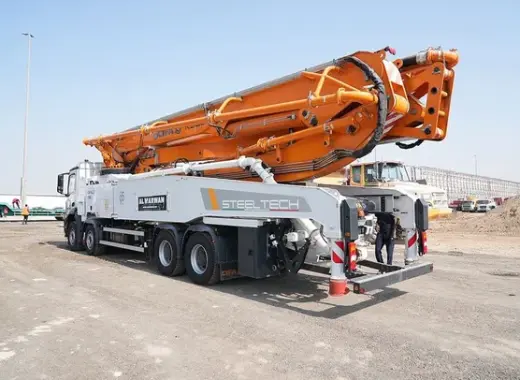
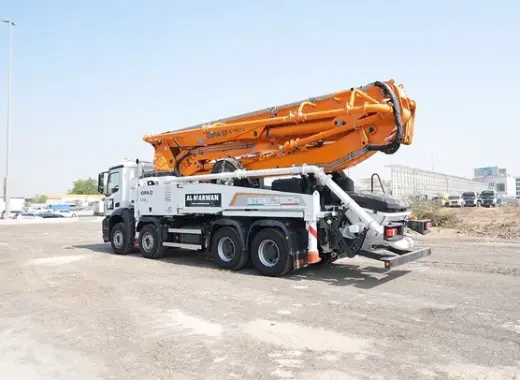
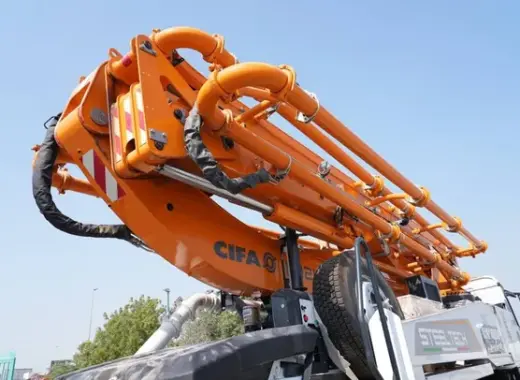
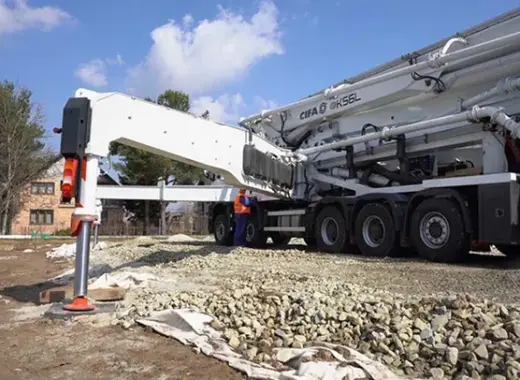
- Ultra-High-Strength Folding Booms: The multi-section folding arm is built from lightweight, low-alloy steel that resists bending under extreme loads. Extending a 56-meter arm generates huge leverage forces, so the truck uses wide X-style or swing-out outriggers to stay firmly anchored.
- High-Pressure Hydraulic Pumps: Power from the truck's engine drives twin-cylinder hydraulic pumps. These pumps push thick, heavy concrete up through a steel pipeline at high pressures without shaking the truck frame.
- Smart Stability Systems: Modern trucks feature One-Sided Support (OSS) technology. On cramped sites or near active traffic lanes, outriggers can fully extend on the working side while staying tucked in on the other, keeping the site safe without blocking roads.
Primary Uses & Job Site Applications
Because of their long reach and high output (often exceeding 210 cubic yards per hour), 42 to 56-meter boom pumps handle the largest construction jobs:
- Commercial High-Rises: Effortlessly reaches several stories above ground level, eliminating slow crane buckets and allowing crews to pour columns, walls, and elevated slabs rapidly.
- Bridges & Overpasses: Reaches across wide obstacles like rivers, active highways, or train tracks so concrete can be placed directly onto bridge decks while the truck sits safely on stable ground.
- Industrial Warehouses & Slabs: Parks outside a building footprint and extends its long arm over structural steel framing to spread concrete evenly across vast indoor floor slabs.
- Massive Mat Foundations: High output allows multiple concrete mixer trucks to unload into the pump hopper at the same time, ensuring continuous pours for thick skyscraper foundations without weak seams (cold joints).
Key Operational & Financial Benefits
- Unmatched Reach & Flexibility: Reaches across long vertical and horizontal spans, eliminating the need for complex pipelines or extra booster pumps on site.
- Lower Labor Costs: A single operator uses a wireless remote control to position the boom arm precisely, allowing ground crews to focus solely on spreading and finishing the concrete.
- Continuous High-Volume Flow: Smooth S-valve switching and wide pipelines prevent clogs, reduce internal pipe wear, and maintain consistent concrete density.
- Improved Job Site Safety: Automated sensors monitor outrigger pressure in real time, preventing tip-overs on soft dirt or uneven ground.
Overview
Concrete pump trucks in the 42 to 56-meter class are essential for major infrastructure, commercial high-rises, and industrial projects worldwide. By combining long-reach folding arms with high-pressure pumping and smart stability controls, they deliver wet concrete safely and efficiently to places standard equipment cannot reach.
Frequently Asked Questions
1. How high and far can a 42 to 56-meter concrete boom pump reach?
A 42-meter boom reaches roughly 137 feet vertically and 124 feet horizontally. A large 56-meter boom reaches up to 183 feet vertically and 169 feet horizontally—roughly the height of an 18-story building.
2. How fast can a 42-56m boom pump place concrete?
Depending on the pump setup and concrete mix, these large units can pump between 160 and 210 cubic yards (120 to 160 cubic meters) of concrete per hour.
3. What is the difference between a Z-fold and an R-fold boom arm?
An R-fold arm opens in a simple roll-out sequence, making it great for open outdoor spaces. A Z-fold arm bends back and forth like an accordion, making it much easier to unfold under low structures, inside buildings, or beneath power lines.
4. How much space do outriggers need to set up safely?
A full outrigger spread on a 56-meter pump truck requires a clear footprint roughly 30 to 35 feet wide. However, using One-Sided Support (OSS) mode reduces the required side clearance by up to 40% on cramped job sites.
5. How big of a truck chassis is required for a 56-meter boom pump?
Because of the immense weight of the boom and outriggers, a 52 to 56-meter pump is mounted on a heavy-duty 4-axle or 5-axle truck chassis to meet legal road weight limits and ensure stable transport.