






35-Ton Articulated Dump Trucks: Ultimate Off-Road Heavy Haulers
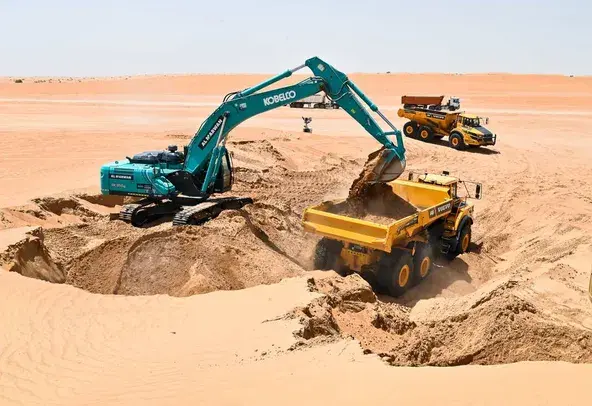
Transporting heavy earth, rock, or site debris over rough terrain requires specialized equipment. Standard dump trucks often get stuck or lose traction in deep mud. This is where 35-ton articulated dump trucks (ADTs) shine on demanding job sites across civil engineering, quarrying, site clearing, and land development projects nationwide. A 35-ton ADT combines raw engine power with exceptional mobility. It is engineered specifically for severe off-road environments where traditional rigid haulers fail to operate efficiently or safely. Contractors rely on these heavy-duty haulers to keep earthmoving projects moving on schedule, regardless of bad weather or poor ground conditions.
Earthmoving operations require constant material flow to maintain daily productivity targets. When heavy rainfall turns dirt roads into thick mud, standard highway trucks stop working completely. An articulated dump truck overcomes these obstacles through specialized chassis design, continuous power distribution, low ground pressure, and balanced weight management across all axles.
What Is an Articulated Dump Truck?
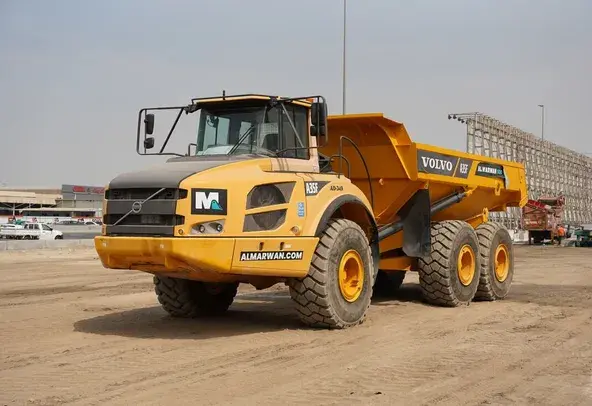
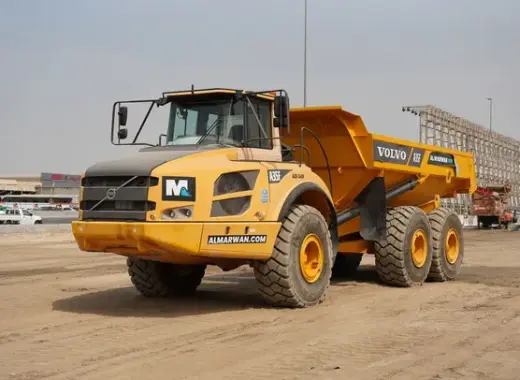
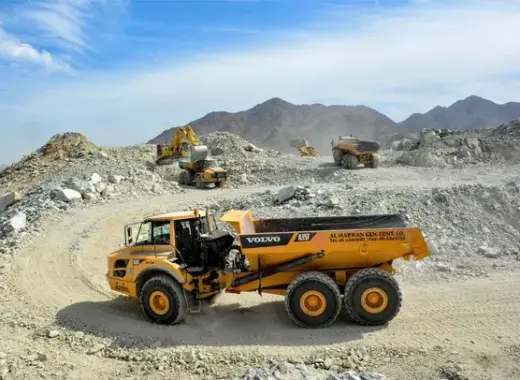
The term "articulated" refers to the unique two-piece frame design of the vehicle. Unlike conventional trucks built on a single rigid frame, an ADT has two distinct structural sections. The front cab section and rear dump body are connected by a heavy-duty oscillating hitch. This central swivel joint allows the front and rear halves to turn and rotate independently of each other. As a result, all six drive wheels stay firmly planted on uneven ground. This prevents excessive frame stress and delivers continuous traction across deep ruts, rocks, soft clay, and deep mud. By keeping constant ground contact, the truck reduces spin-out risk and lowers tire wear over long work shifts.
The oscillating joint acts as a mechanical stabilizer on uneven ground. While a rigid frame twists under uneven load stress, an articulated frame flexes naturally to allow smooth weight distribution. This keeps structural components intact and protects both the engine and transmission from premature wear caused by structural twisting across rough haul roads.
Key Engineering Features of a 35-Ton ADT
Modern 35-ton articulated dump trucks feature advanced engineering designed for high daily output, low operating costs, simple maintenance access, and maximum job site safety.
Hydraulic Articulated Steering
The central articulation joint handles vehicle steering using high-pressure hydraulic cylinders. Instead of turning front wheels like a car, the truck pivots its entire front cab section relative to the rear bed. This design creates a remarkably tight turning radius. It enables easy maneuvering in cramped job site conditions, narrow quarry paths, busy stockpiles, and restricted loading zones. Furthermore, pivoting the frame prevents tip-over risks on soft or sloping terrain by keeping the machine's center of gravity stable during turns. Drivers can swing the front cab while stationary, clearing obstacles without needing wide turnarounds or extra backing maneuvers.
Continuous 6x6 Drivetrain
Most 35-ton ADTs feature continuous all-wheel drive systems paired with automatic differential locks. If one wheel slips in thick mud or loose gravel, power instantly transfers to the remaining wheels with grip. High-torque turbocharged diesel engines deliver strong pulling power to move massive 70,000-pound payloads up steep, slippery job site inclines without stalling. Advanced automatic transmissions select the exact gear ratio needed for speed and fuel economy across changing ground conditions. Downhill speed control systems also prevent over-speeding when hauling heavy loads down steep mountain routes or deep quarry ramps.
Self-Leveling Suspension Systems
Specialized front hydro-pneumatic suspension dampens harsh impacts from unpaved haul roads. This prevents machine structural fatigue and protects critical powertrain components. A smoother ride also prevents operator fatigue during long 10-hour shifts, boosting overall site productivity and safety. Rear suspension systems feature walking-beam axles that absorb big bumps and maintain uniform tire weight distribution across all rear axles. This reduces localized tire wear, improves steering response, and ensures comfortable machine operation across rough terrain.
Detailed Technical Specifications Overview
Understanding standard mechanical specifications helps fleet managers select the right haul truck for their earthmoving operations. Engine output typically ranges between 350 and 450 horsepower. This provides excellent power-to-weight ratios when fully loaded with wet clay, wet sand, topsoil, gravel, or blasted rock. Payload capacity sits right at 35 U.S. tons (approx. 31.7 metric tons or 64,000 to 70,000 lbs). Body capacity ranges from 26 to 29 cubic yards heaped. Top road speeds average 30 to 35 mph, allowing quick haul cycles between loading zones and dump areas.
Fuel tank capacity averages 100 to 130 gallons, allowing the unit to run continuously through long shifts without refueling breaks. Hydraulic oil reservoirs are oversized to keep hydraulic fluid cool under heavy dumping cycles in extreme ambient temperatures.
Primary Industry Applications
Because of their high payload capacity and off-road capability, 35-ton ADTs excel in many demanding industries around the world:
• Infrastructure Construction: Essential for moving millions of yards of dirt when building highways, dams, bridges, airports, reservoirs, and major civil engineering projects.
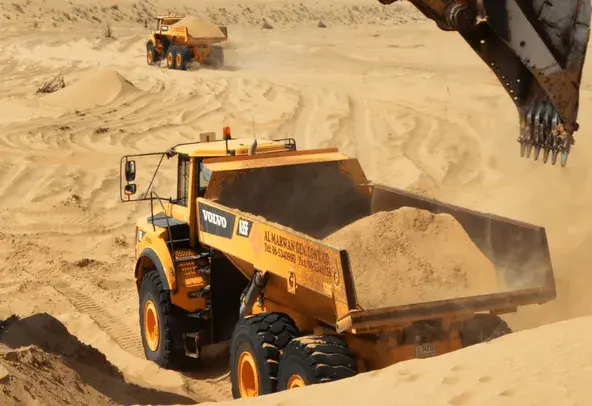
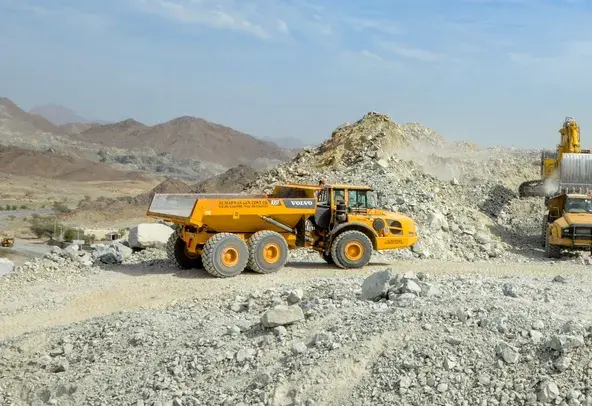
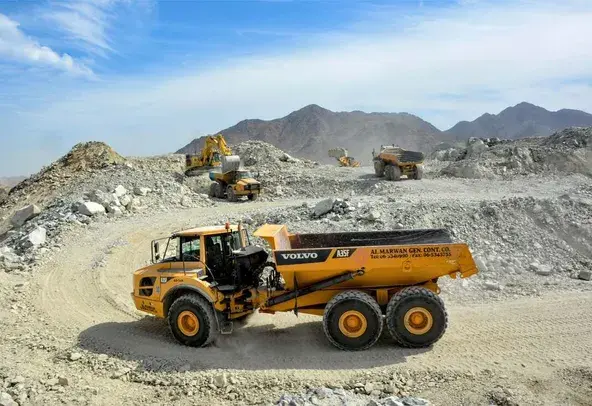
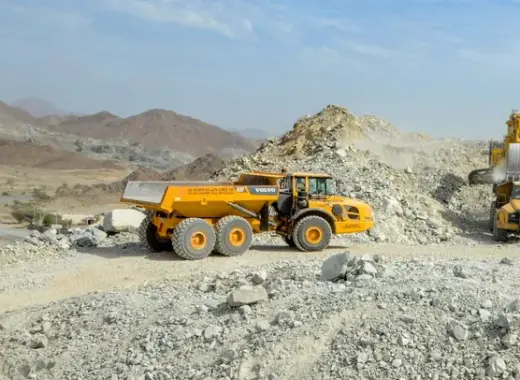
• Mining and Quarrying: Ideal for moving raw ore, overburden, aggregate, sand, and blasted rock out of steep open-pit mines and stone quarries.
• Environmental Restoration: Wide flotation tires allow safe travel across soft wetlands and sensitive soils without causing deep rutting or topsoil destruction.
• Waste Management: Provides reliable traction on slippery landfill slopes when spreading daily dirt cover layers or hauling bulk municipal waste.
• Pipeline and Utility Work: Excellent for hauling backfill material along narrow, unpaved utility rights-of-way across rural regions.
• Land Development: Used during initial site clearing, pond excavation, and rough grading phases before permanent access roads are paved.
Major Operational Advantages
Choosing a 35-ton articulated dump truck offers clear performance and financial benefits over standard rigid trucks or smaller haulers:
• All-Terrain Dependability: Operates smoothly in deep mud, heavy rain, soft sand, and snow, preventing costly weather project delays.
• Optimal Payload Capacity: Carries 35 tons per load to finish bulk excavation jobs significantly faster than smaller 25-ton models.
• Low Ground Pressure: Wide tires distribute massive machine weight evenly to protect haul roads and prevent sinking into soft ground.
• High Resale Value: The 35-ton capacity class is an industry popular standard, making these units easy to buy, sell, lease, or rent globally.
• Low Fuel Consumption: Tier 4 Final and Stage V diesel engines feature automatic idle shutoff and eco-driving modes to cut fuel costs.
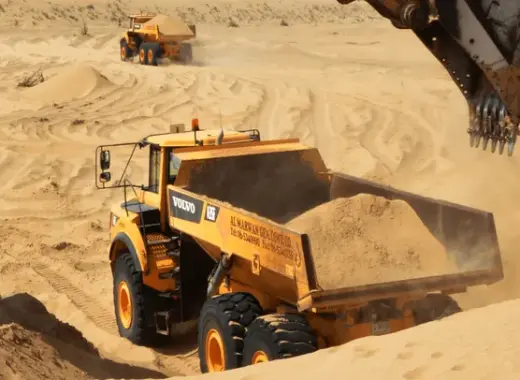
• Fast Dump Cycle Times: Powerful hydraulic hoist cylinders lift the heavy dump body quickly, dumping full loads in under 12 seconds.
• Reduced Site Road Maintenance: Because ADTs smooth out unpaved tracks rather than tearing them up, crews spend less time grading haul roads.
Maintenance Practices for Maximum Uptime
Regular preventative maintenance ensures your 35-ton haul truck operates reliably without unexpected job site breakdowns. Daily inspections should include checking engine oil levels, hydraulic fluid levels, tire inflation pressure, and grease points around the central oscillating hitch. Keep the articulation joint greased according to manufacturer guidelines to avoid premature wear on heavy pins and bushings. Inspect air filters daily when working in dusty quarry environments to ensure proper airflow to the engine turbocharger. Monitor transmission fluid clarity and replace filters on schedule to ensure smooth gear shifting under heavy payload stress. Routine oil sampling helps identify internal wear early before major engine component failure occurs.
Operator Comfort and Safety Standards
Modern haulers prioritize operator safety and comfort to maintain focus and efficiency throughout long work hours. Quiet cabins feature pressurized air conditioning, ergonomic air-suspension seating, and clear visibility around the entire vehicle perimeter. Integrated rear view cameras and radar sensors alert the operator to workers, obstacles, or equipment standing behind the truck. Automatic retarders and engine brakes assist service brakes when descending steep slopes, preventing brake overheating and failure. Rollover Protective Structures (ROPS) and Falling Object Protective Structures (FOPS) come standard on modern cabs, giving operators full protection during extreme job site hazards.
Summary
The 35-ton articulated dump truck remains a top choice for modern earthmoving projects across the globe. By combining massive payload capacity with off-road agility, it maximizes site productivity, operator safety, and long-term investment return. Investing in a reliable ADT fleet ensures your construction or mining operations run efficiently, even in the toughest ground conditions imaginable.
Frequently Asked Questions
1. What is the main difference between a rigid dump truck and an ADT?
An ADT features a flexible two-piece frame with a central oscillating hitch built for off-road mud and rough ground. A rigid dump truck uses a solid single frame designed for firm, smooth, paved haul roads in large open mines.
2. What is the volumetric body capacity of a 35-ton ADT?
A typical 35-ton ADT dump body holds between 26 and 29 cubic yards of heaped material, depending on material density and tailgate options.
3. Which job site conditions favor an ADT?
ADTs excel in deep mud, soft clay, steep grades, tight spaces, wet weather, and unpaved site areas where stable haul roads are not yet built.
4. What loader sizes pair best with a 35-ton ADT?
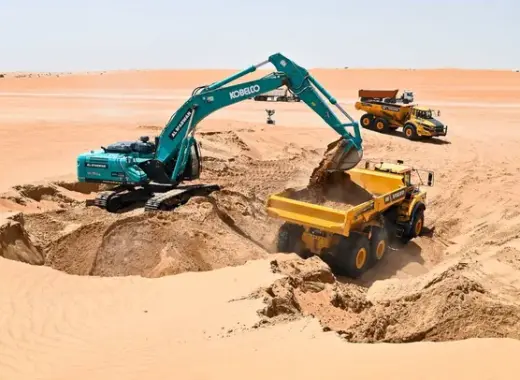
To load a 35-ton truck efficiently in 4 to 6 passes, pair it with a 30-to-45-ton hydraulic excavator (2.5 to 3.5 cu. yd. bucket) or a wheel loader with a 4.5-to-5.5 cu. yd. bucket.
5. How fast can a 35-ton articulated dump truck travel when full?
When fully loaded, most 35-ton ADTs reach top speeds of 30 to 35 mph on flat, firm haul roads, allowing fast site cycle times.
6. What maintenance keeps an ADT running long-term?
Greasing the central hitch joint, checking hydraulic pressures, replacing air filters, and servicing transmission fluid at recommended intervals guarantees maximum machine lifespan.